PBP / A living atlas of beer historyResearch · documents · reconstructions
Independent research project
History of Belarusian beer
From a line in an old book to a place, its people, and the taste of an era.
Manuscripts, estate inventories, and forgotten recipes help us study brewing in the Belarusian lands, the Grand Duchy of Lithuania, the Polish–Lithuanian Commonwealth, and neighbouring regions.
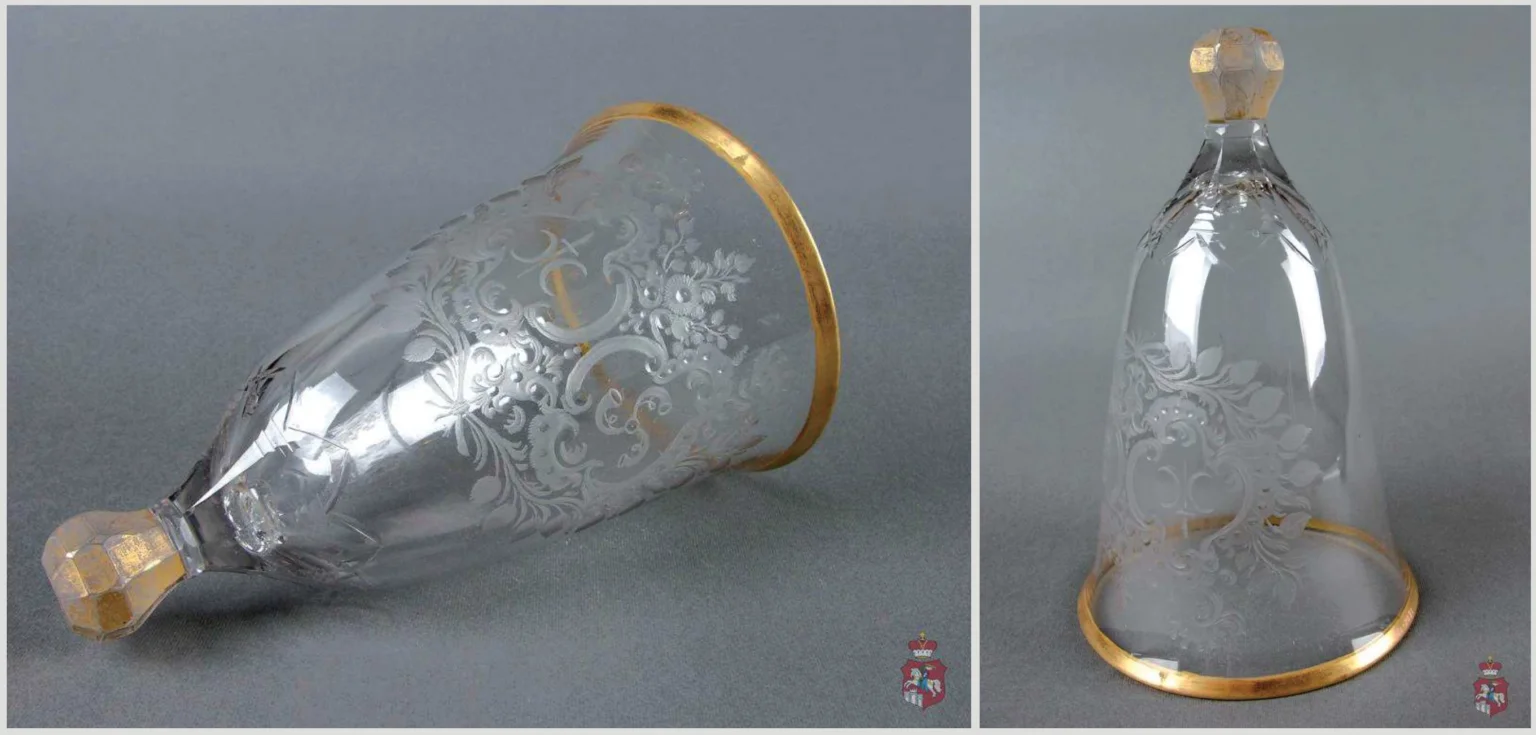
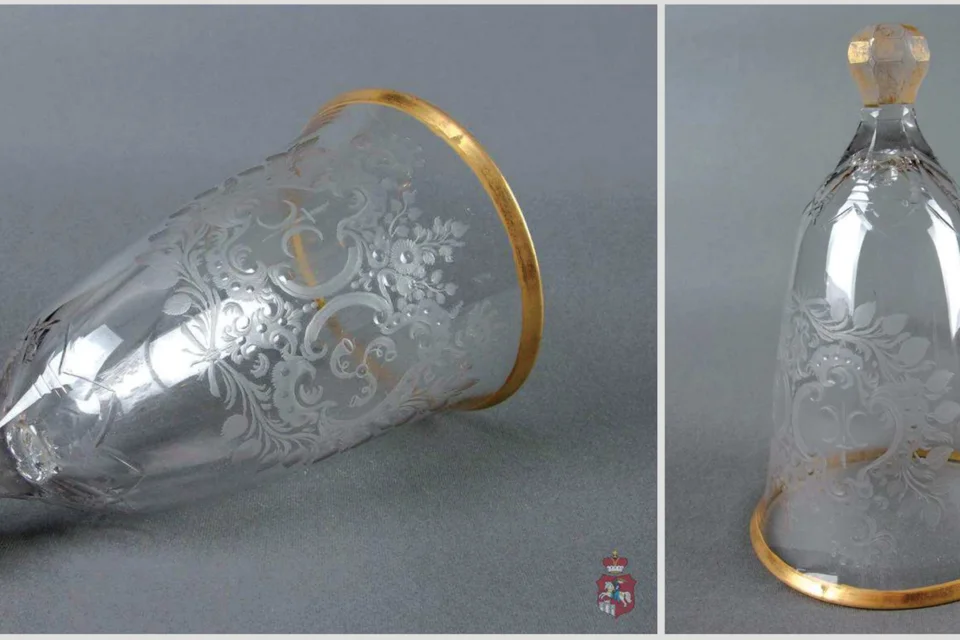
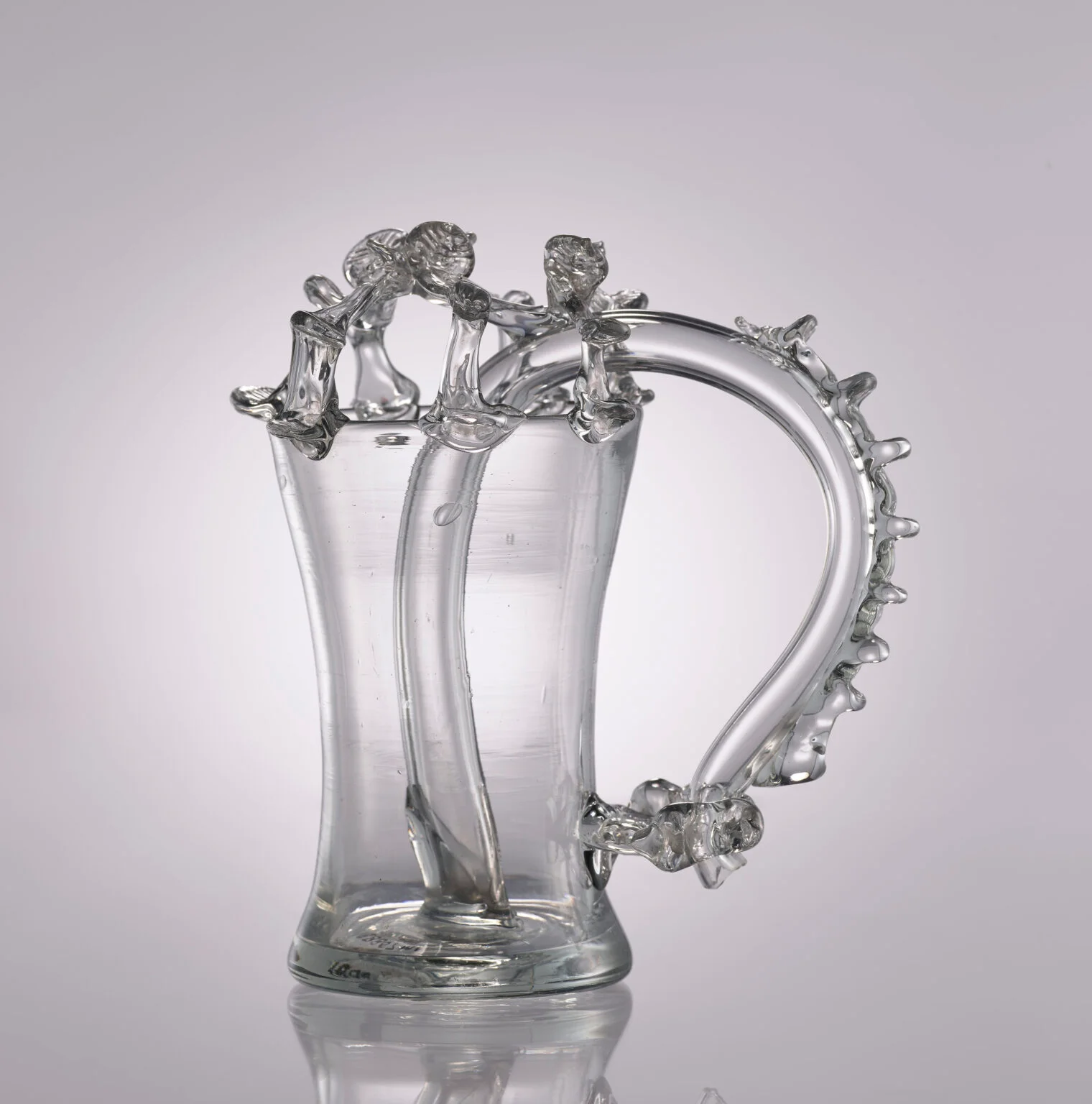
↗Kulawka with the Ostoja and Trąby coats of arms. Urzecze–Naliboki, last quarter of the 18th century. Source: Karolina Wolska, Szkło i Ceramika, no. 2, 2014.
Exhibit 01Chapter LVI · Zythopoeia
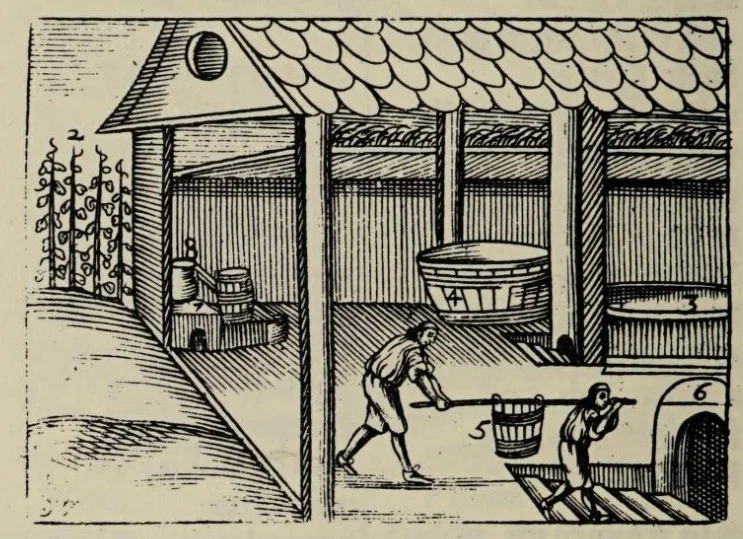
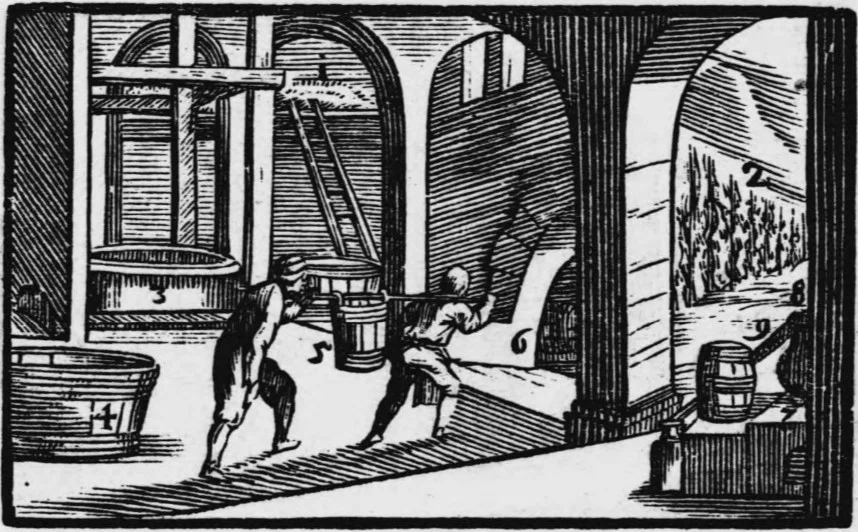
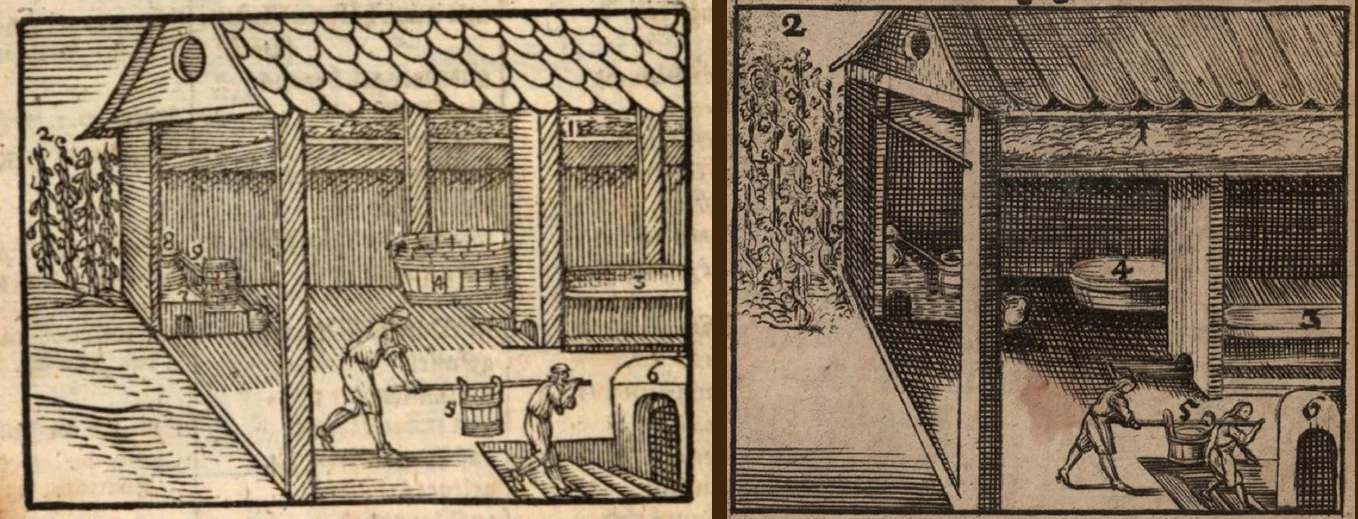
↗Historical engraving · 1658The “Zythopoeia” chapter from Jan Amos Comenius’s Orbis Pictus (1658), shown from a facsimile; Wikimedia Commons.Original record ↗Public domain1658
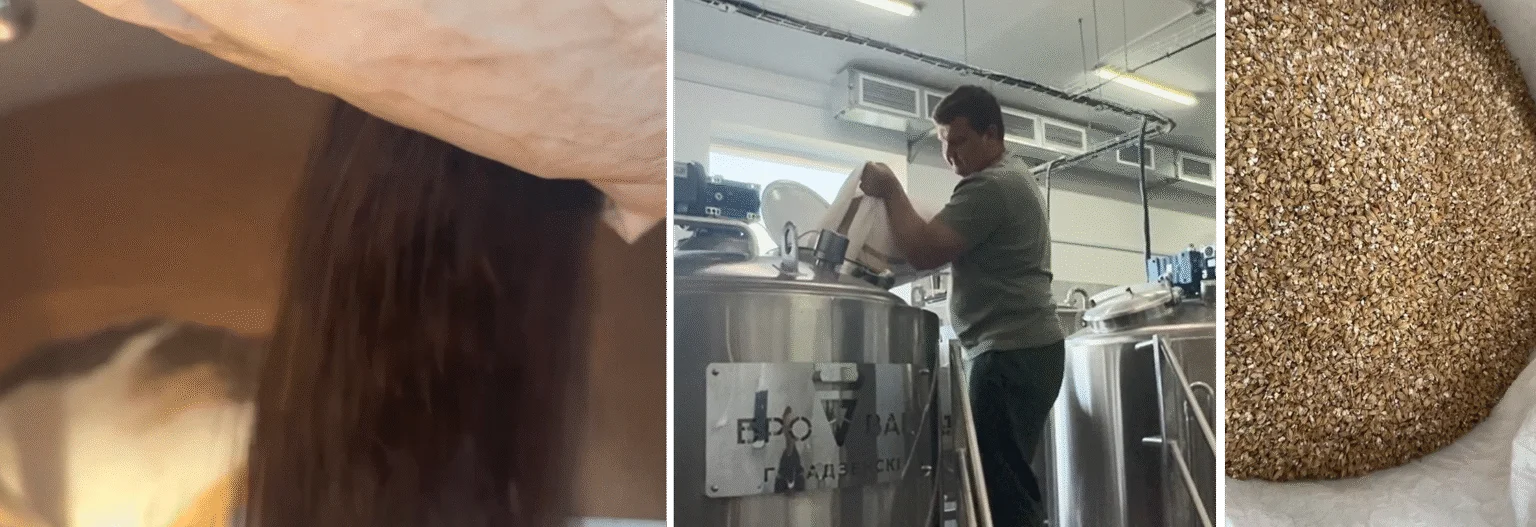
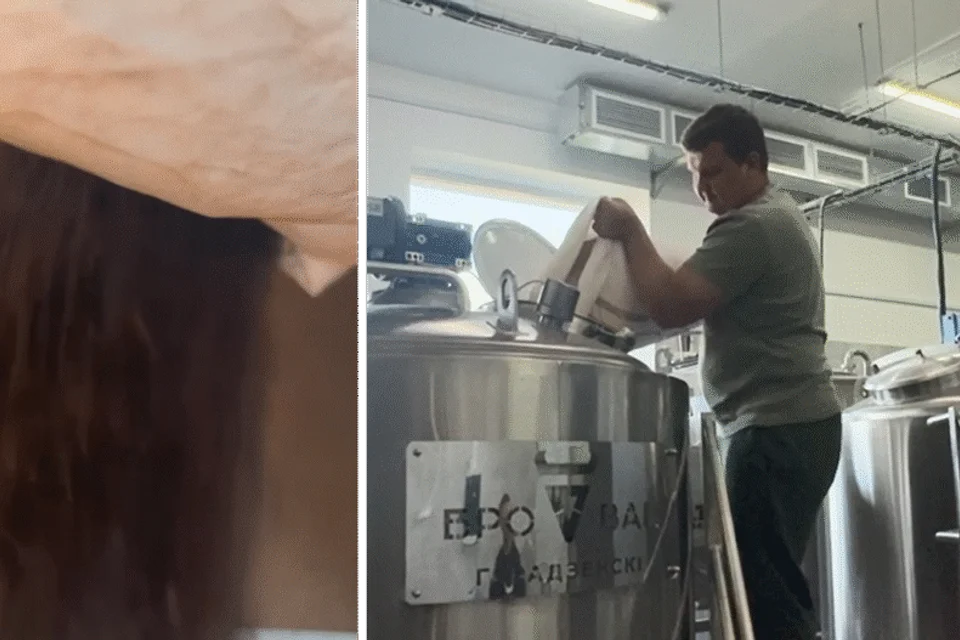
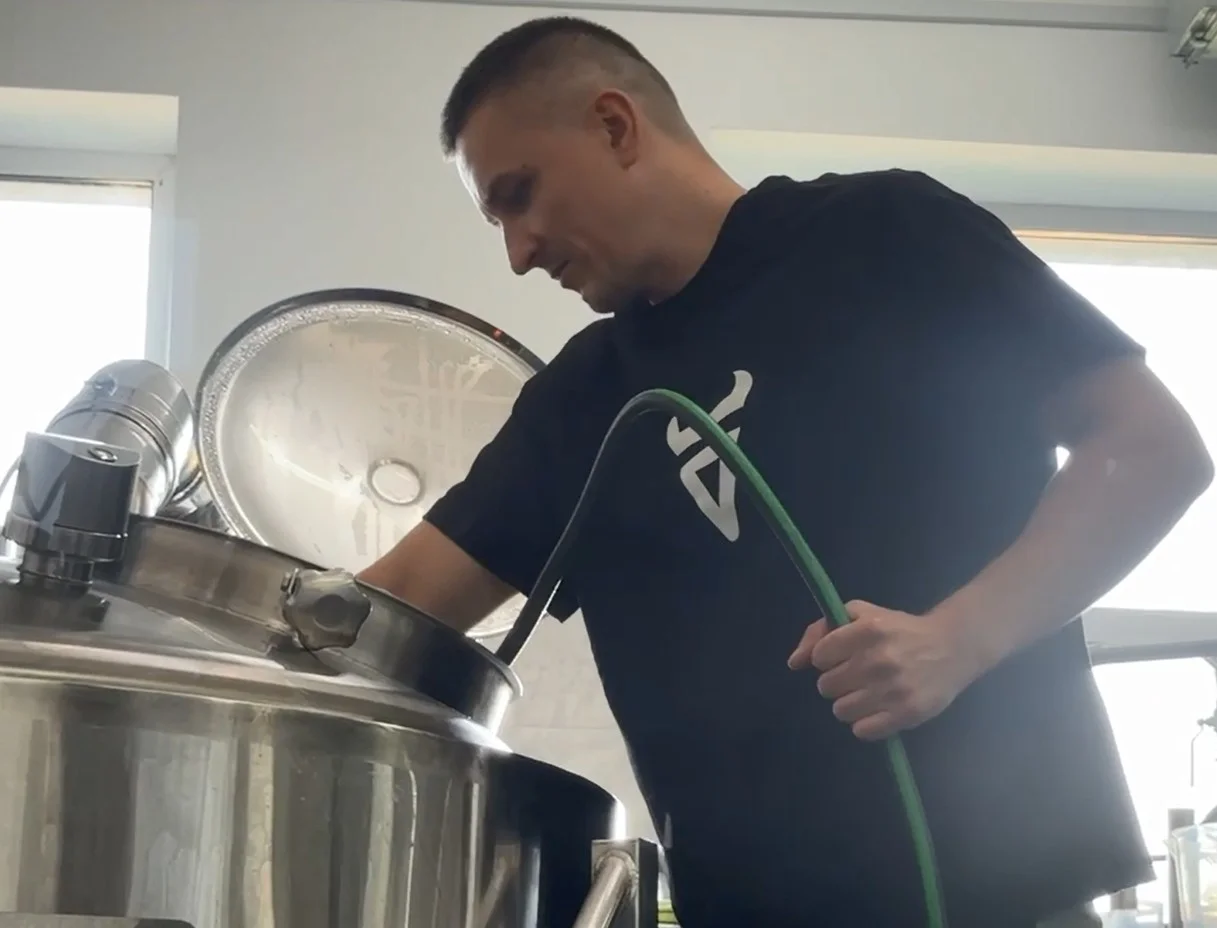
↗The author of the research adding malt to the mash tun during the experimental reconstruction of historical Grodno Bock beer at Garadzenski Brovar brewery.
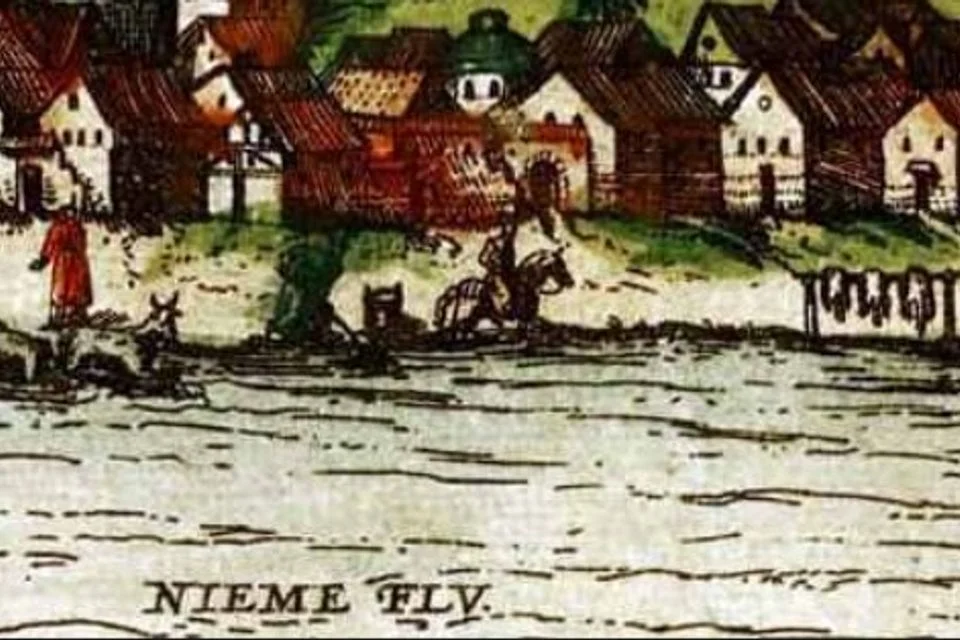
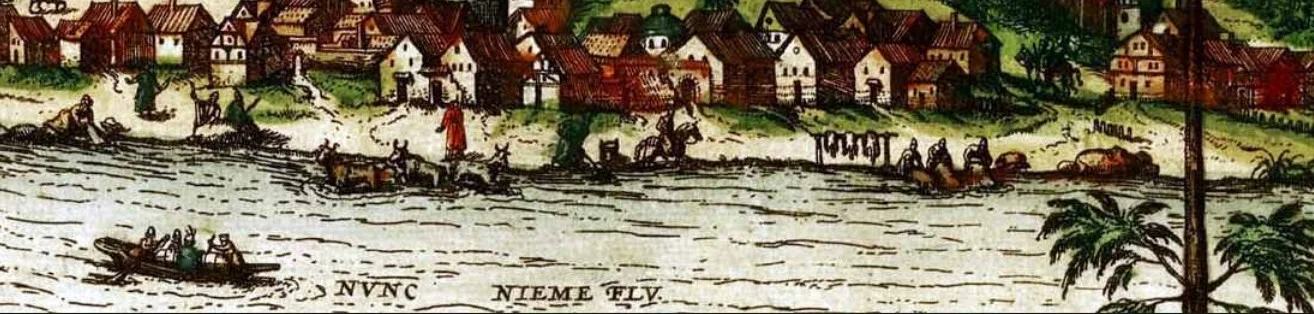
01 / Study fragment↗The Neman River and everyday life in sixteenth-century Grodno. Detail from a 1568 engraving by Matthias Zündt after Johann Adelhauser.Grodno Beer and Gabriel Rzączyński ↗
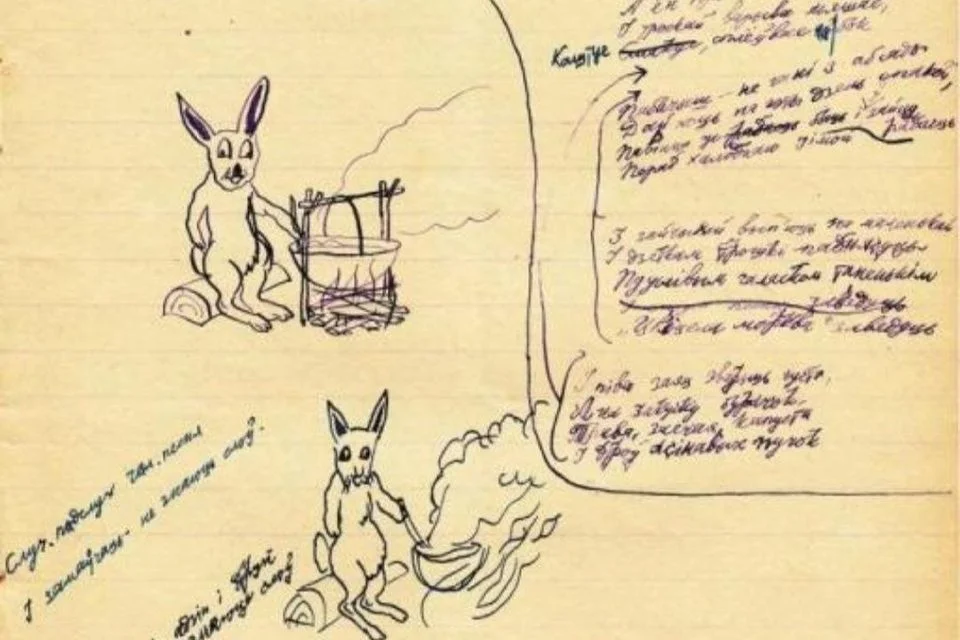
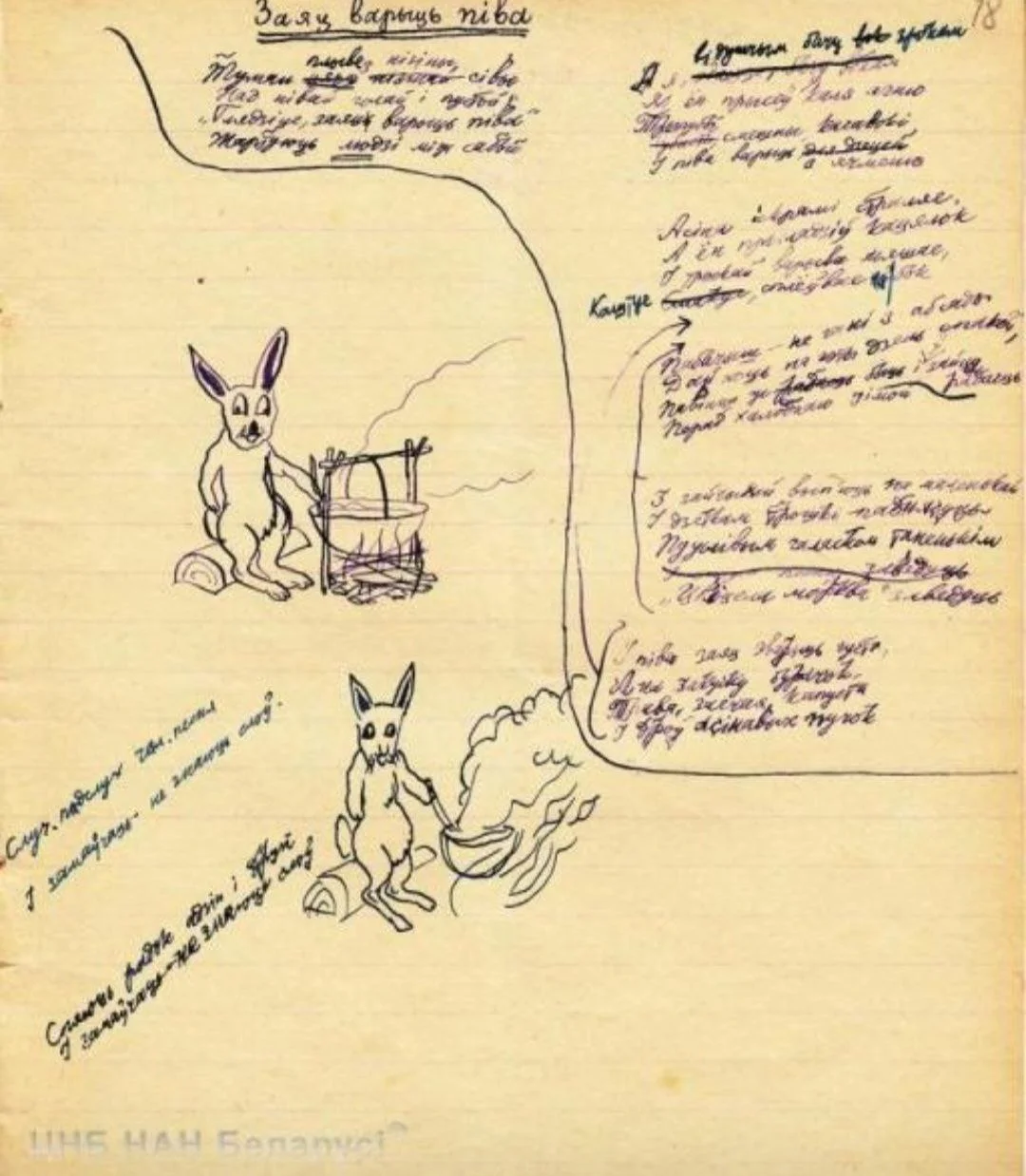
02 / Study fragment↗Manuscript of “Заяц варыць піва” with drawings by Uladzimir Karatkevich. Kyiv, 1955.Hare Beer ↗
04 / Study fragment↗The author of the research adding malt to the mash tun during the experimental reconstruction of historical Grodno Bock beer at Garadzenski Brovar brewery.Grodno Beer and Gabriel Rzączyński ↗
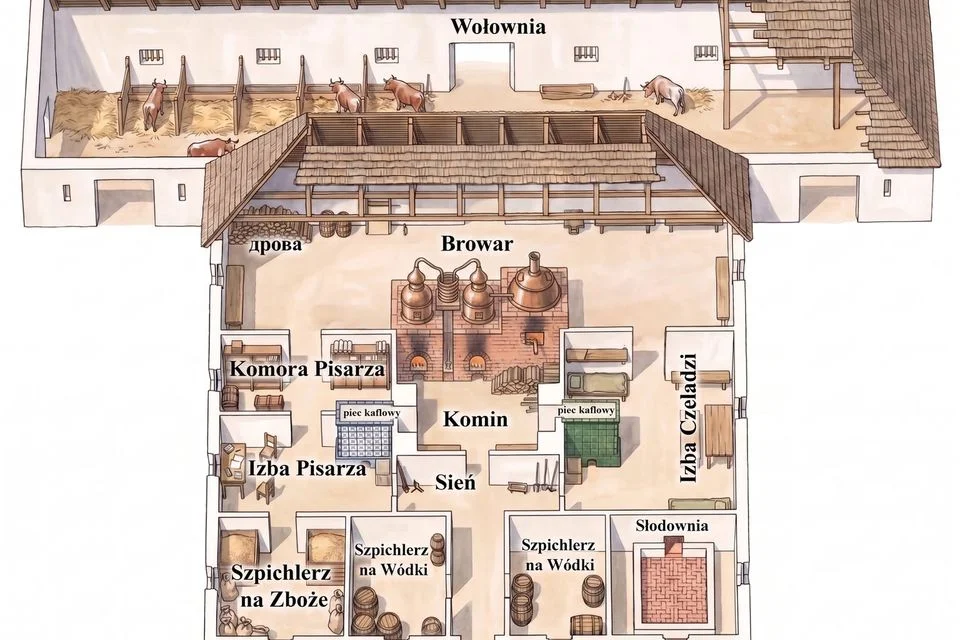
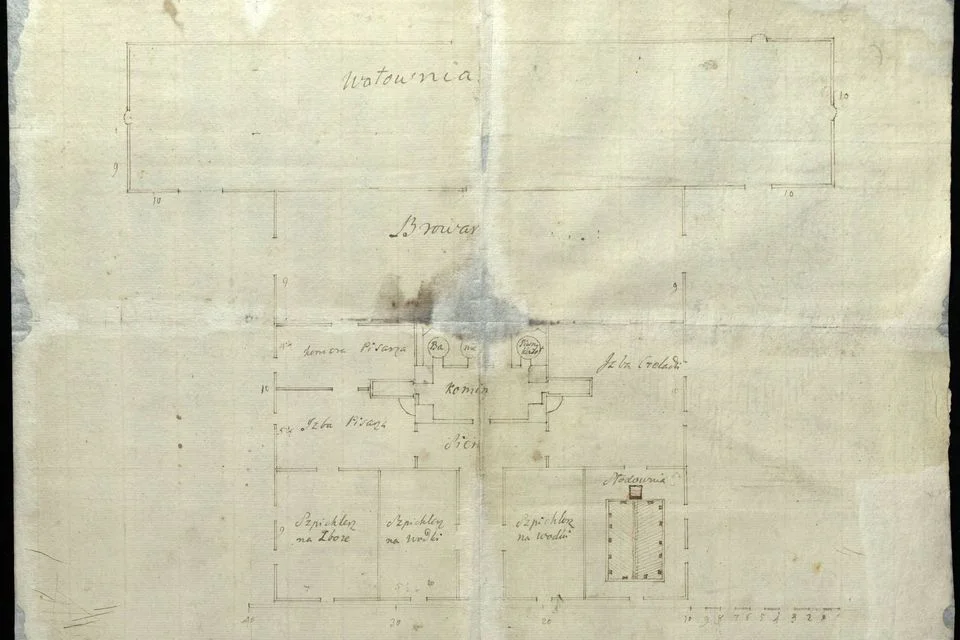
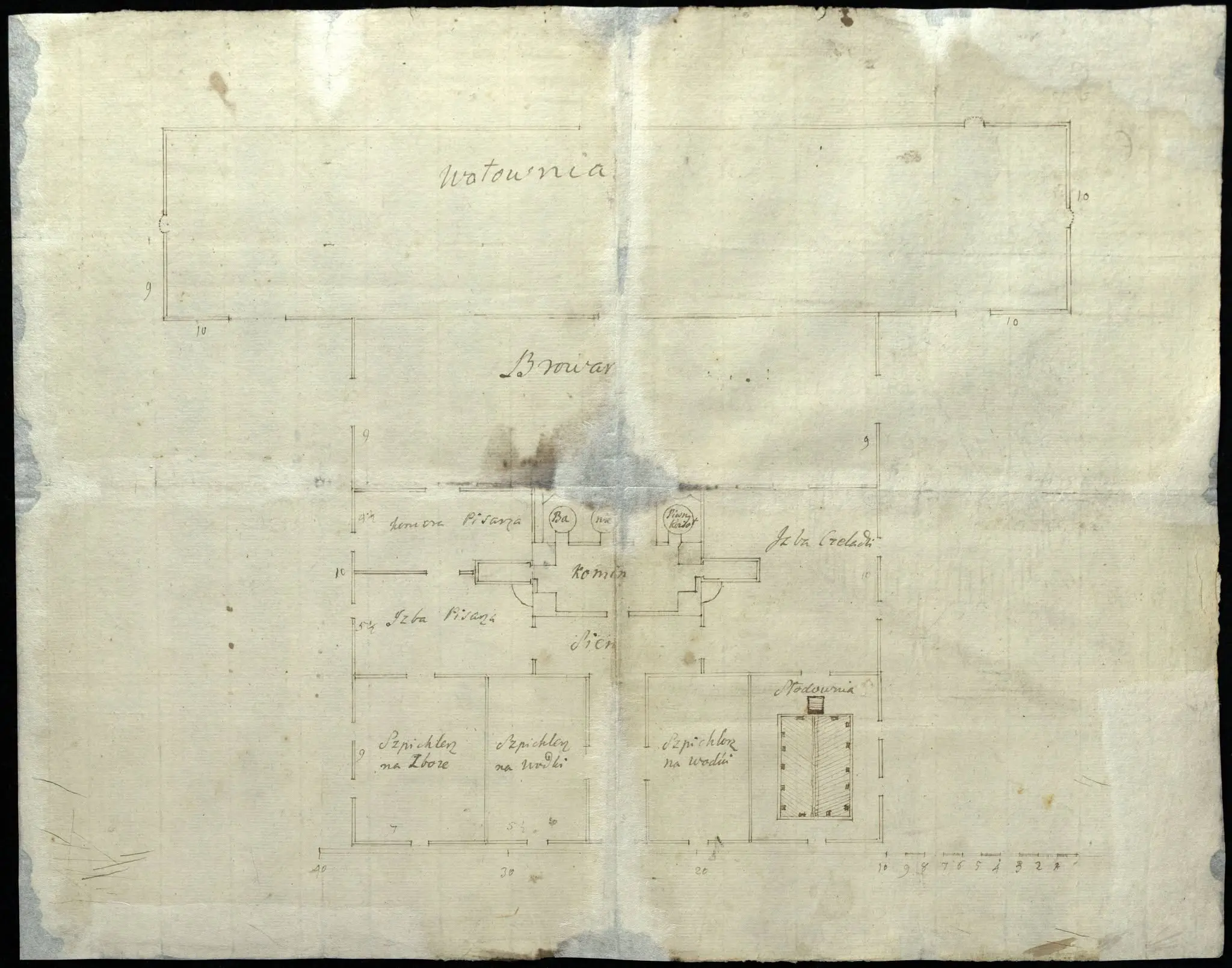
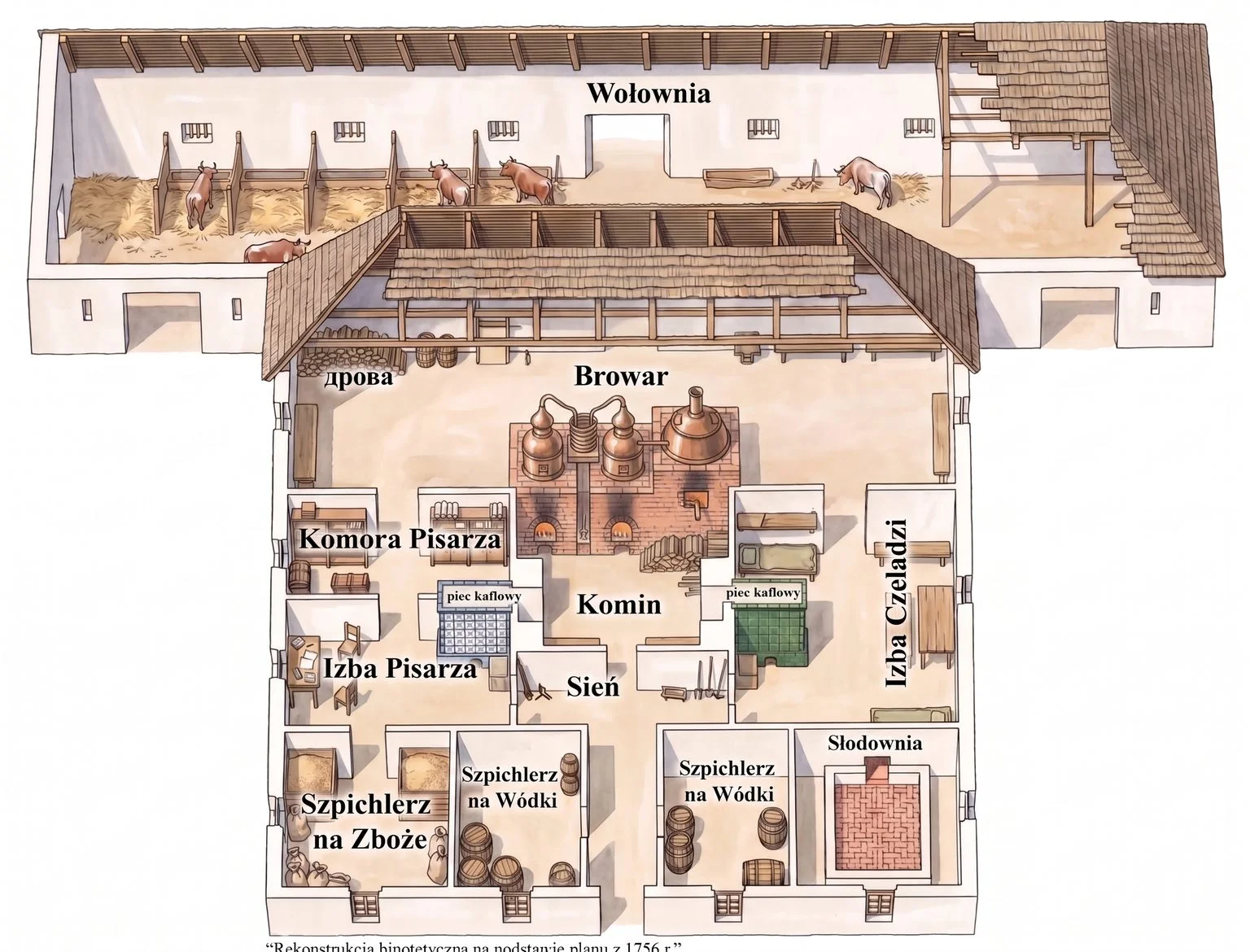
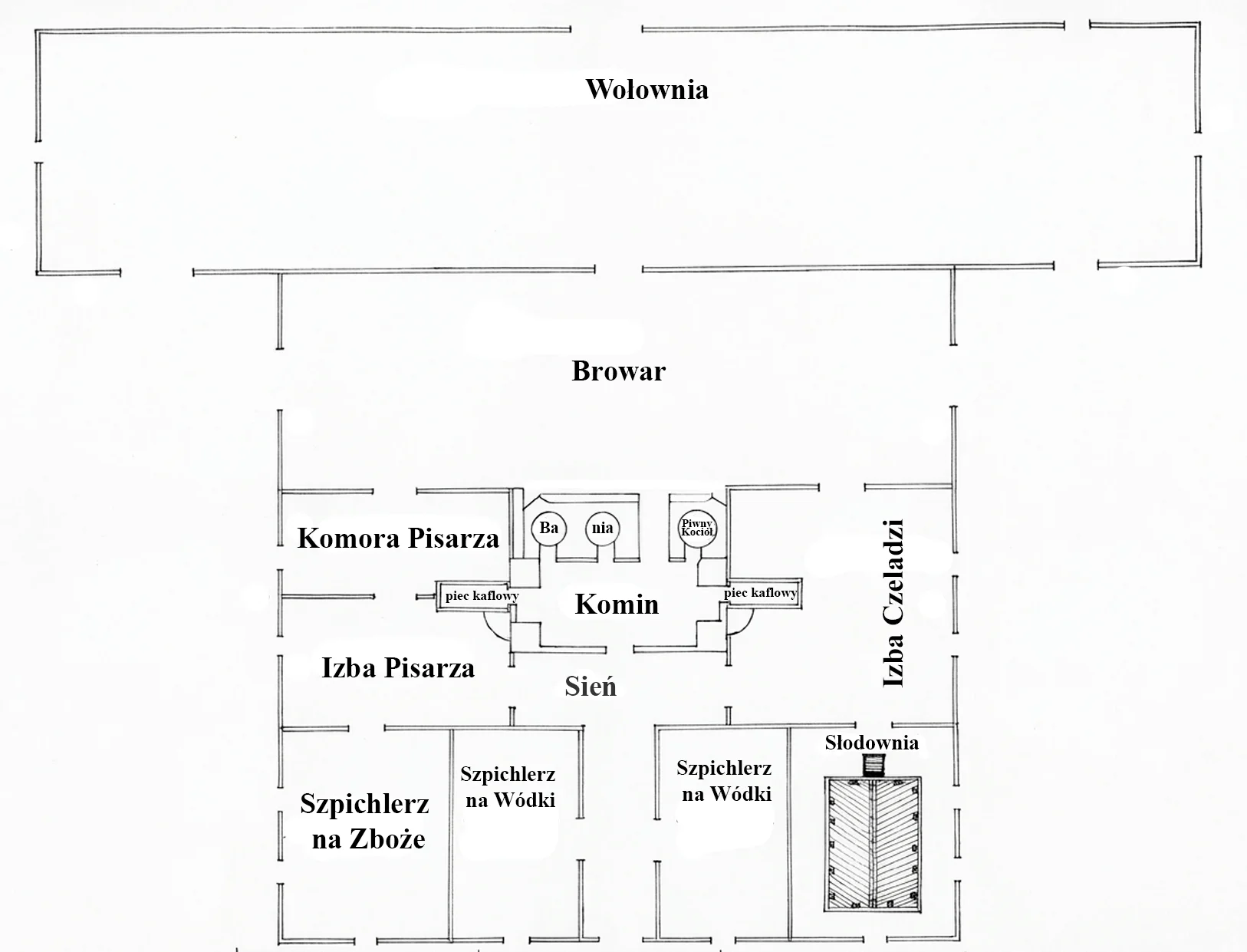
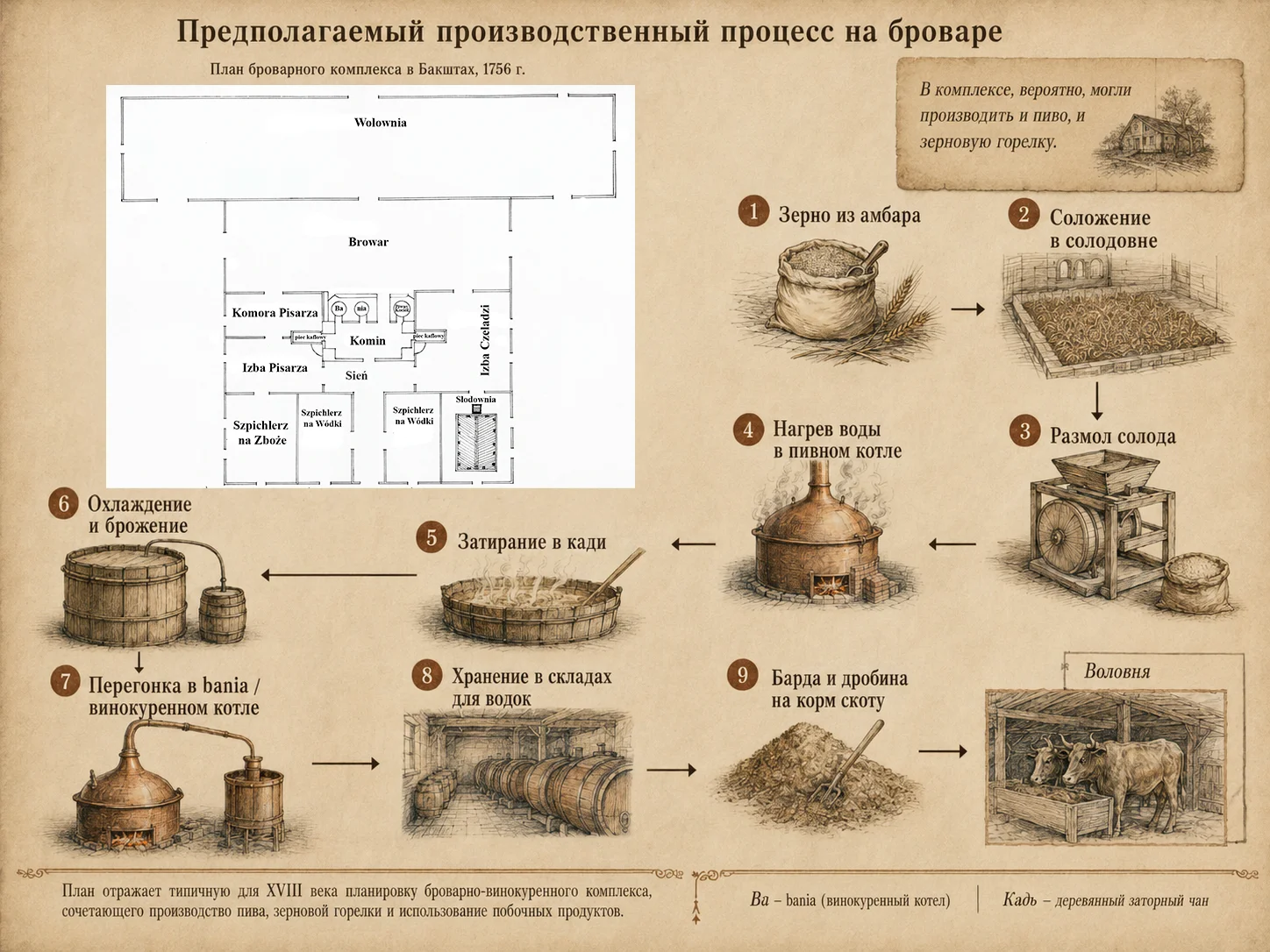
05 / Study fragment↗Plan of an ox stable and brewery at the Bakszty estate (?) in the Ashmyany district. 1756. Wróblewski Library of the Lithuanian Academy of Sciences.Browar: Brewery or Distillery? ↗
Book pages, paintings, maps, finds, and photographs from my experiments. All illustrations from the studies are gathered here: choose a story and open the full image.
In the collection:164images.
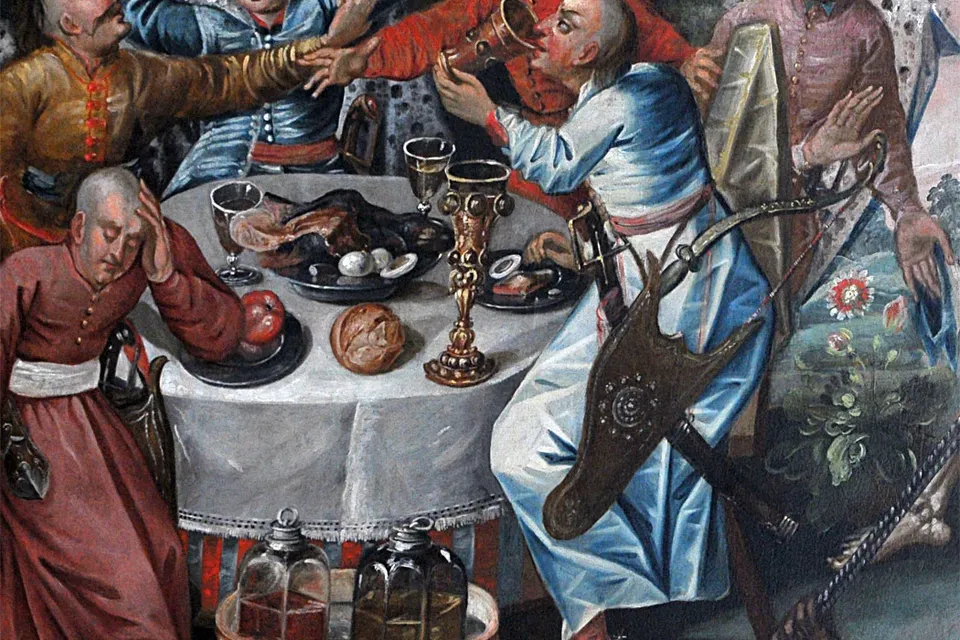
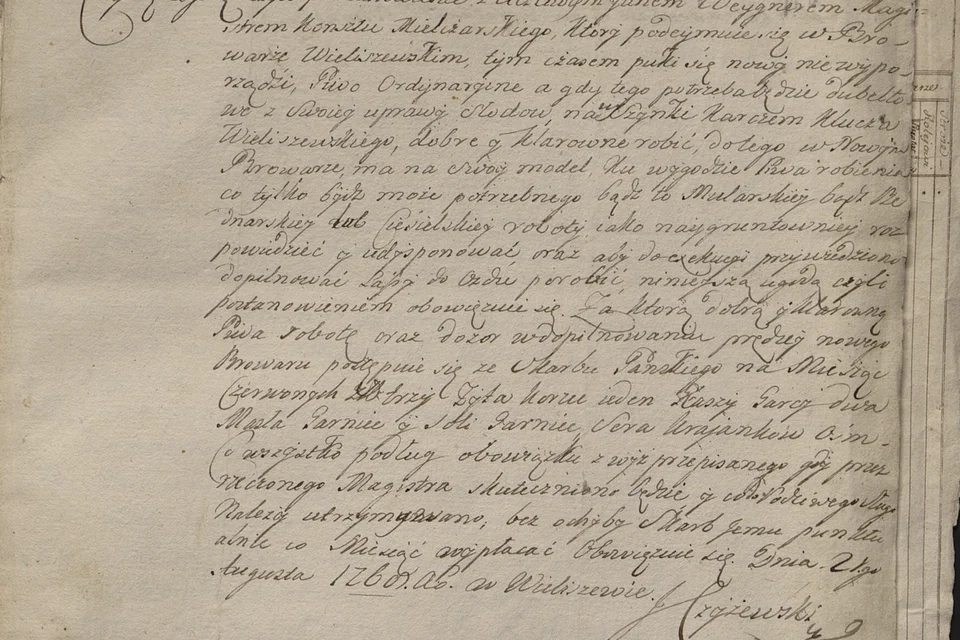
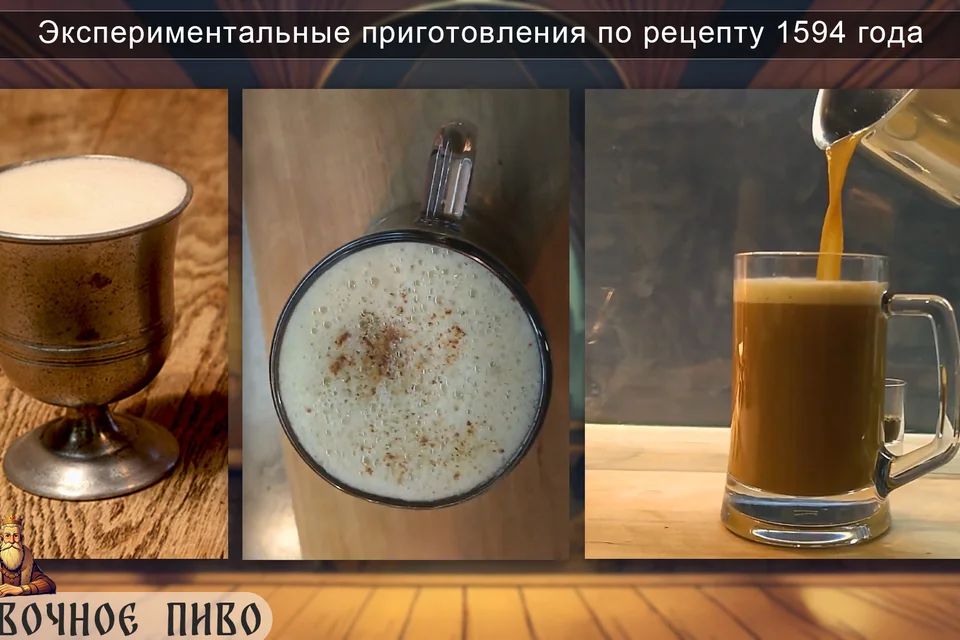
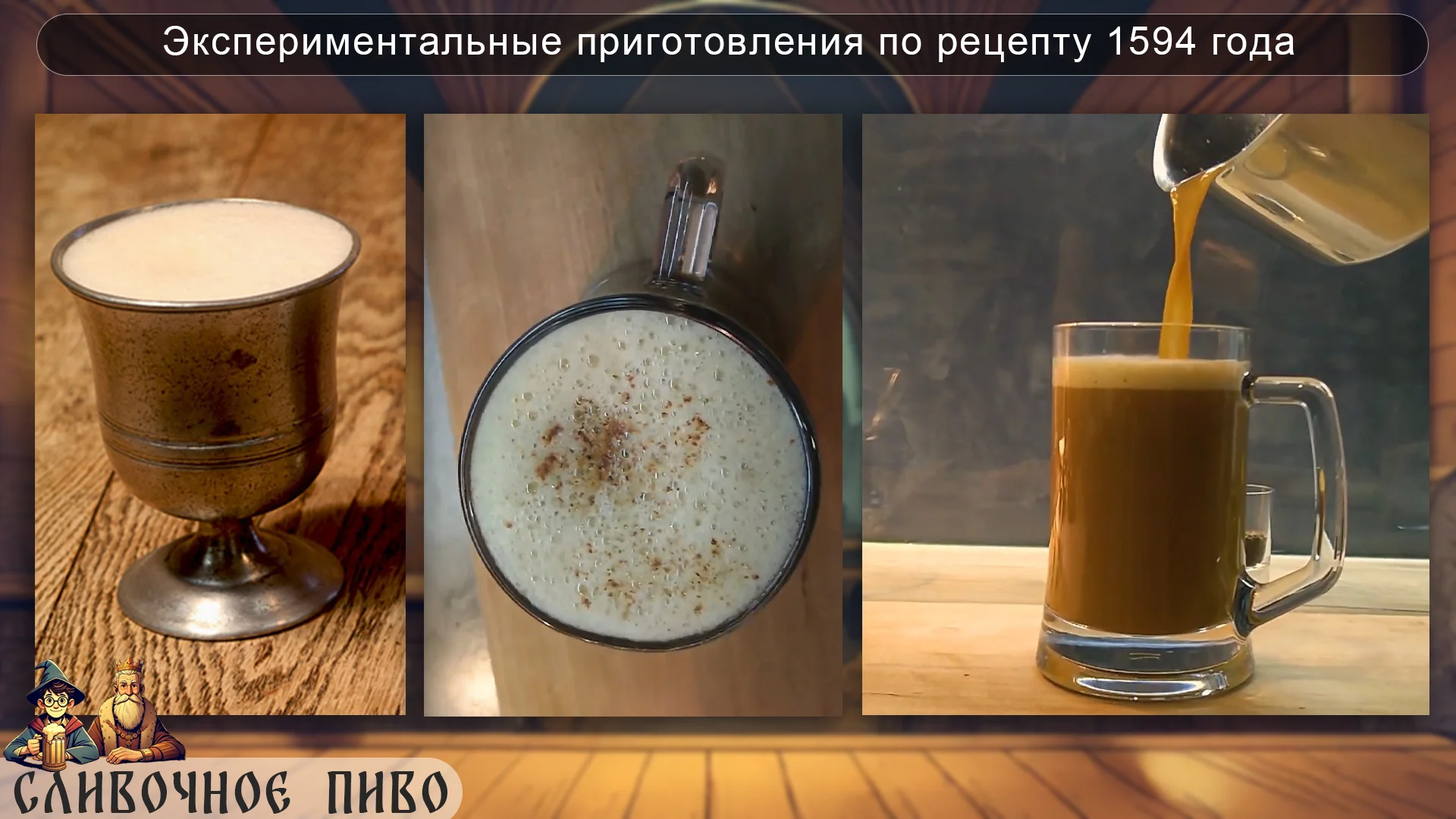
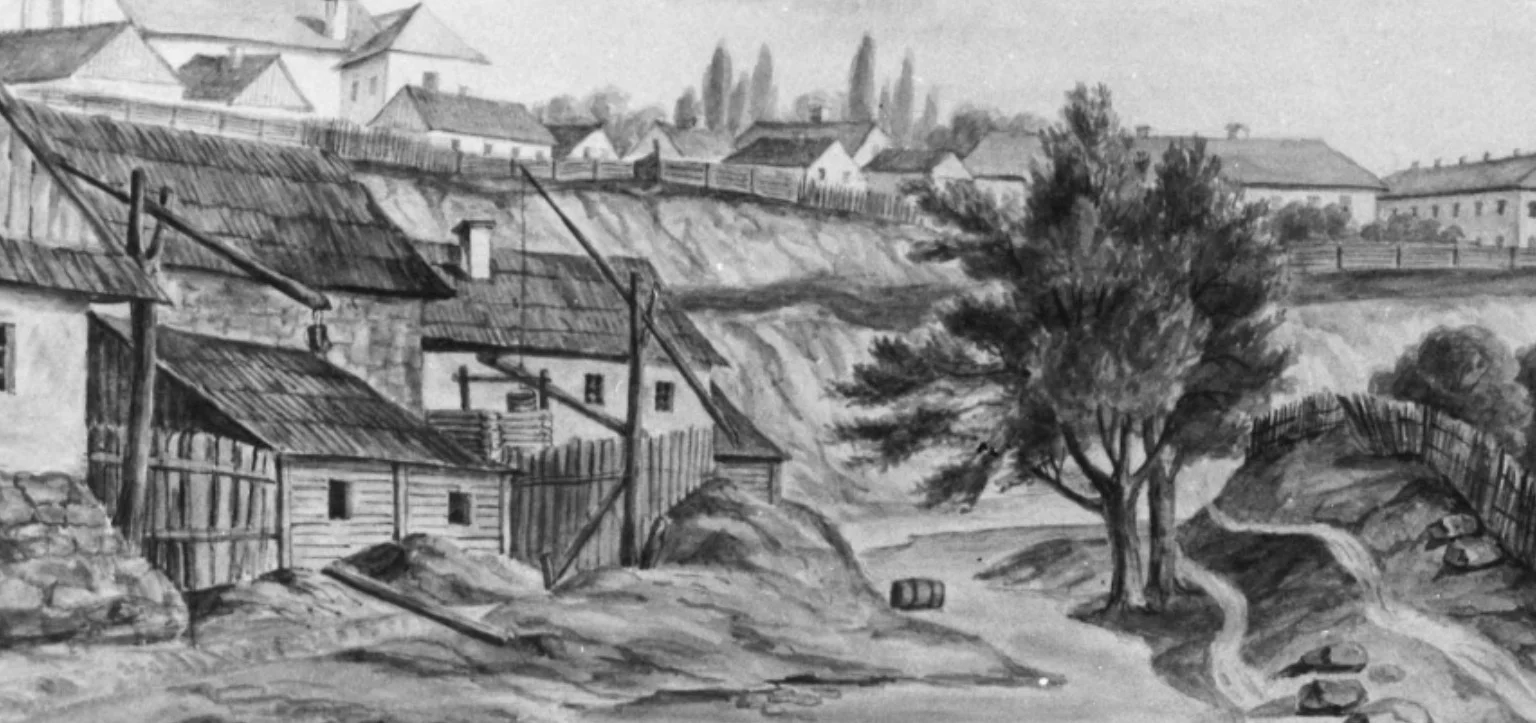
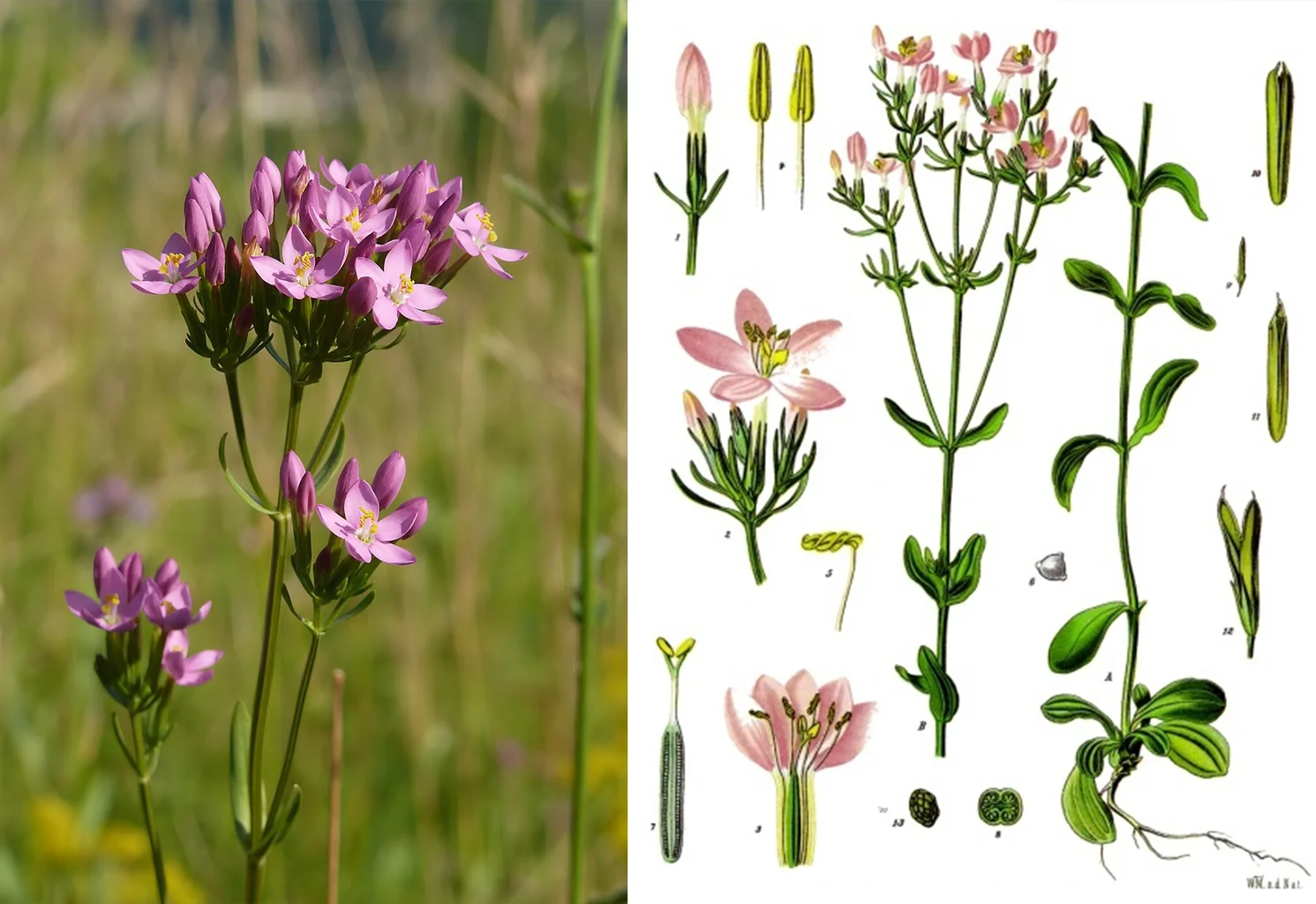
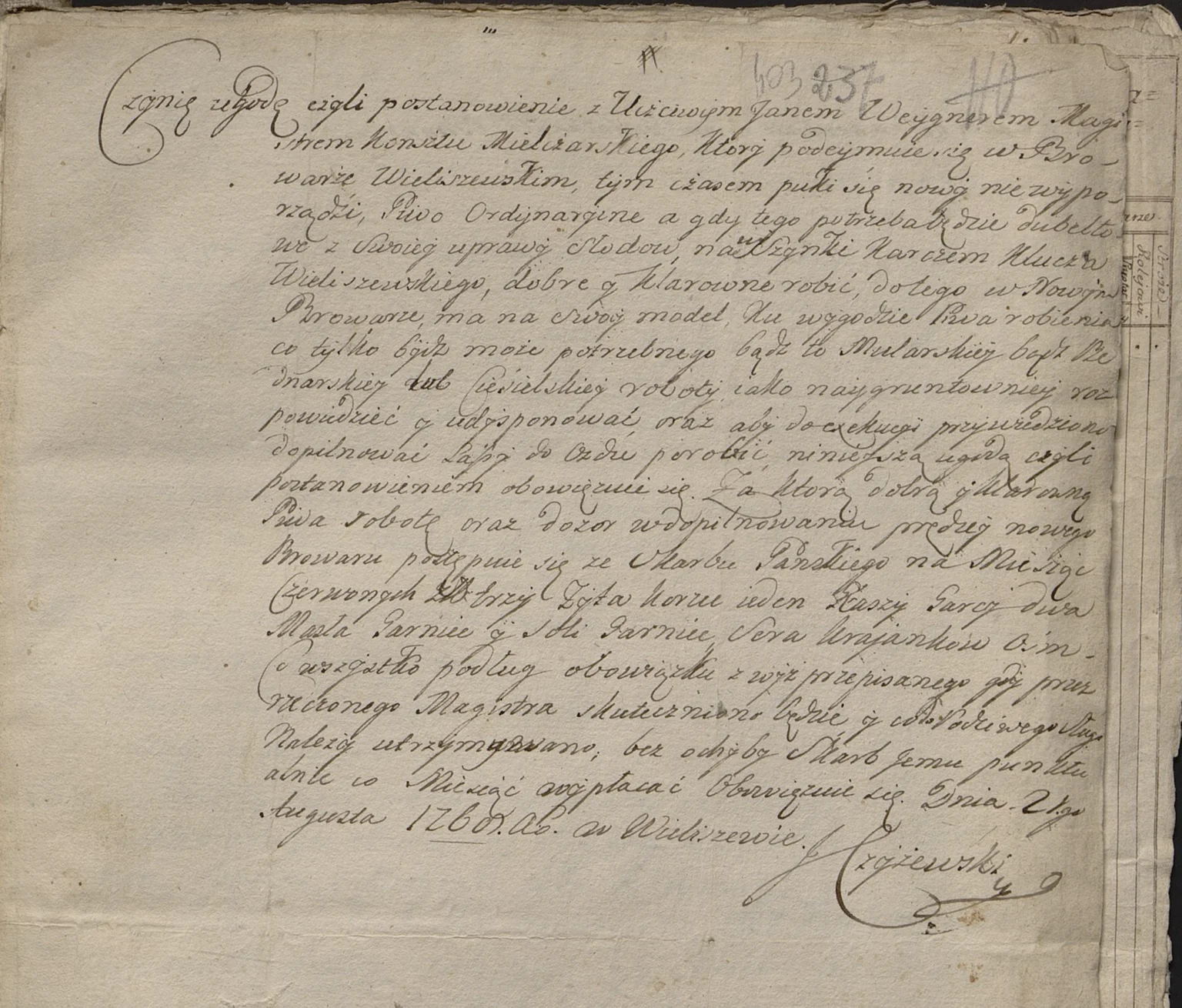
↗A noble banquet. Detail of Dzwon śmierci (The Bell of Death), unknown artist, mid-17th century. Basilica of the Holy Trinity, Krosno, Poland.Beer Glasses, Drinking Games and Politics during the Reign of Augustus III ↗↗Manuscript of “Заяц варыць піва” with drawings by Uladzimir Karatkevich. Kyiv, 1955.Hare Beer ↗↗The author of the research adding malt to the mash tun during the experimental reconstruction of historical Grodno Bock beer at Garadzenski Brovar brewery.Grodno Beer and Gabriel Rzączyński ↗↗Plan of an ox stable and brewery at the Bakszty estate (?) in the Ashmyany district. 1756. Wróblewski Library of the Lithuanian Academy of Sciences.Browar: Brewery or Distillery? ↗↗Kulawka with the Ostoja and Trąby coats of arms. Urzecze–Naliboki, last quarter of the 18th century. Source: Karolina Wolska, Szkło i Ceramika, no. 2, 2014.Beer Glasses, Drinking Games and Politics during the Reign of Augustus III ↗↗The Neman River and everyday life in sixteenth-century Grodno. Detail from a 1568 engraving by Matthias Zündt after Johann Adelhauser.Grodno Beer and Gabriel Rzączyński ↗↗Experimental preparations of Buttered Beere based on the 1594 recipe: three serving variants and visual outcomes.Gramatka and Butterbeer: What Do Sigismund I and Harry Potter Have in Common? ↗↗Reconstruction / illustrationVisualization of the plan of an ox stable and brewery at the Bakszty estate (?) in the Ashmyany district. 1756. Hypothetical reconstruction based on the archival plan.Browar: Brewery or Distillery? ↗↗Title page of De tuenda bona valetudine. Frankfurt, 1554. The volume includes Ioannes Placotomus’s De natura et viribus cerevisiarum et mulsarum.In the Sixteenth Century, Our Beer and Mead Were Praised in German Lands ↗↗The Great Synagogue area in Grodno. Drawing by Napoleon Orda, 1860s. The foreground shows structures possibly associated with the city's early water supply system.Grodno Beer and Gabriel Rzączyński ↗↗Common centaury (Centaurium erythraea): modern appearance of the plant and a botanical plate from Köhler’s Medizinal-Pflanzen, 1887.Hare Beer ↗↗Contract with brewer Jan Weygner for work in Wieliszew, 21 August 1760. Source: Archiwum Główne Akt Dawnych (AGAD).How Tyzenhauz Developed Brewing ↗↗Restored plan of an ox stable and brewery at the Bakszty estate (?) in the Ashmyany district. 1756. Reconstruction based on the archival original from the Wróblewski Library of the Lithuanian Academy of Sciences.Browar: Brewery or Distillery? ↗↗Reconstruction / illustrationHypothetical production process at the Bakszty brewery and distillery complex. Historical reconstruction based on the 1756 plan and seventeenth- and eighteenth-century sources.Browar: Brewery or Distillery? ↗↗“Brewing” (Zythopoeia. Die Bierbraw.), Jan Amos Comenius, Orbis Sensualium Pictus, Nuremberg, 1658.Browar: Brewery or Distillery? ↗Appears in 2 studies
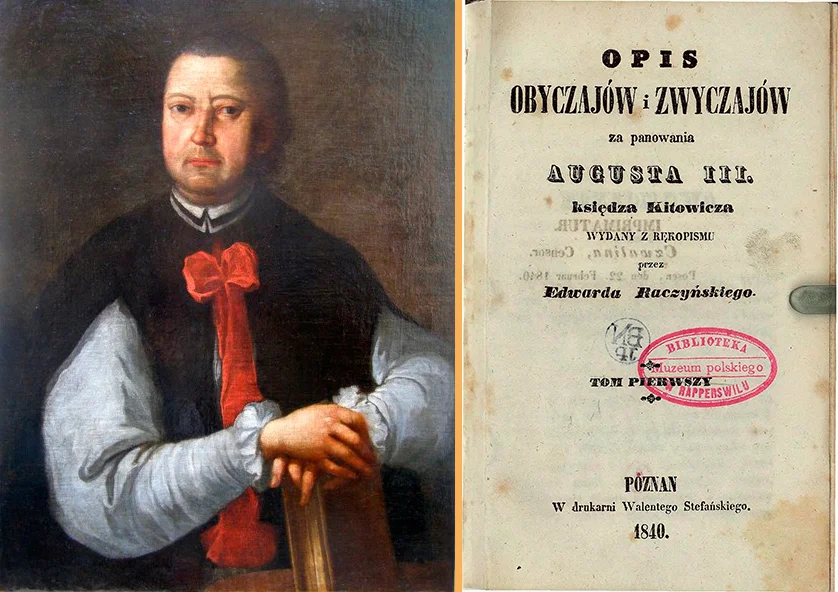
↗Left: Jędrzej Kitowicz (1728–1804). Right: title page of the first volume of «Opis obyczajów i zwyczajów za panowania Augusta III» (Description of Customs and Habits during the Reign of Augustus III), Poznań, 1840.Beer Glasses, Drinking Games and Politics during the Reign of Augustus III ↗Appears in 2 studies
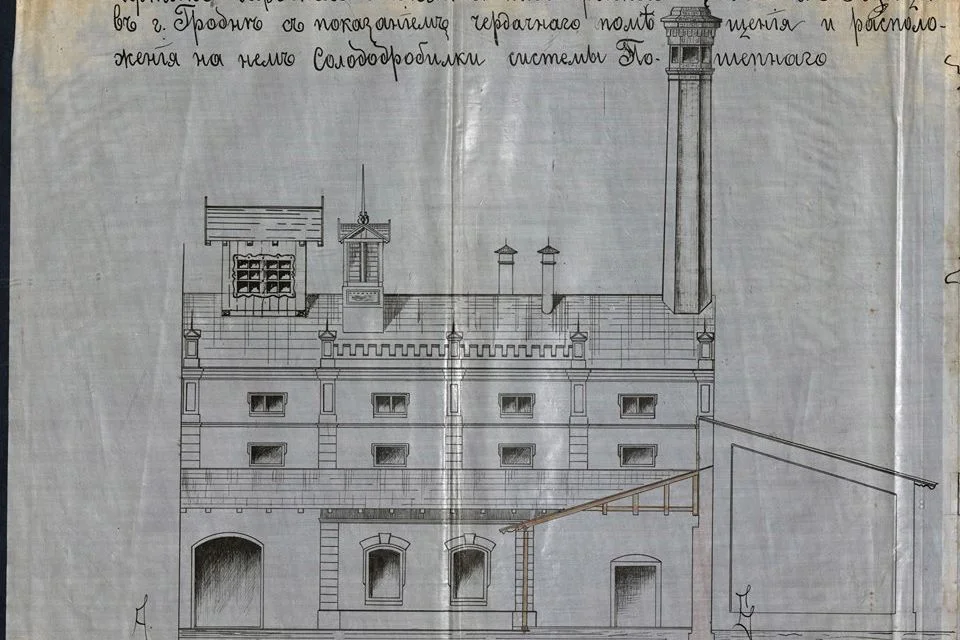
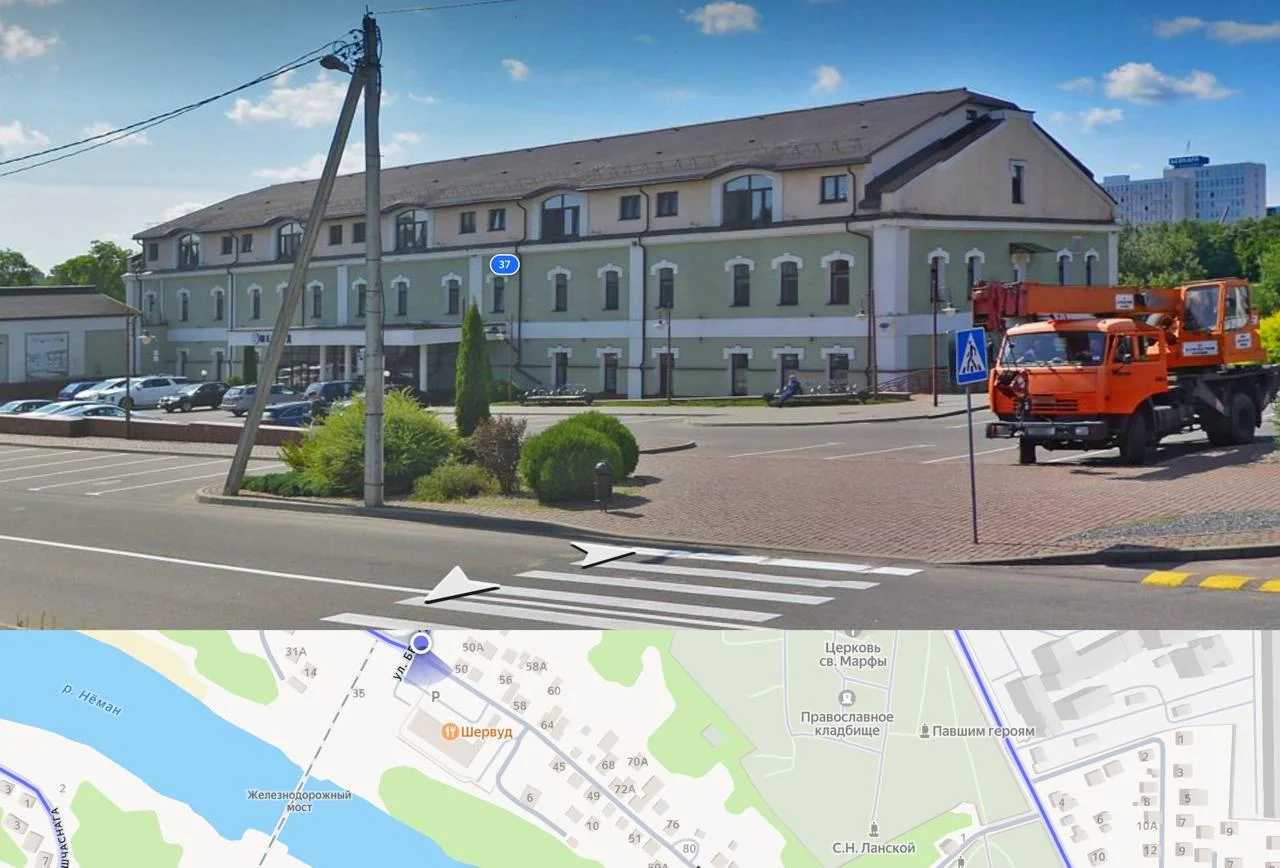
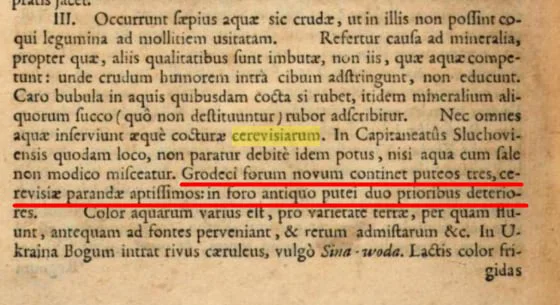
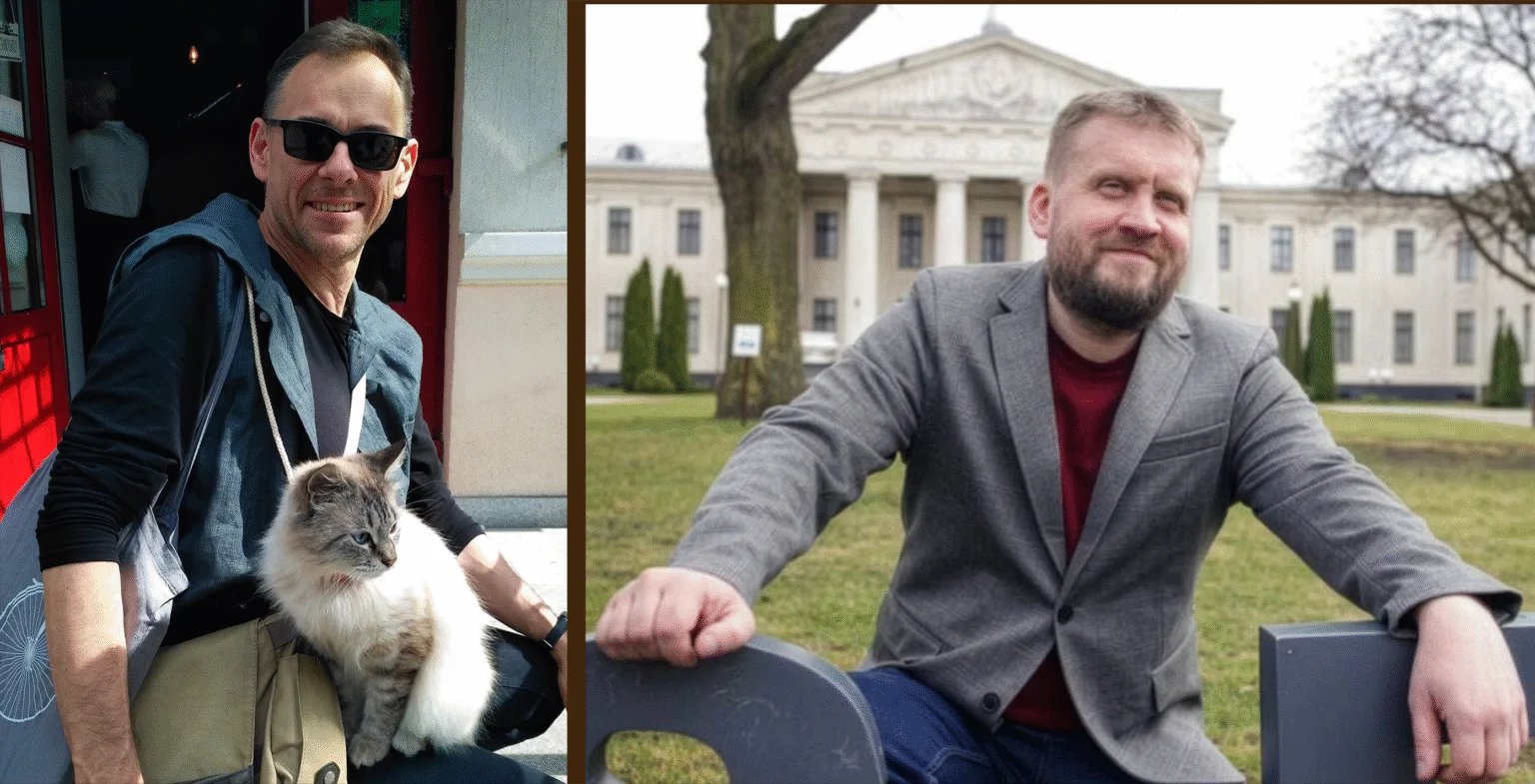
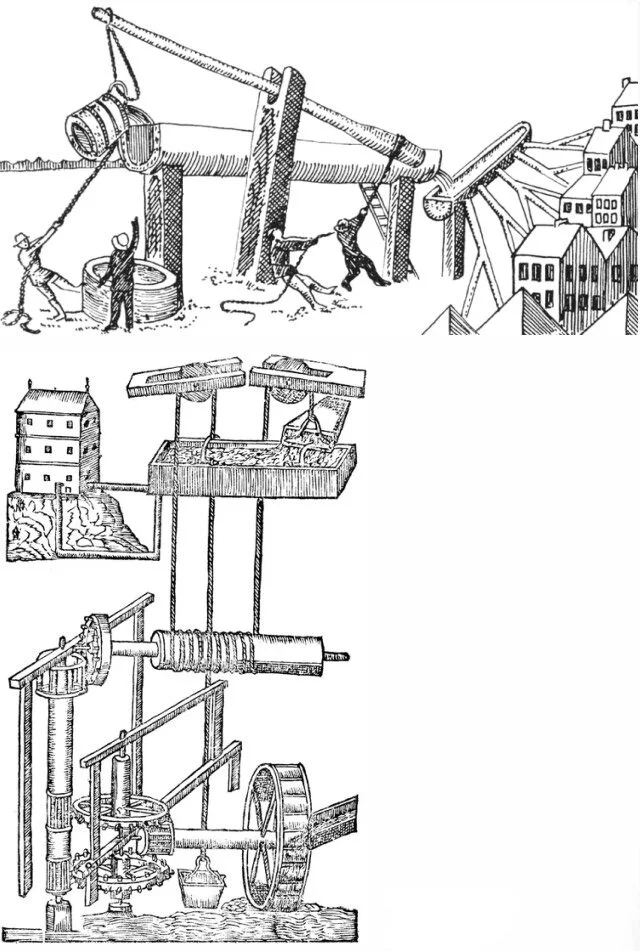
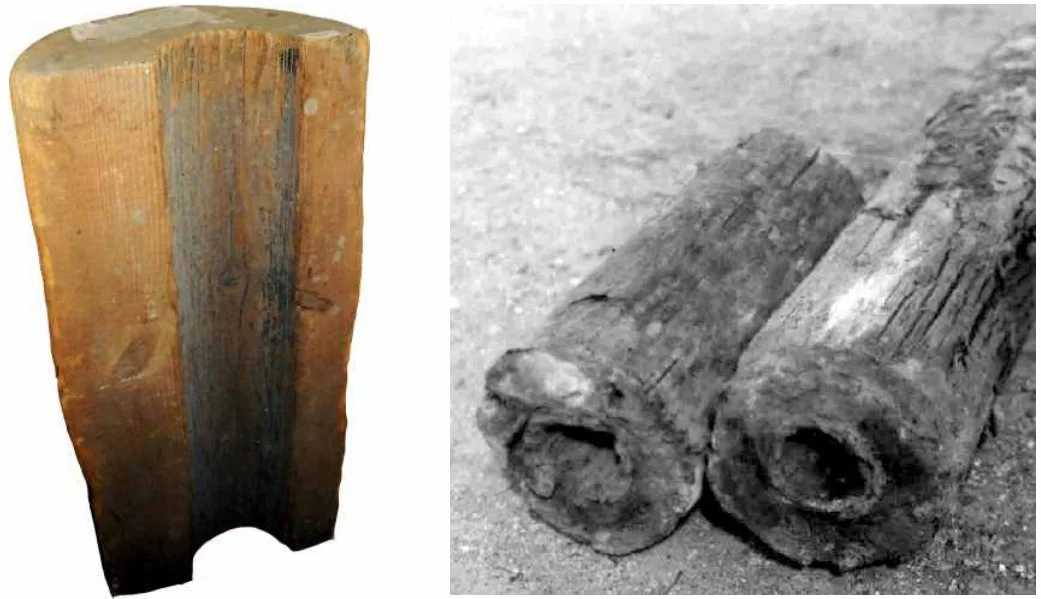
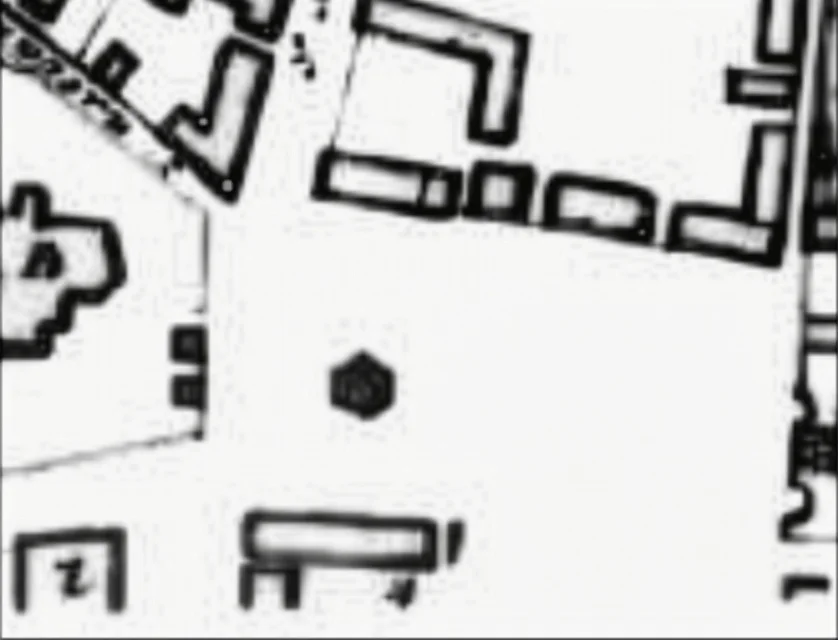
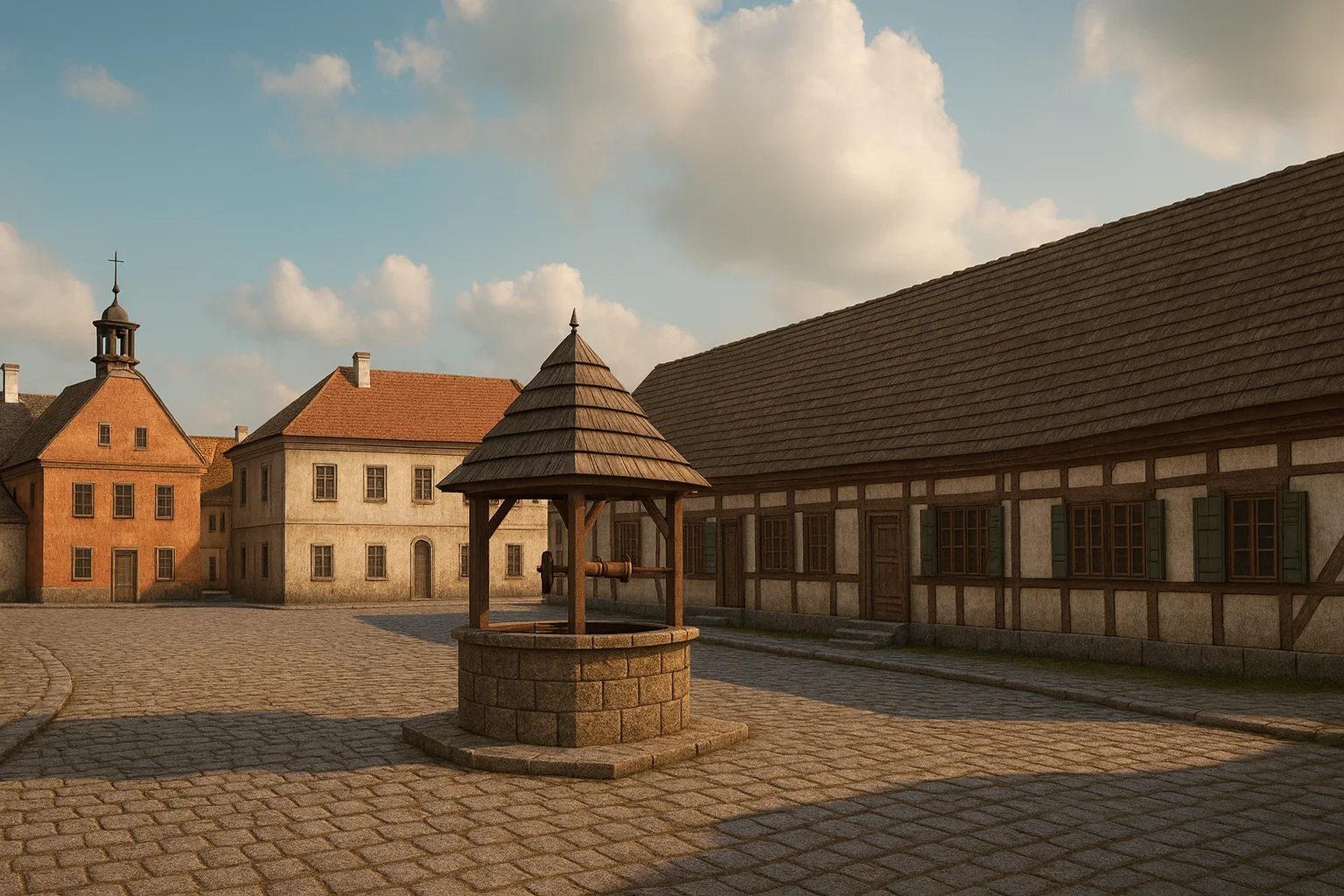
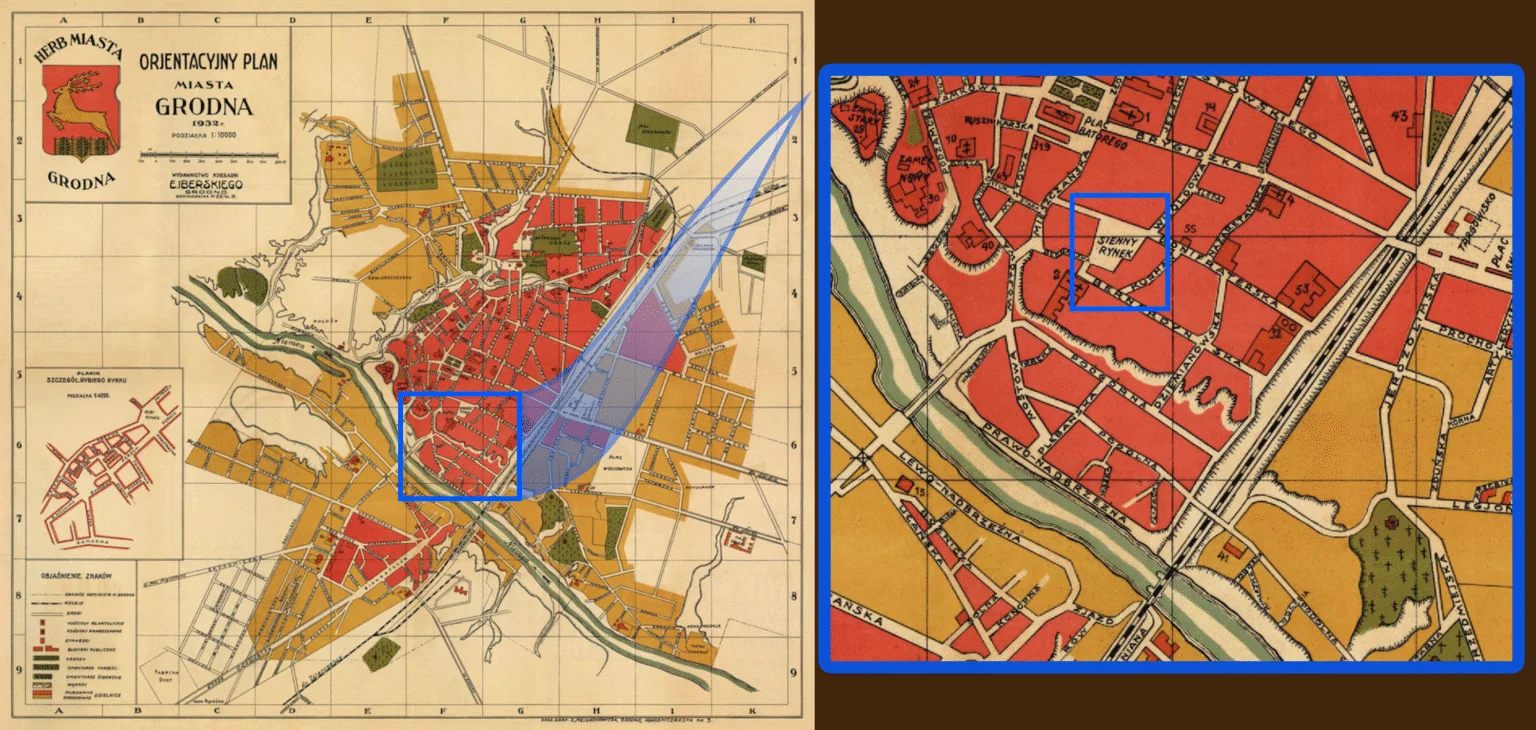
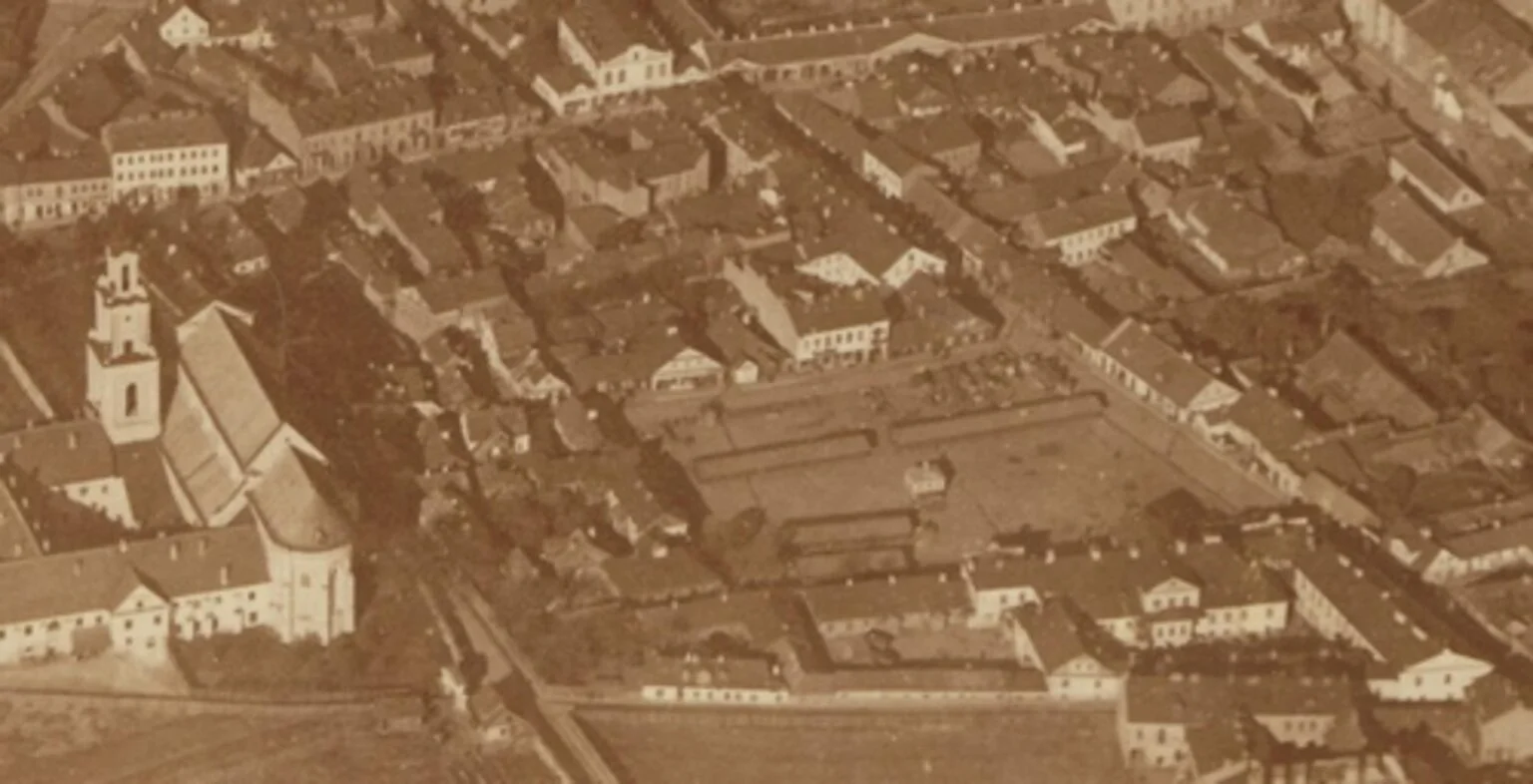
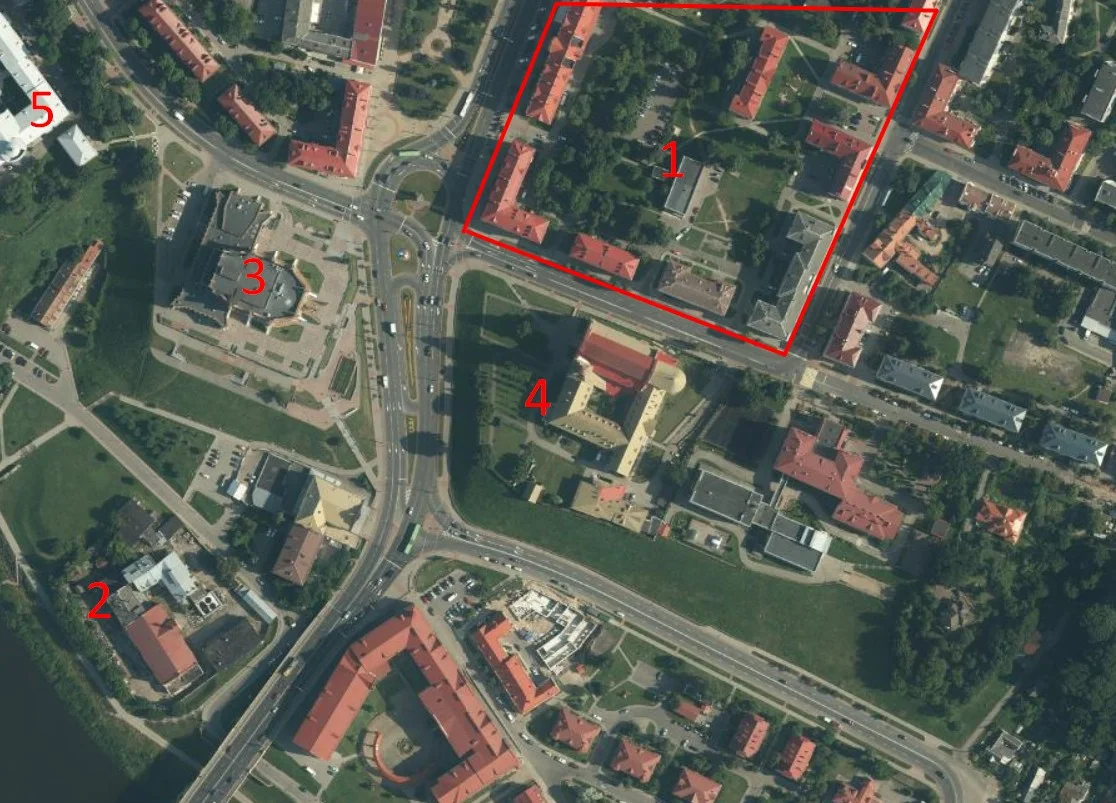
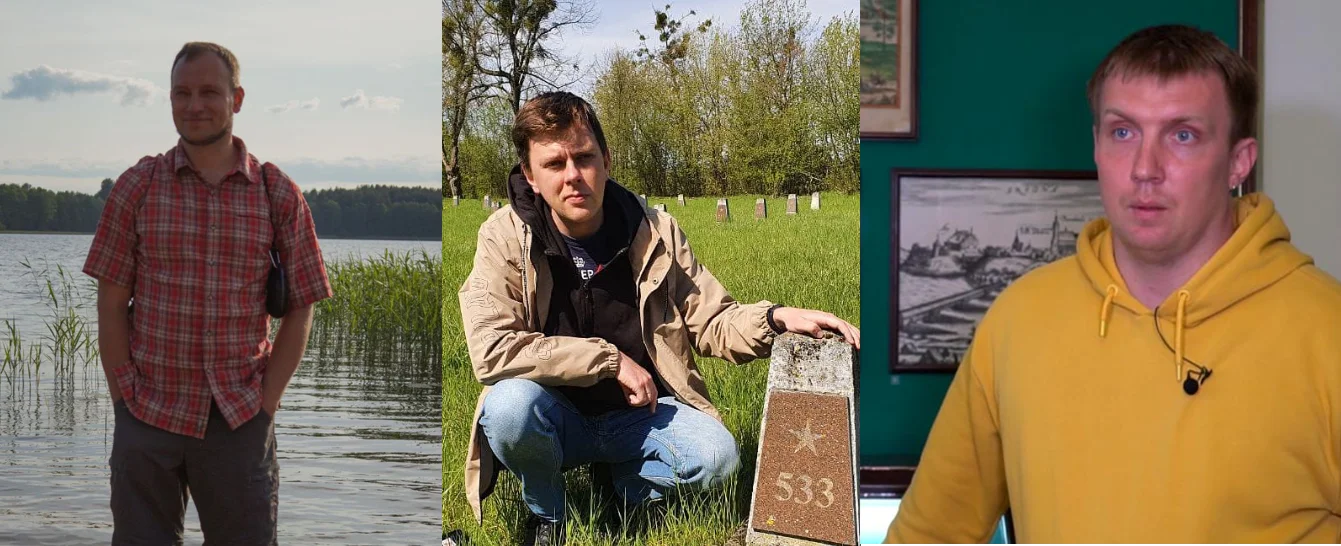
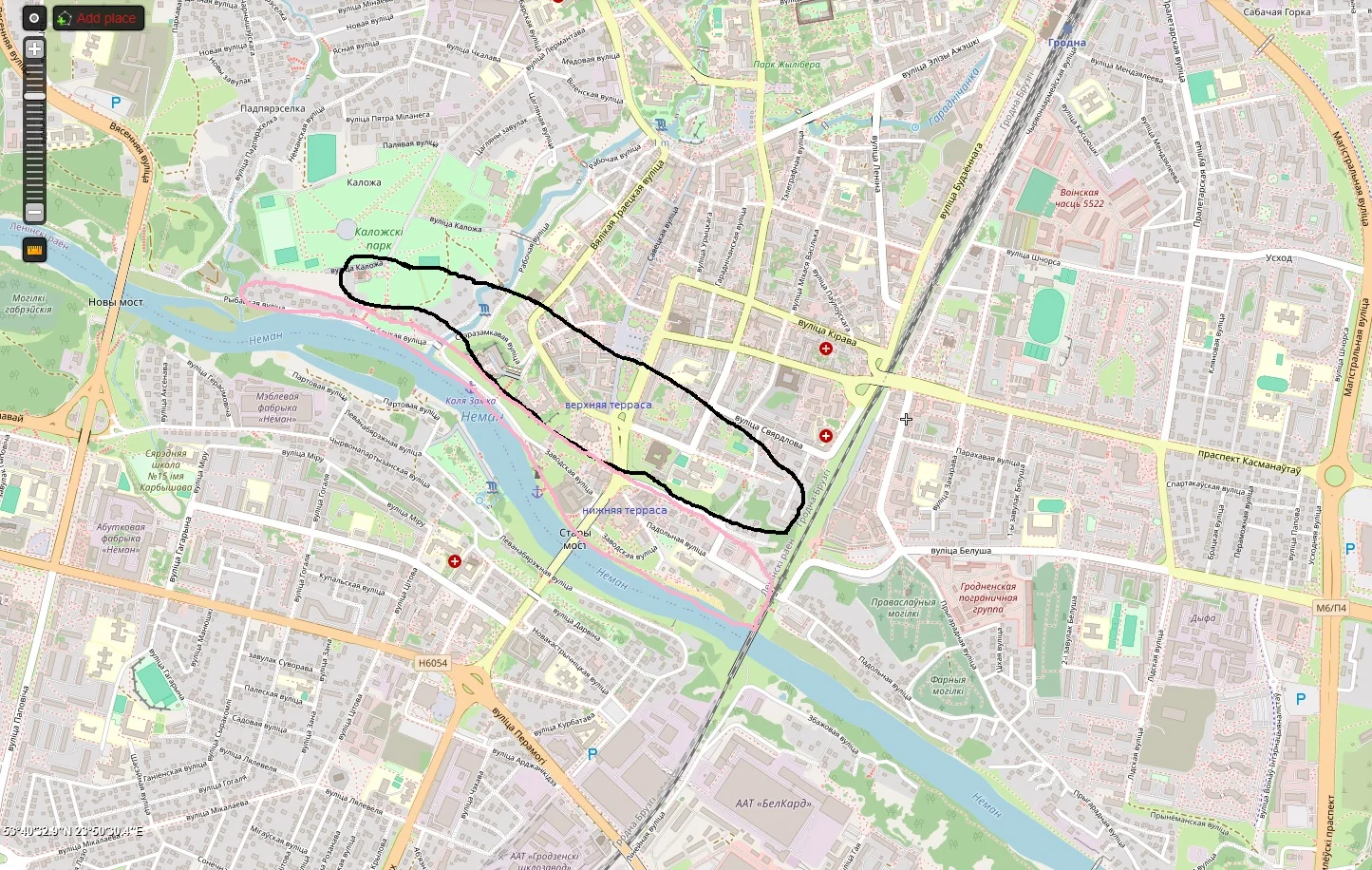
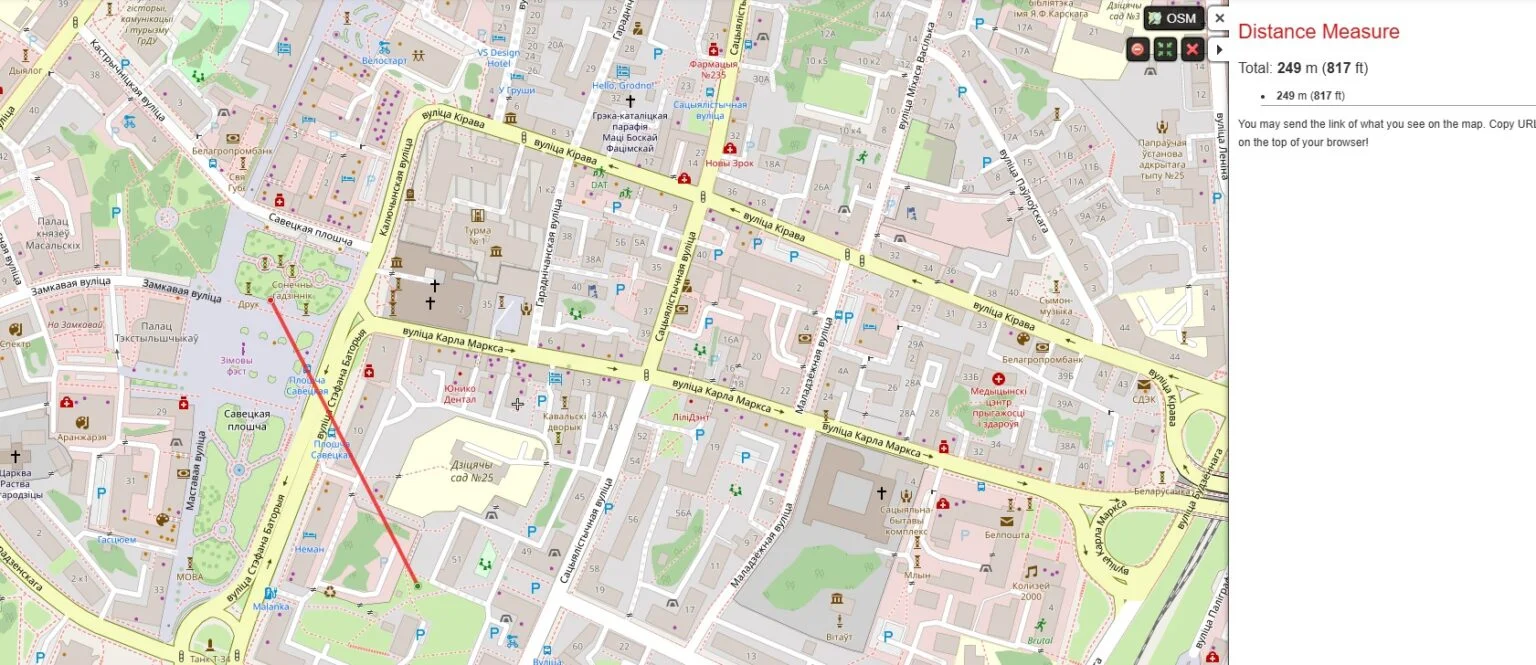
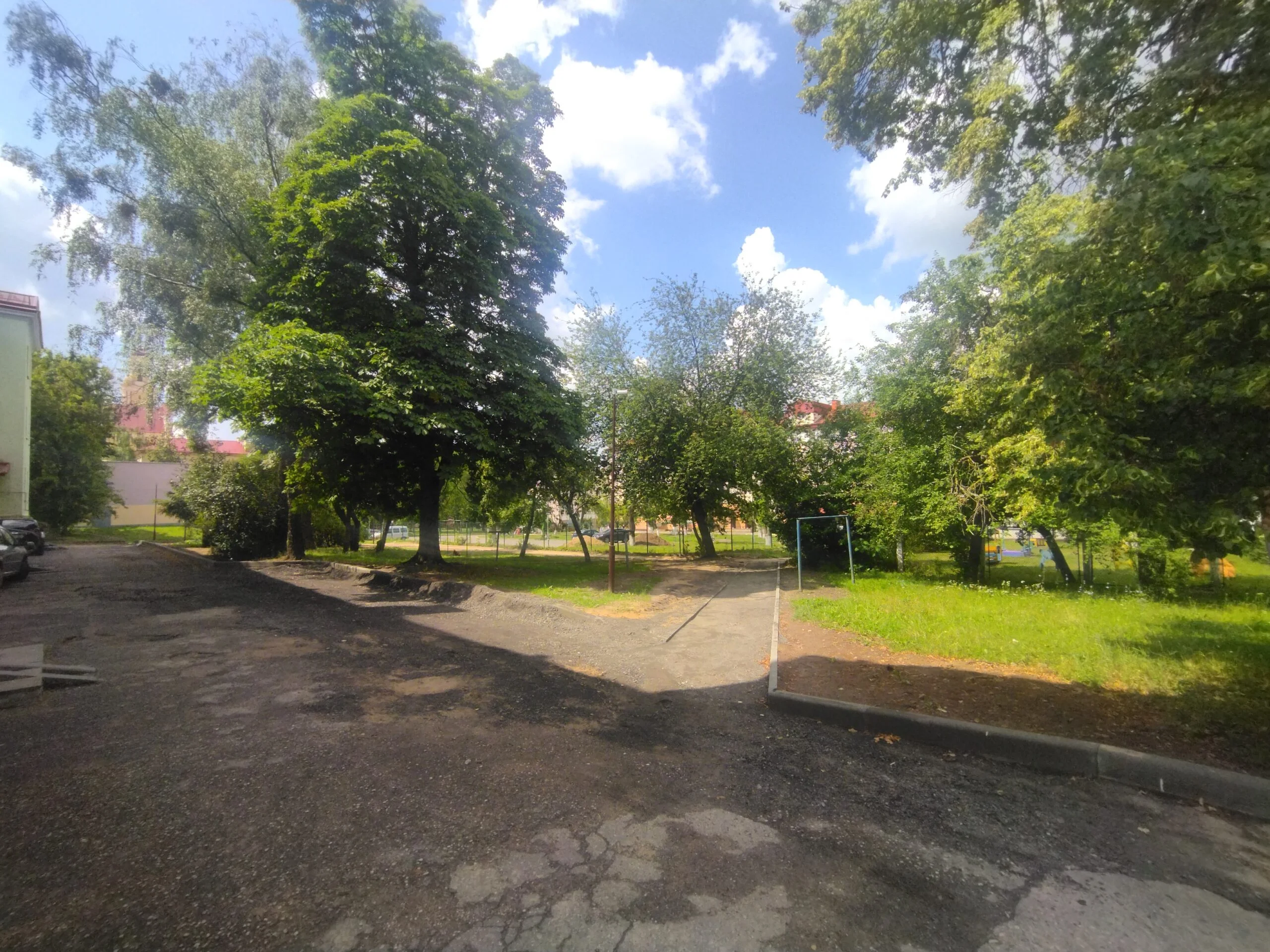
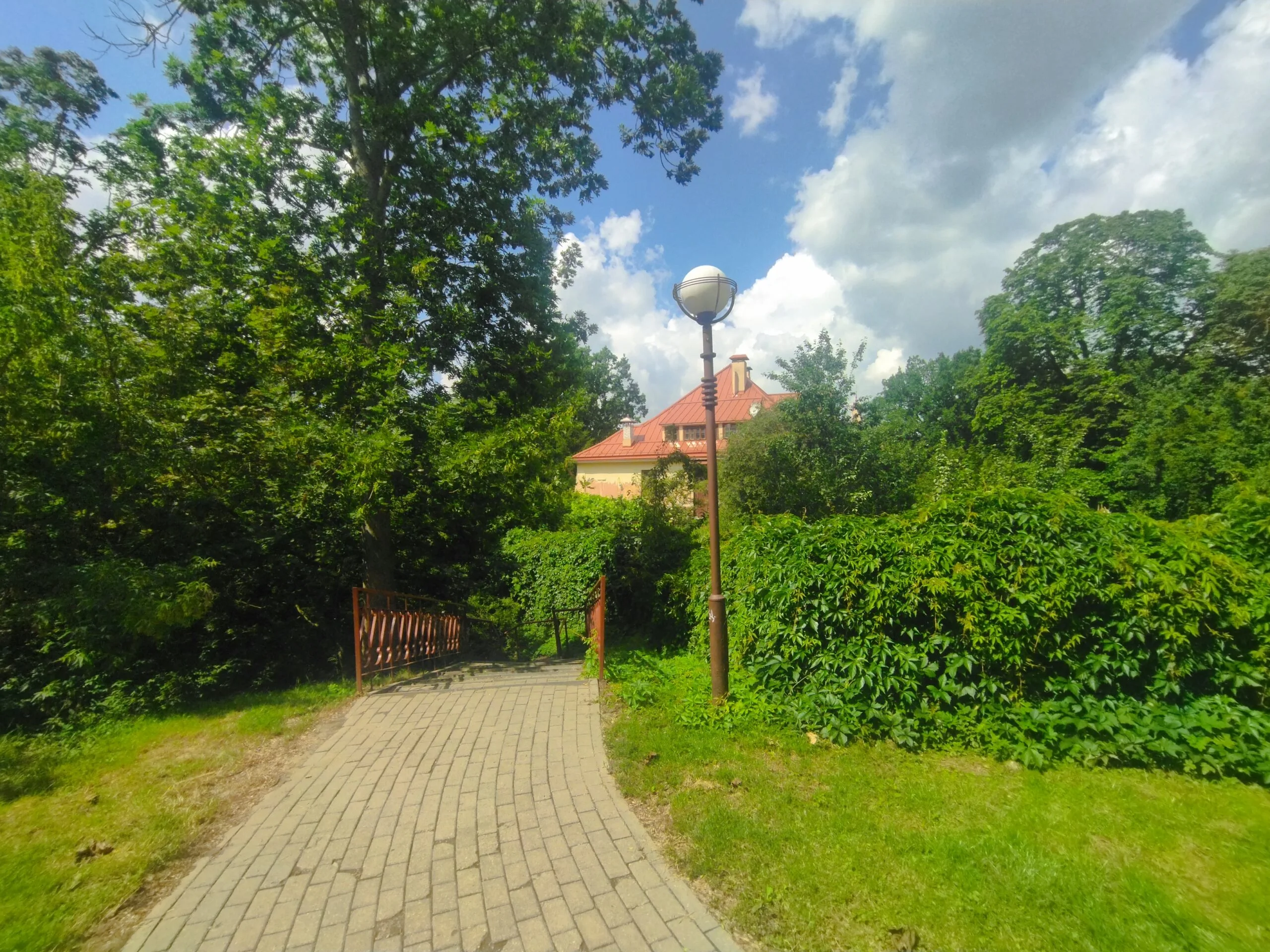
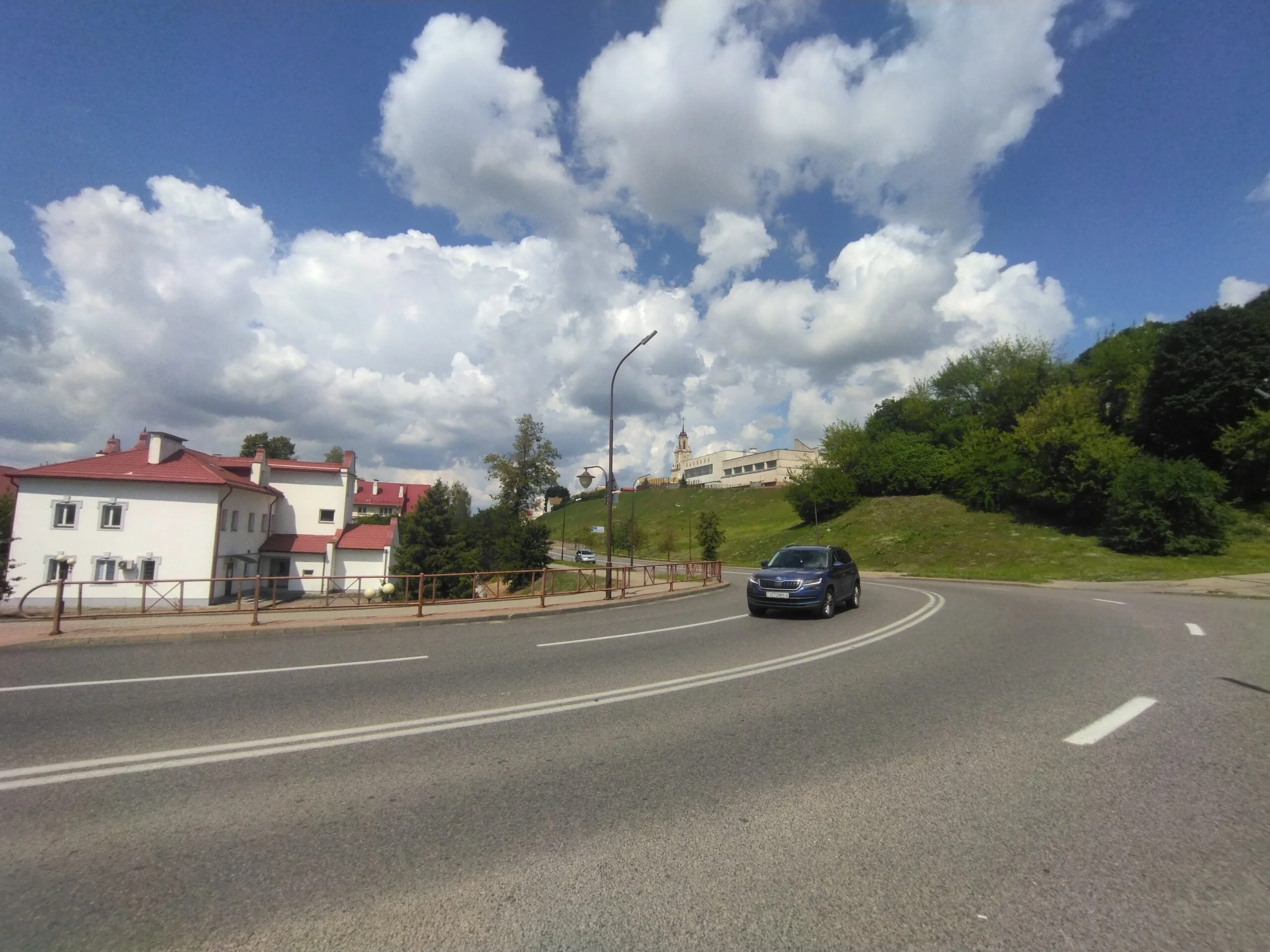
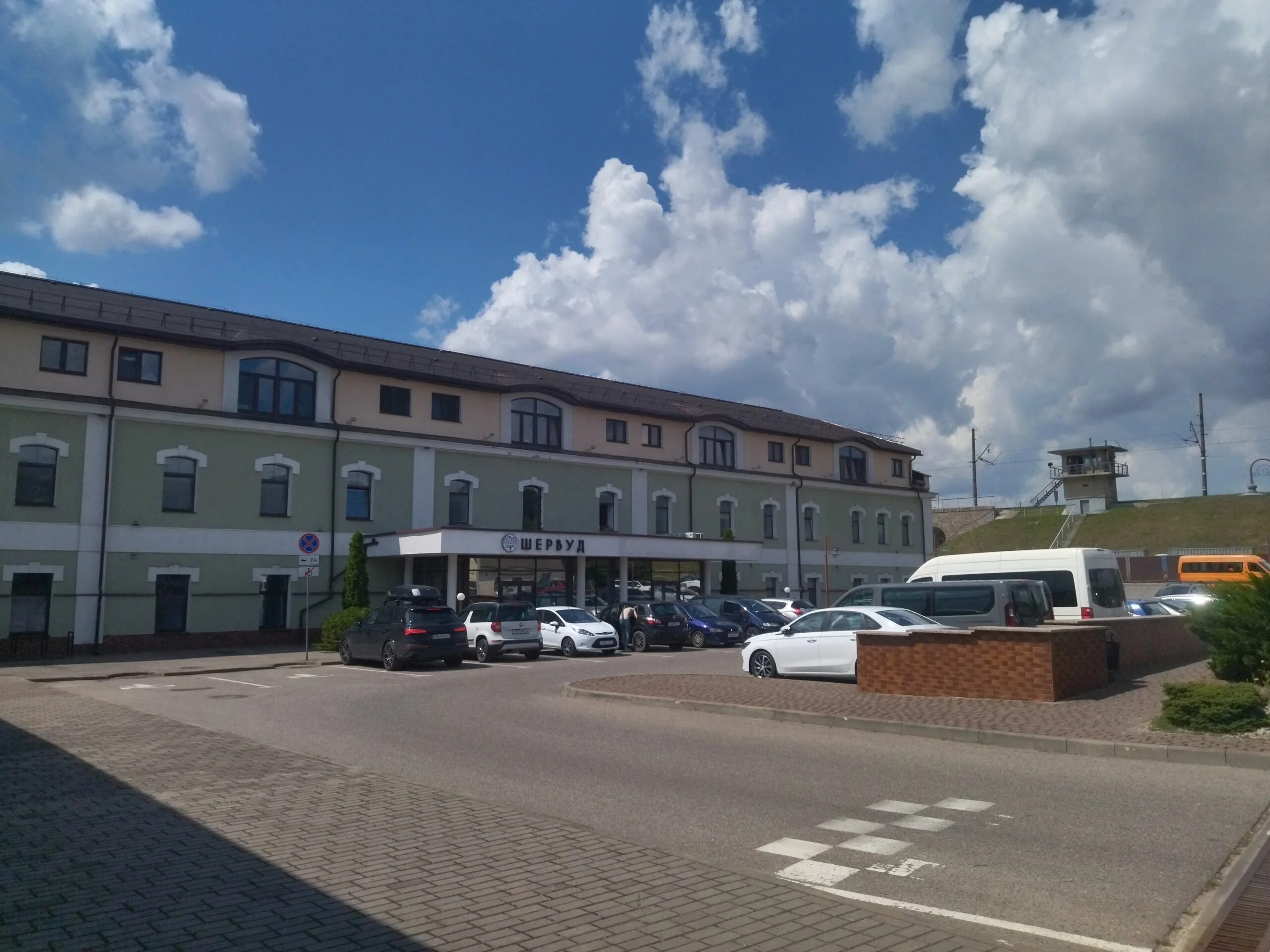
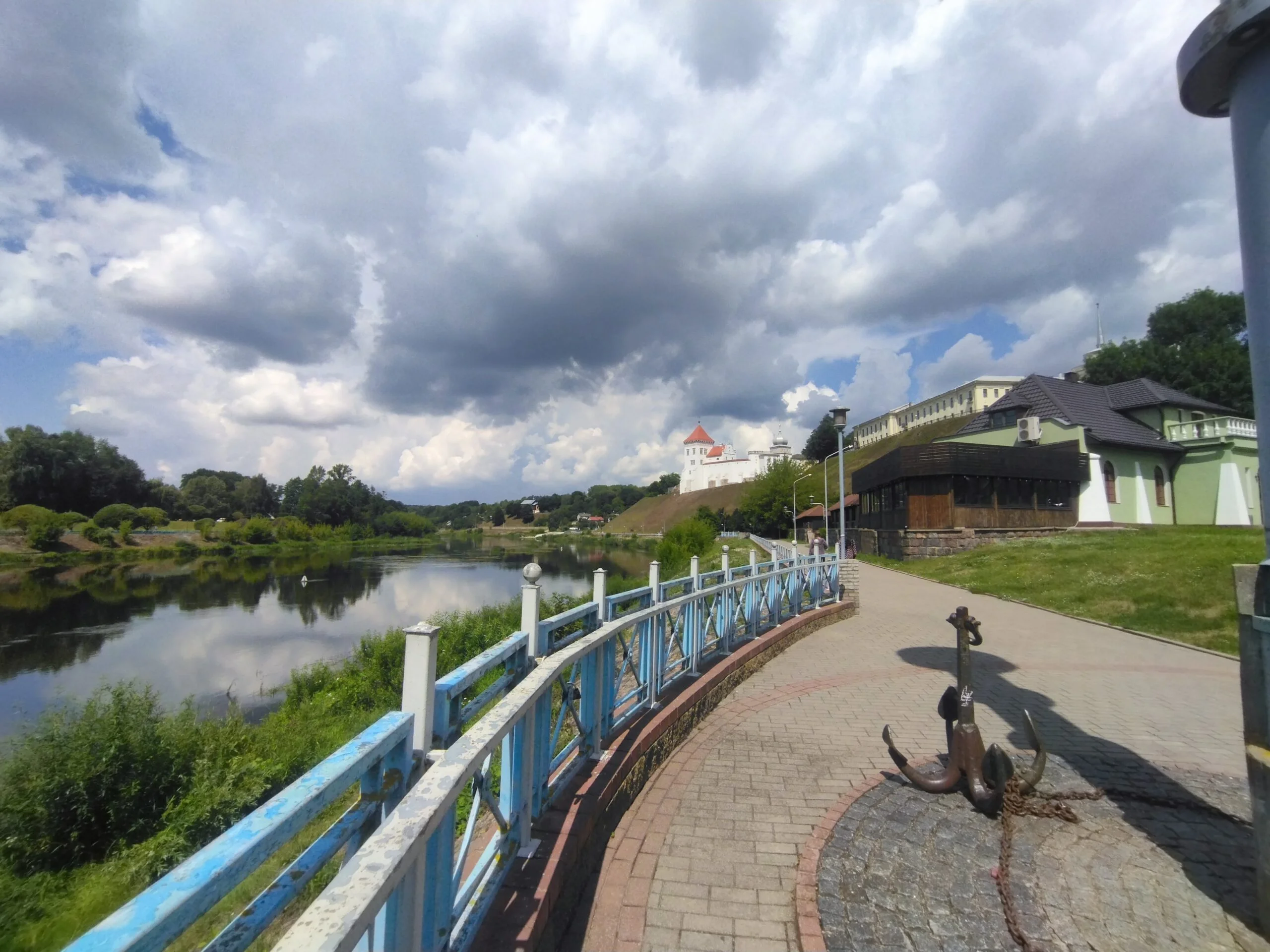
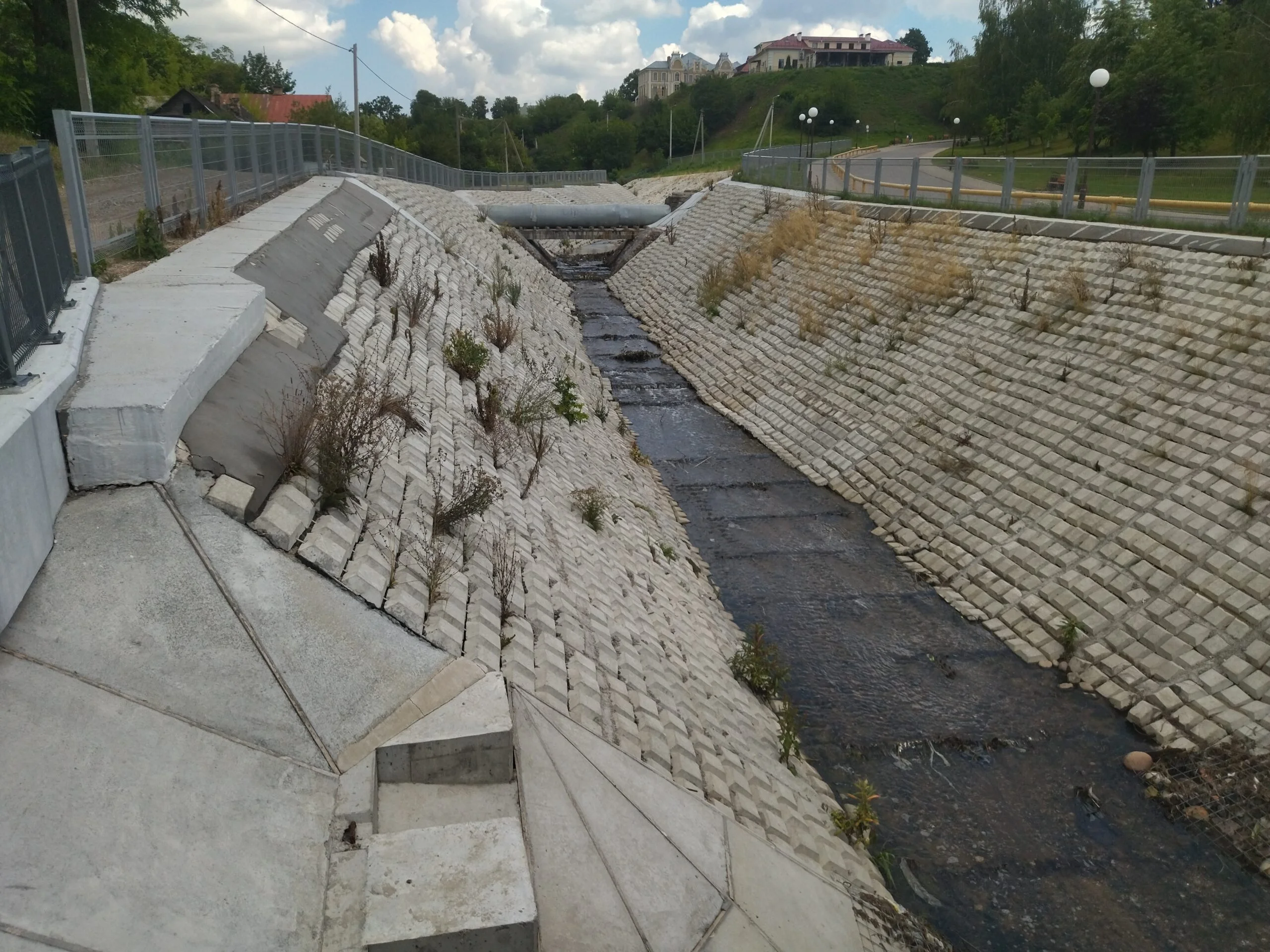
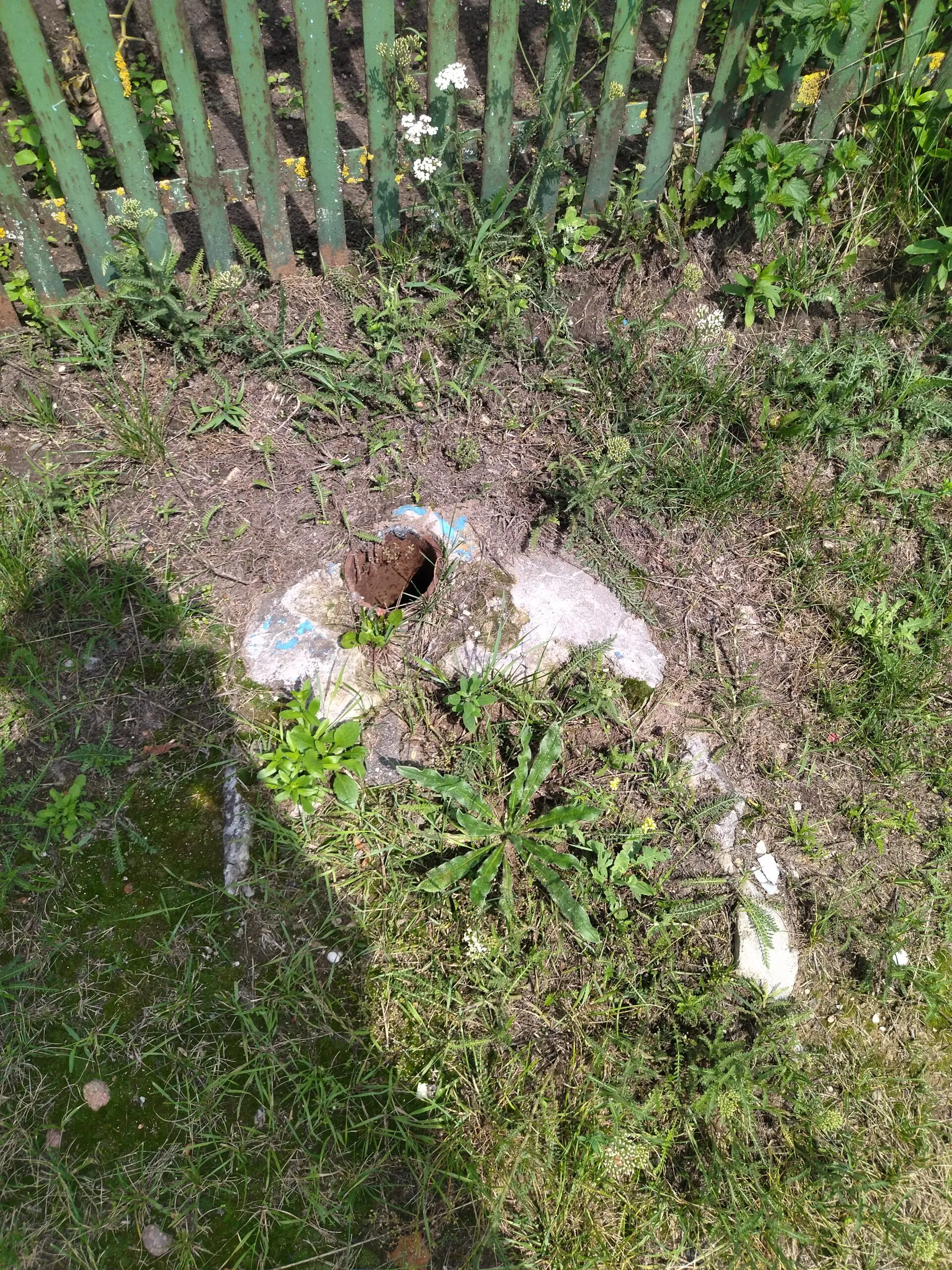
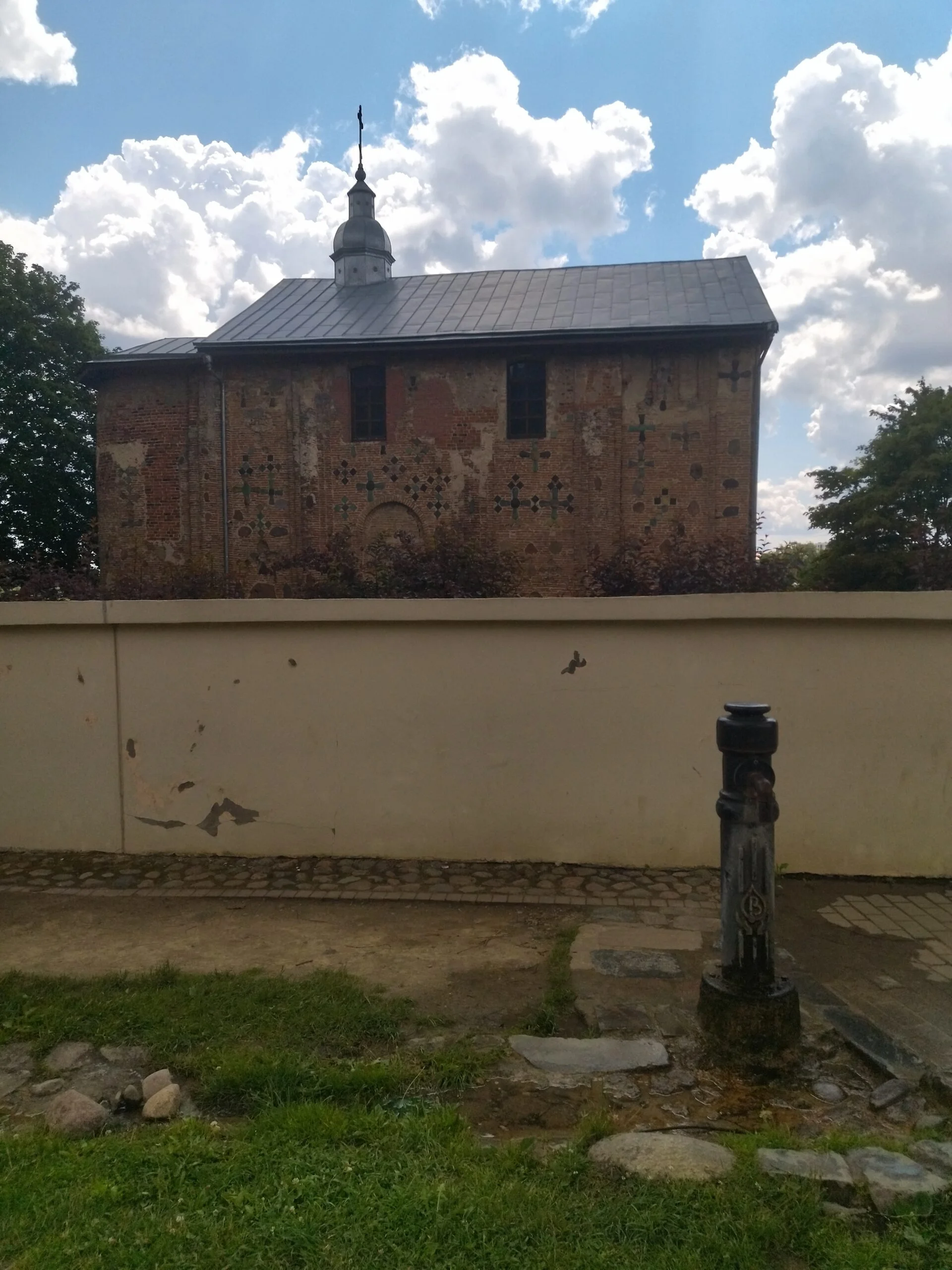
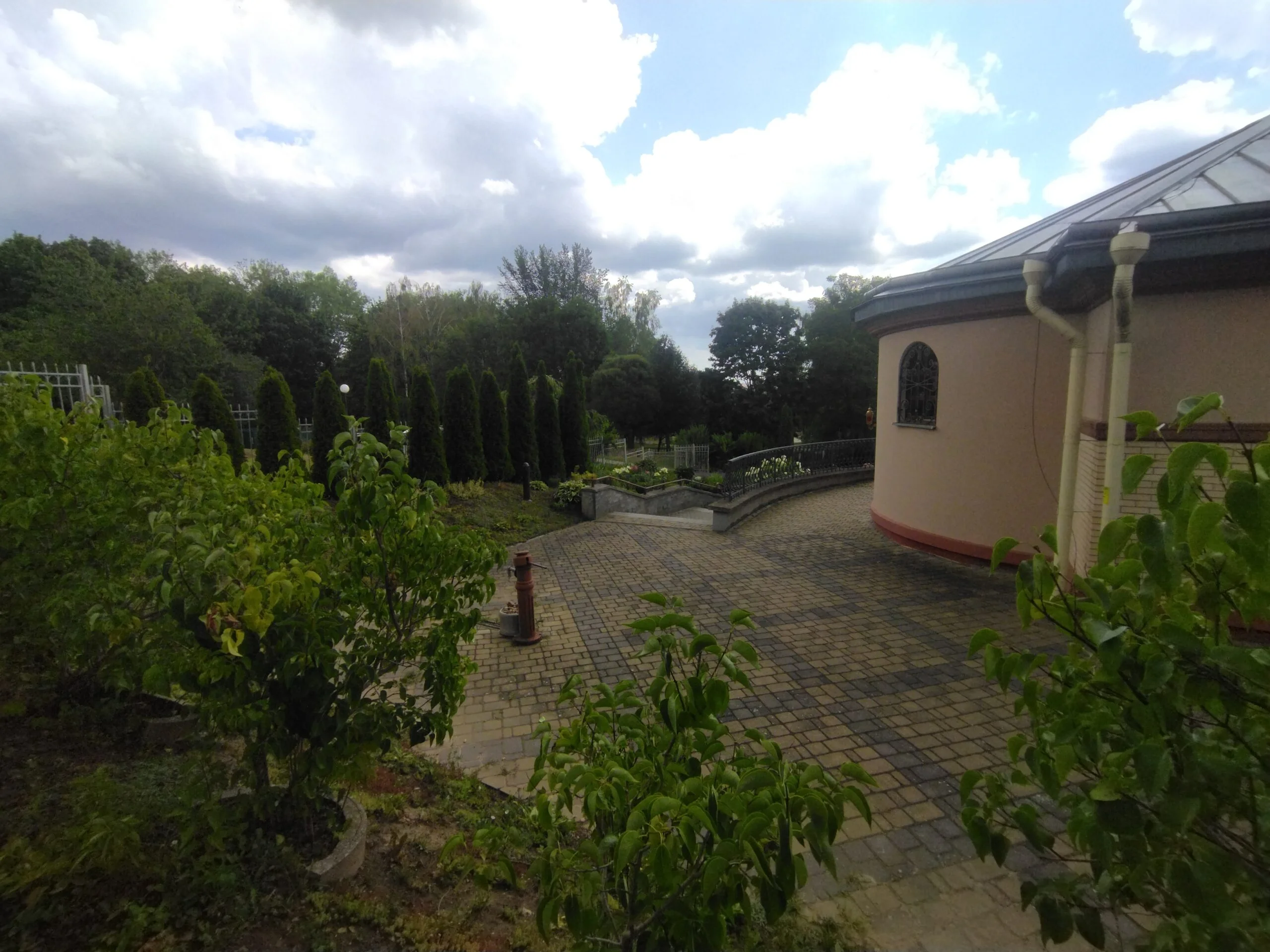
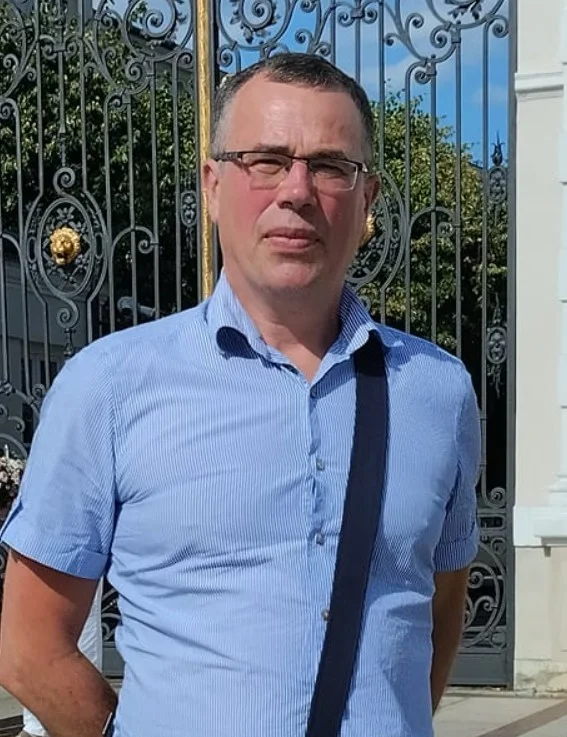
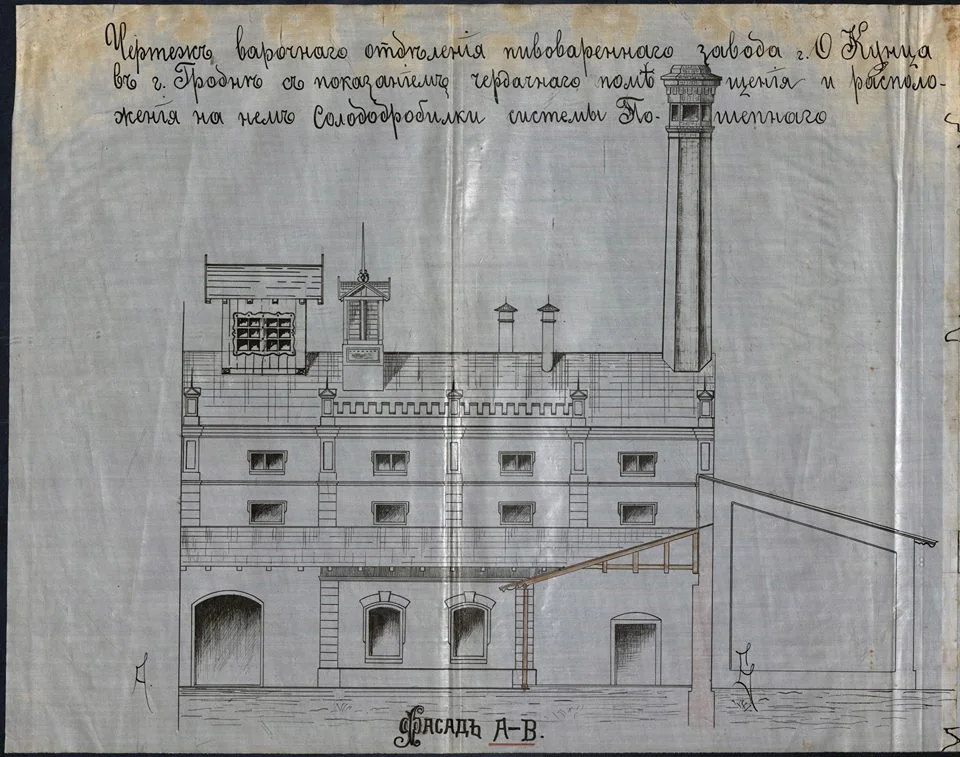
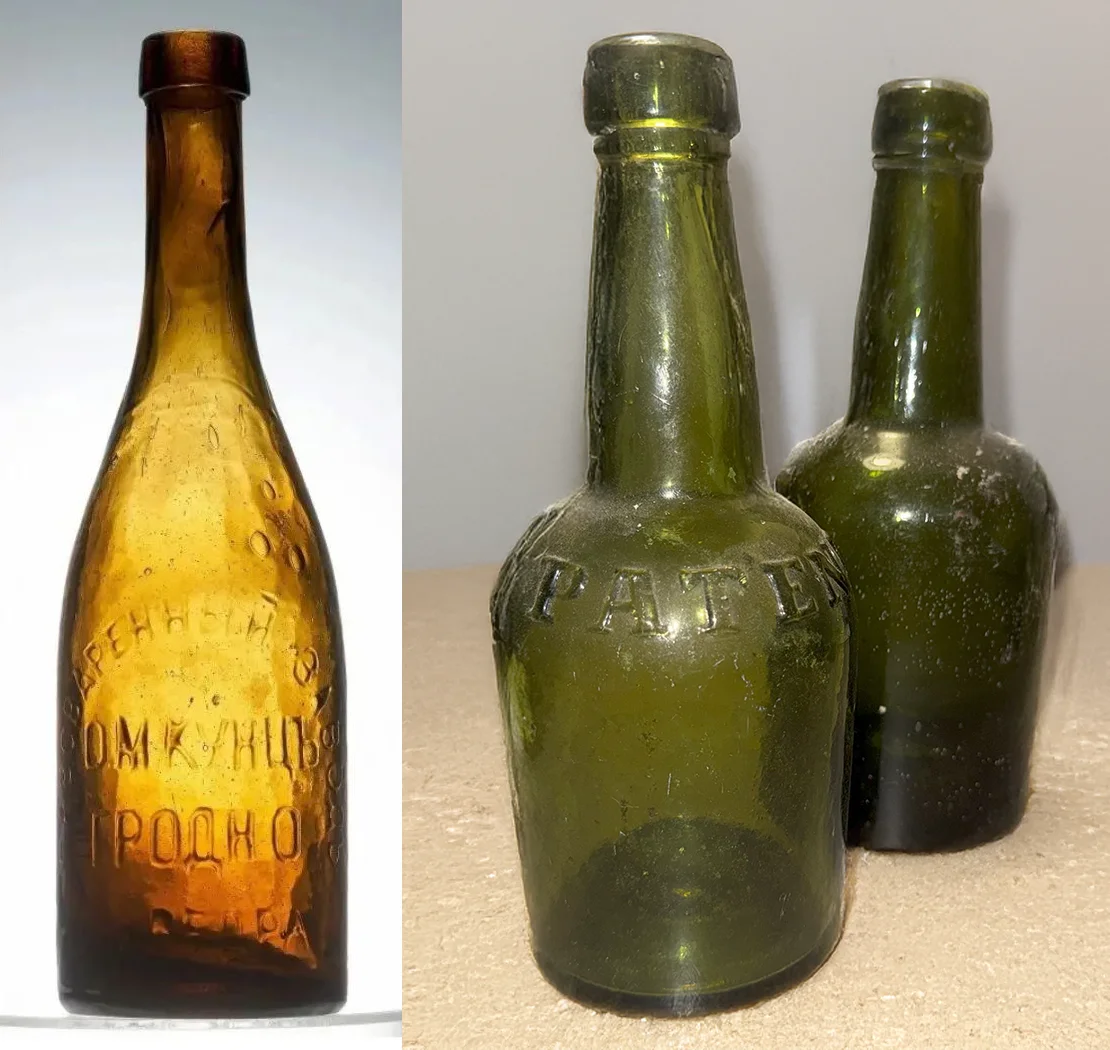
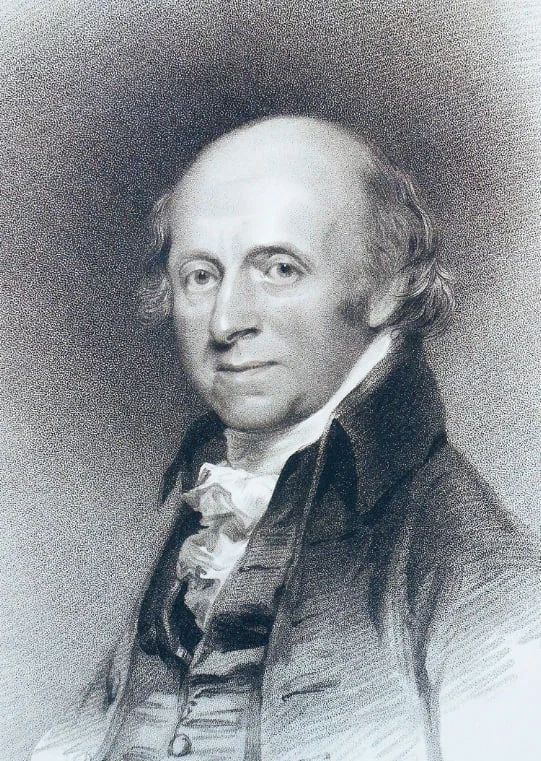
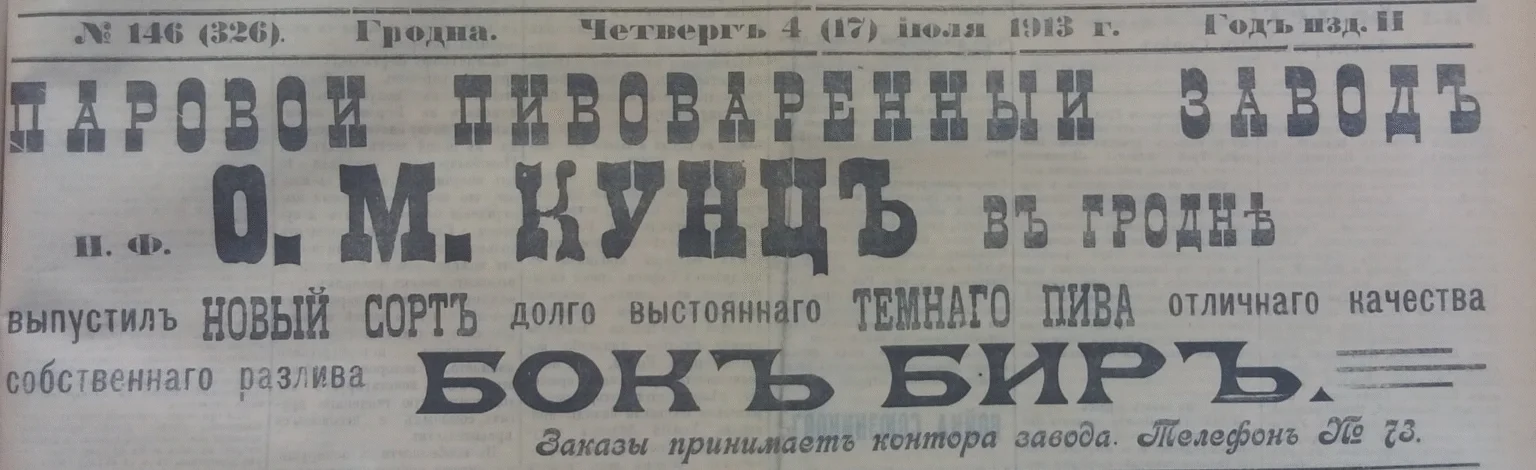
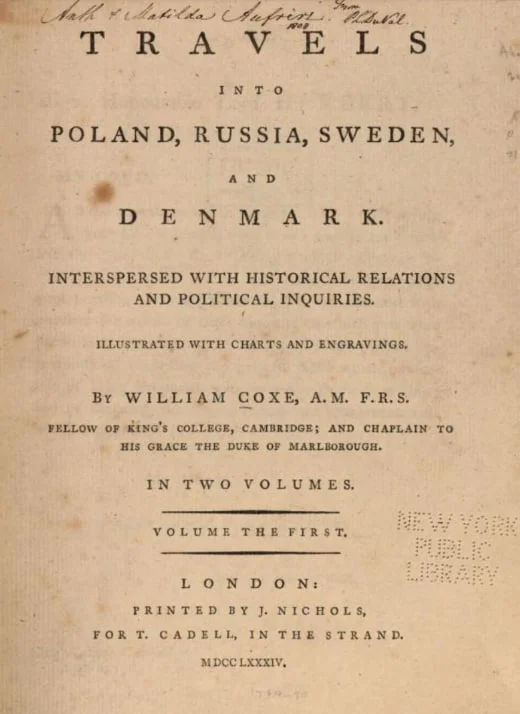
↗Excerpt from Gabriel Rzączyński's 1721 work mentioning three wells in Grodno's New Market whose water was particularly suitable for brewing beer.Grodno Beer and Gabriel Rzączyński ↗↗Historians Yury Hardziejeu (left) and Andrei Vashkevich (right).Grodno Beer and Gabriel Rzączyński ↗↗Medieval water-lifting mechanisms. Illustrations reproduced in Гродноводоканал. 140 лет. 1876–2016. Водоворот истории (2016).Grodno Beer and Gabriel Rzączyński ↗↗Wooden pipes from Grodno's historic water supply system, discovered in 1931 on Krivaya Street. Reproduced from Grodnovodokanal's historical publication (2016).Grodno Beer and Gabriel Rzączyński ↗↗The central town well on a detail from the 1795 plan of Grodno. Source: Jury Hardziejeu, Магдэбургская Гародня (2008).Grodno Beer and Gabriel Rzączyński ↗↗Reconstruction / illustration AI reconstruction of Grodno's central town well in the eighteenth century.Grodno Beer and Gabriel Rzączyński ↗↗Polish city map of Grodno, 1932. The Hay Market (Sienny Rynek) is highlighted in blue as the proposed location of the “New Market” mentioned by Rzączyński in 1721.Grodno Beer and Gabriel Rzączyński ↗↗Aerial view of the Hay Market (Sienny Rynek) in Grodno, 1915. Photograph from the collection of Tomasz Wiśniewski.Grodno Beer and Gabriel Rzączyński ↗↗Modern map of Grodno's historic centre: 1 — Hay Market; 2 — Kuntz's brewery; 3 — Drama Theatre; 4 — Church of the Finding of the Holy Cross; 5 — New Castle.Grodno Beer and Gabriel Rzączyński ↗↗Contributors to the research on Grodno's historical water supply: Kirill Mishin (left), historian Alexander Khotko (centre) and historian Evgeny Makhnach (right).Grodno Beer and Gabriel Rzączyński ↗↗Schematic map of Grodno's upper and lower terraces along the Neman River. Black lines highlight the area investigated.Grodno Beer and Gabriel Rzączyński ↗↗Distance between Grodno's historic Old Market and the proposed location of the New (Hay) Market: 249 metres. Measurement based on OpenStreetMap.Grodno Beer and Gabriel Rzączyński ↗↗Present-day view of Grodno's former Hay Market during the search for historic wells mentioned by Rzączyński in 1721.Grodno Beer and Gabriel Rzączyński ↗↗Figure 17 — Parizhskoy Kommuny Street in Grodno during the search for historic water wells. Present-day view of the area.Grodno Beer and Gabriel Rzączyński ↗↗Podgornaya Street in Grodno during the search for historic water sources. According to a local resident's recollections, two public water pumps once stood in this area.Grodno Beer and Gabriel Rzączyński ↗↗The Podol district of Grodno near the Sherwood restaurant. Search for historic wells and natural water sources.Grodno Beer and Gabriel Rzączyński ↗↗The Neman embankment in Grodno during the search for historic wells and water sources.Grodno Beer and Gabriel Rzączyński ↗↗The present-day Gorodnichanka River channel in Grodno. Search for historic wells and natural springs near former brewery sites.Grodno Beer and Gabriel Rzączyński ↗↗Private well on Rybatskaya Street in Grodno, identified during the search for historic water sources.Grodno Beer and Gabriel Rzączyński ↗↗Public water standpipe near Kalozha Church in Grodno, photographed during the search for historic wells and water sources.Grodno Beer and Gabriel Rzączyński ↗↗Public water standpipe in a courtyard near Kalozha Church in Grodno, documented during the search for historic water sources.Grodno Beer and Gabriel Rzączyński ↗↗Alexander Radziuk, Grodno historian and researcher of the city's brewing history.Grodno Beer and Gabriel Rzączyński ↗↗Historical architectural drawing of the brewhouse at Osip Kuntz's brewery in Grodno, showing the building's façade, chimney and rooftop equipment structures.Grodno Beer and Gabriel Rzączyński ↗↗Historic beer bottle from Kuntz's brewery (left) and glass bottles discovered at the former brewery site in Grodno (right).Grodno Beer and Gabriel Rzączyński ↗↗William Coxe (1748–1828), English historian and traveller.Grodno Beer and Gabriel Rzączyński ↗Appears in 2 studies
No images match this search. Try another word or study.
01 / A journey through time
History has its own evidence.
The history of brewing in Belarus is pieced together from separate documents. A book's date, the event it describes, and the year of a modern edition are different facts. They are shown separately here.
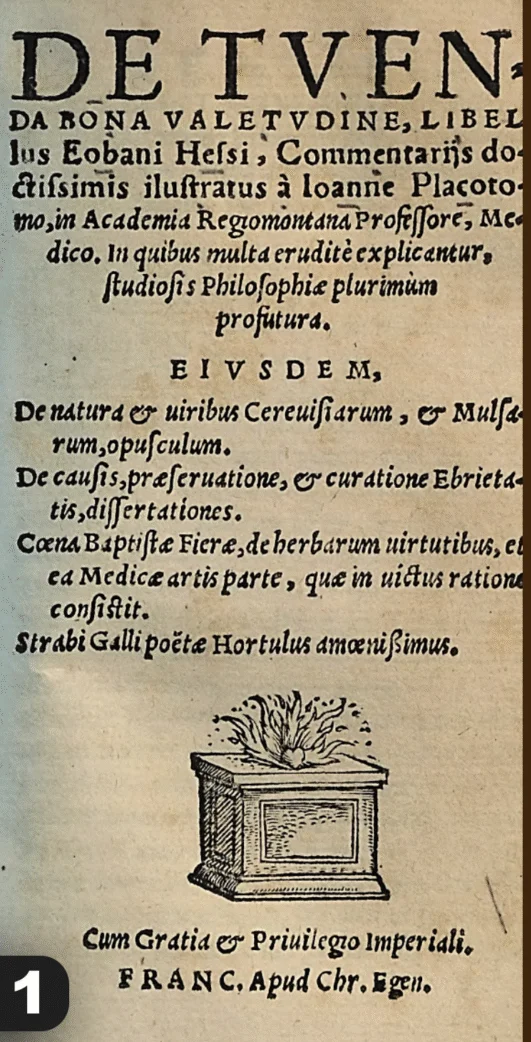
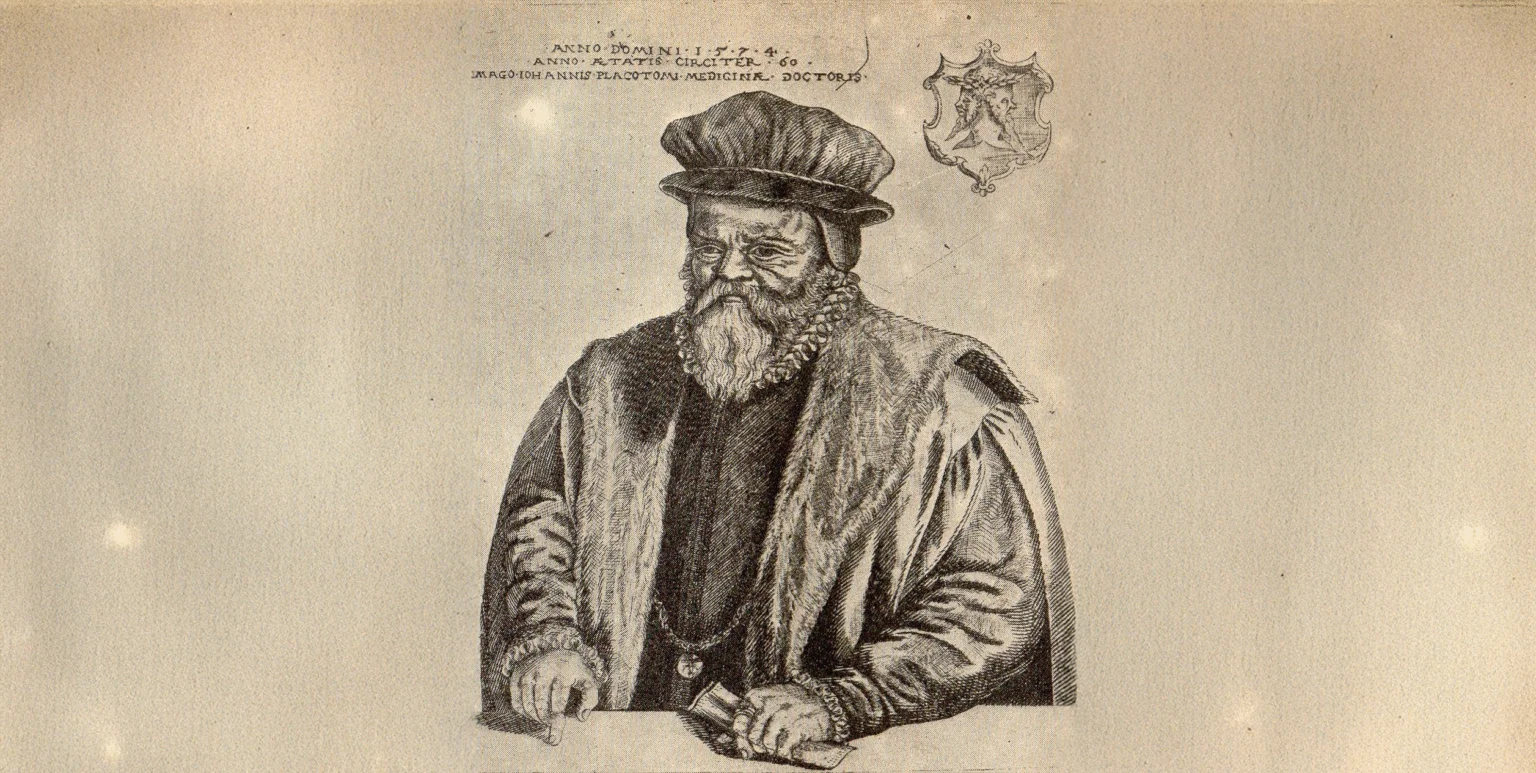
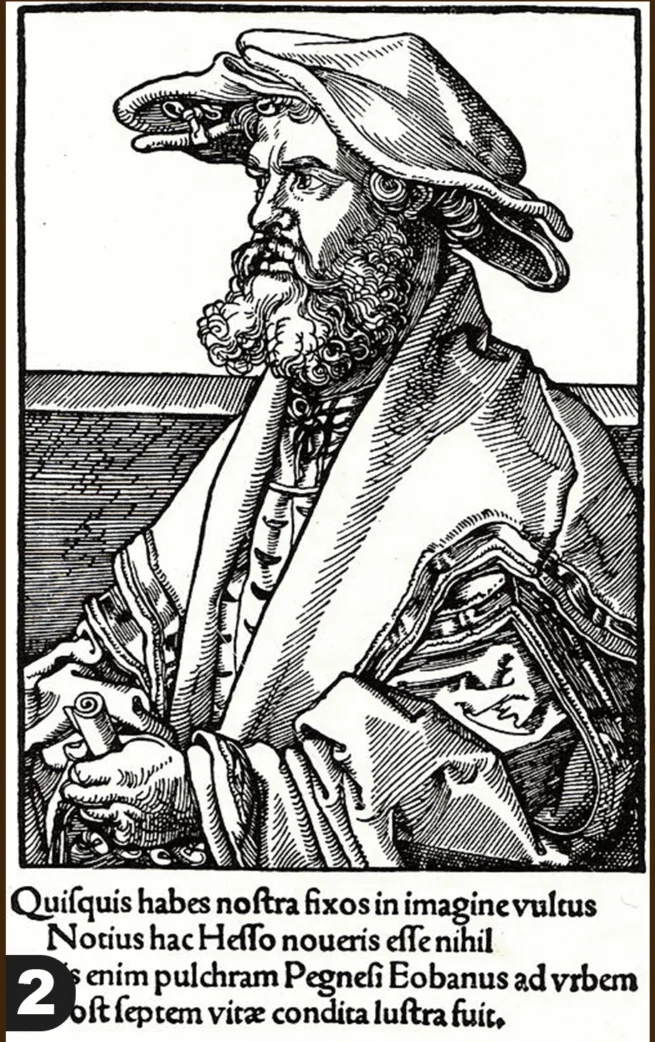
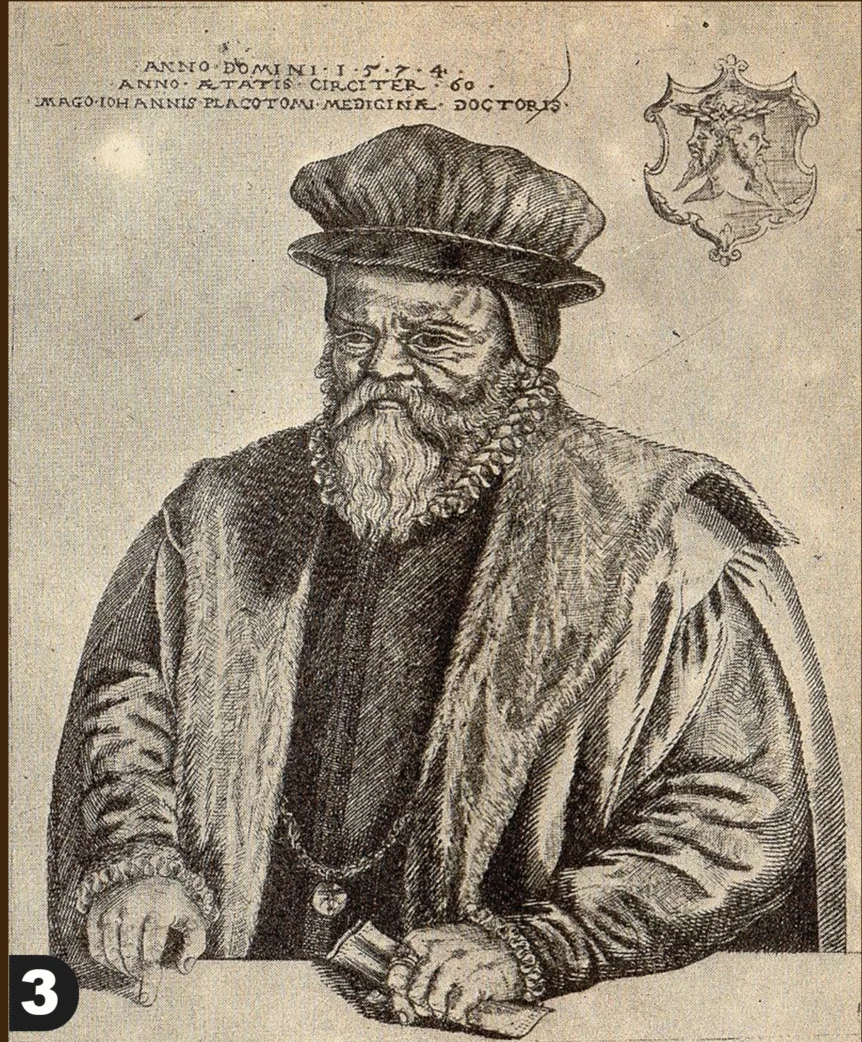
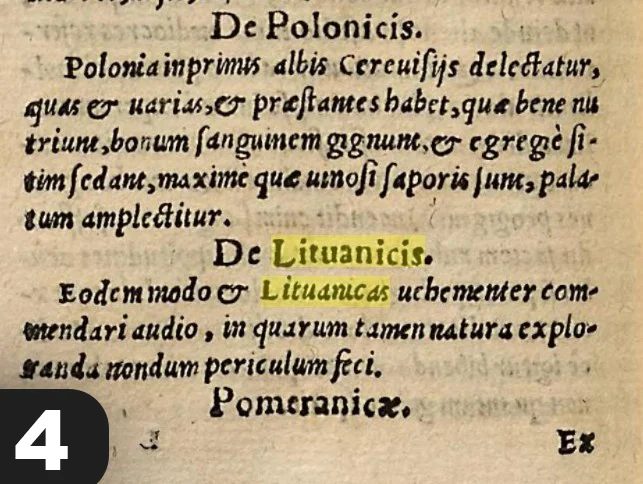
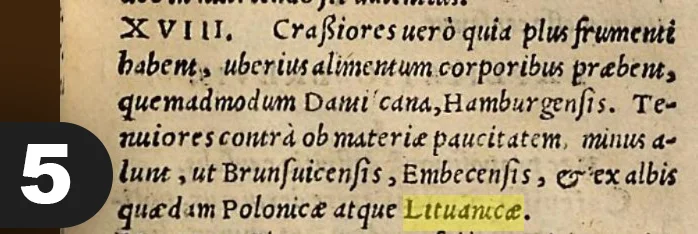
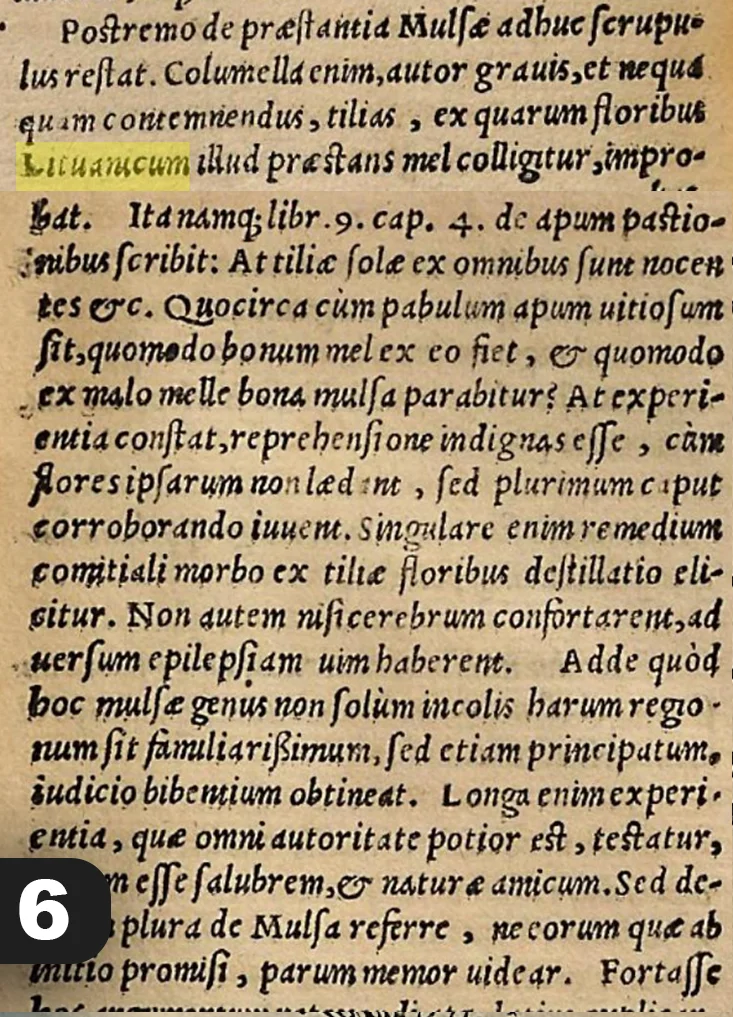
In a German edition published in 1554, the physician Ioannes Placotomus discussed Polish and Lithuanian beers and referred to excellent “Lithuanian honey” gathered from linden blossoms. This article examines what the Latin source actually says, what “Lithuania” meant in the sixteenth century, and why the evidence is relevant to the history of beer and honey-based drinks in the lands of present-day Belarus.
Historical context
Evidence from the mid-sixteenth century
Document and edition
1554
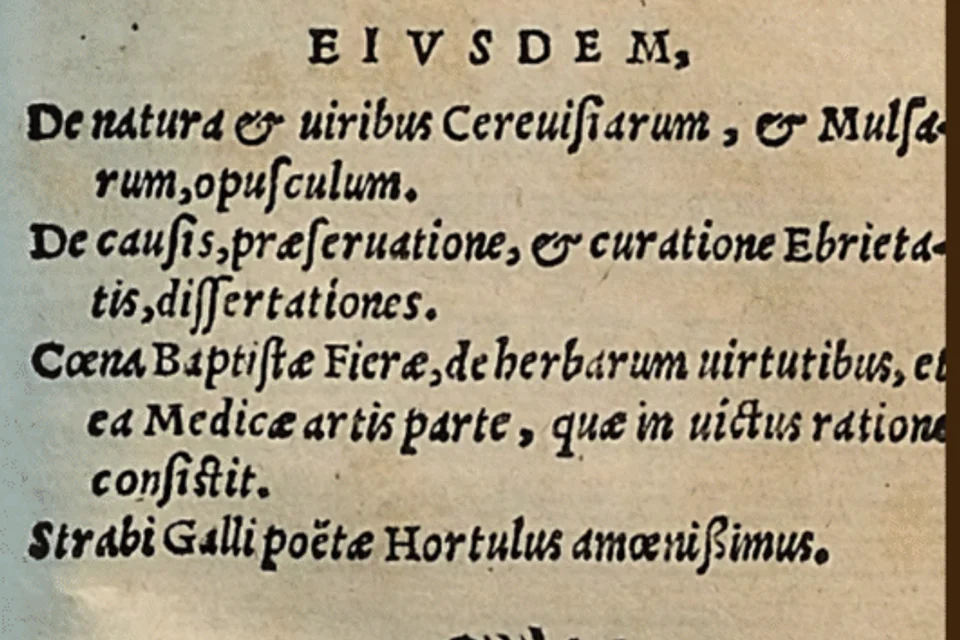
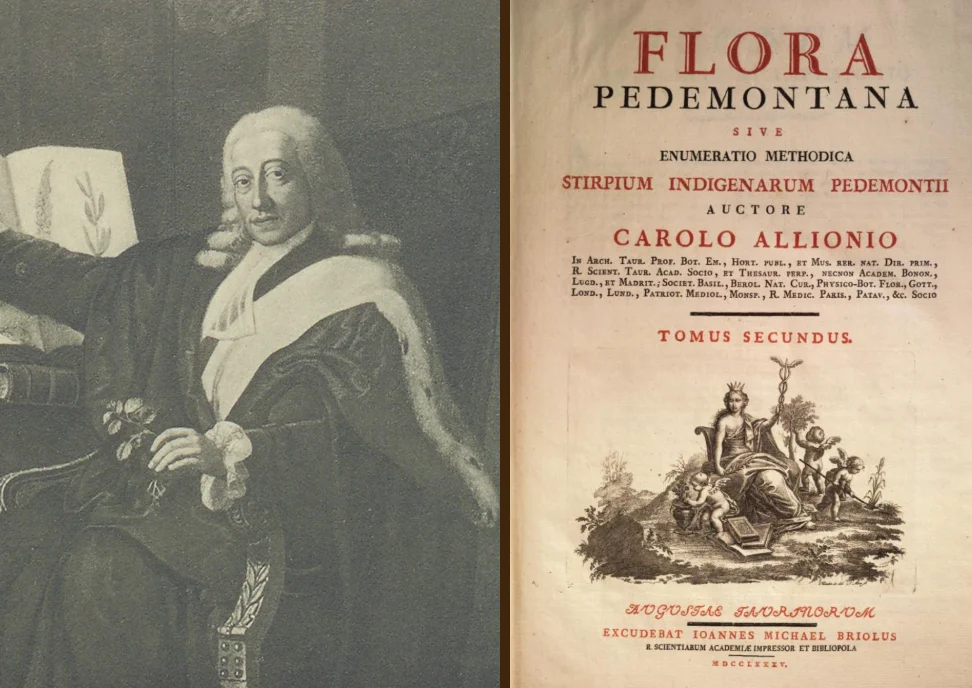
↗Title page of De tuenda bona valetudine. Frankfurt, 1554. The volume includes Ioannes Placotomus’s De natura et viribus cerevisiarum et mulsarum.
A 1554 book discusses beer and mead in the Grand Duchy of Lithuania. Placotomus had not personally tasted Lithuanian beer.
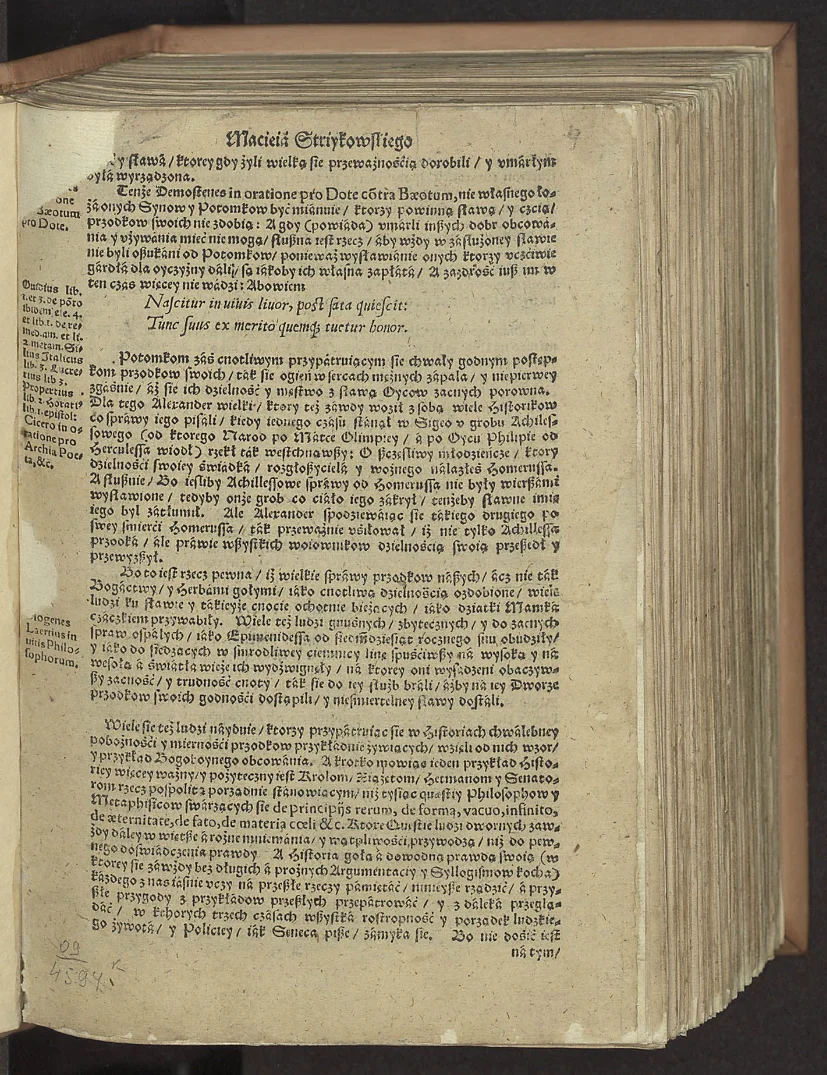
How was beer used in the pagan rites of Lithuania, Samogitia and neighbouring Baltic lands in the sixteenth century? Maciej Stryjkowski’s chronicle records beer in offerings, seasonal festivals, funerals and commemorations of the dead.
Historical context
Sixteenth-century practices and earlier traditions
Document and edition
1582 — first edition of the chronicle; the 1846 edition is used here
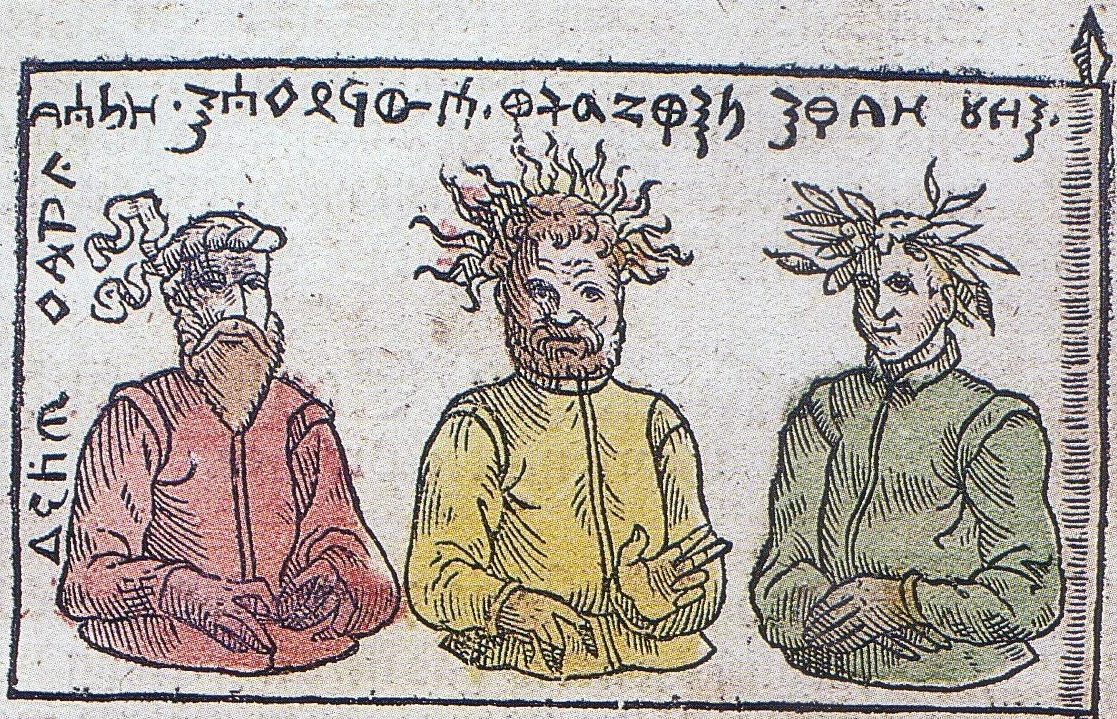
↗Peckols, Perkūnas and Potrimpo, Prussian pagan deities. Caspar Hennenberger, 1584.
The account concerns beer in seasonal, sacrificial, and commemorative rites in the Baltic region. Not every rite can be located in the Grand Duchy of Lithuania or present-day Belarus.
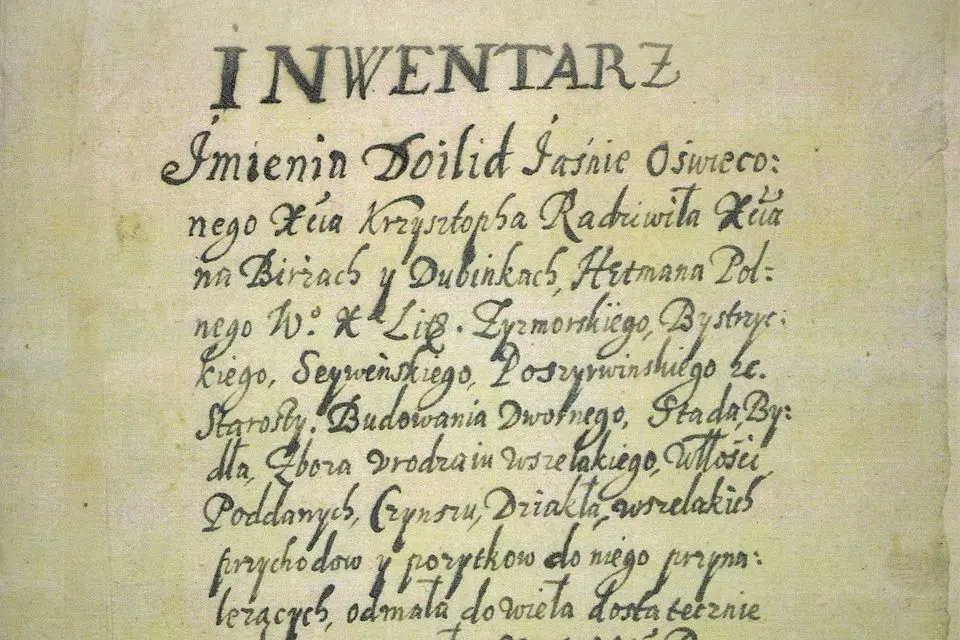
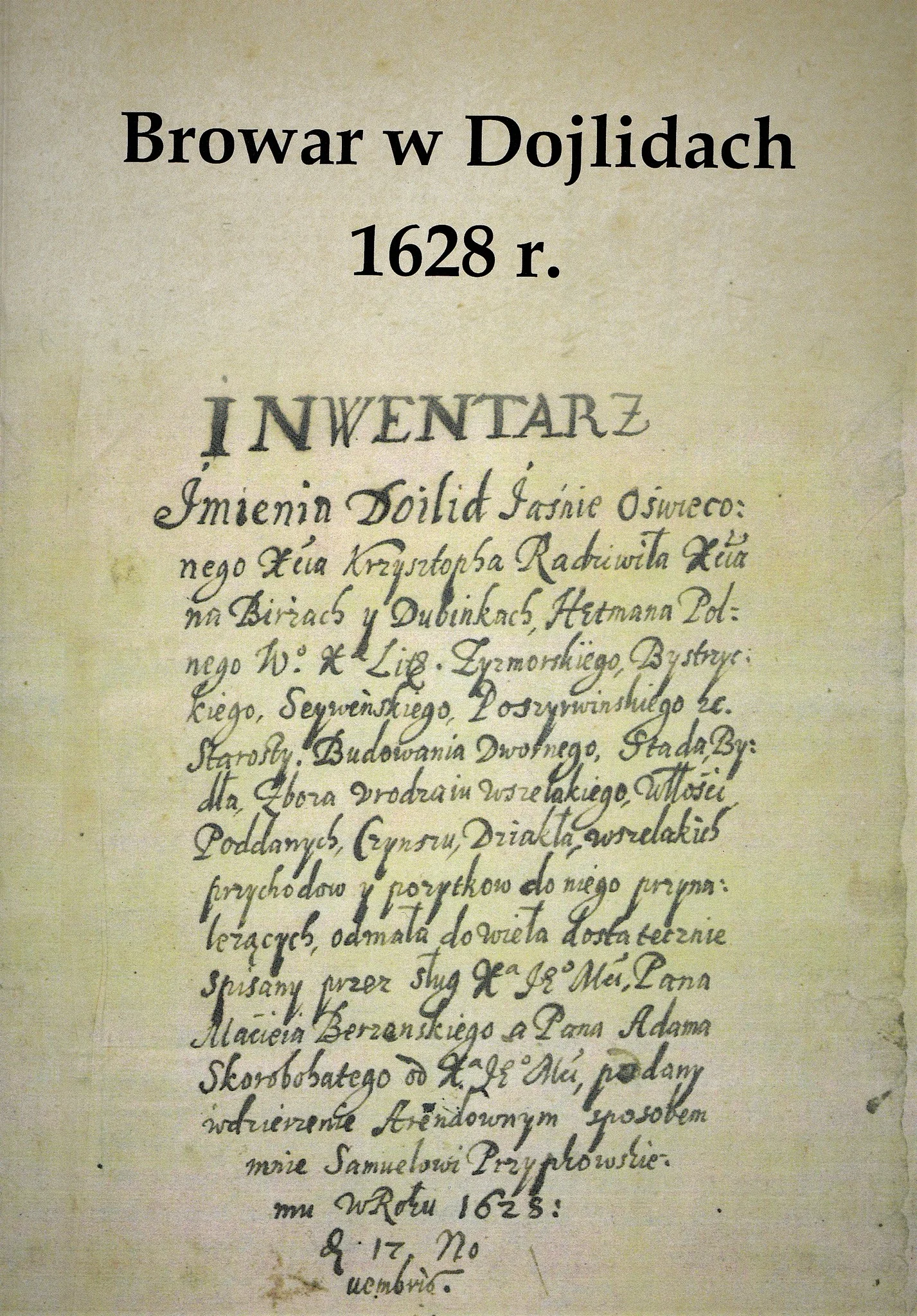
What did a brewery on a seventeenth-century magnate estate look like? An inventory of the Radziwiłł family's Dojlidy estate, dated 17 November 1628, offers a remarkable glimpse into its brewing operations, including a copper brewing kettle, malthouse, malt-drying facilities, barrels and grain-storage buildings. We examine this historical document to discover what it can — and cannot — tell us about brewing technology, production and the estate economy.
Historical context
Dojlidy in 1628
Document and edition
17 November 1628 — inventory; published in 2022
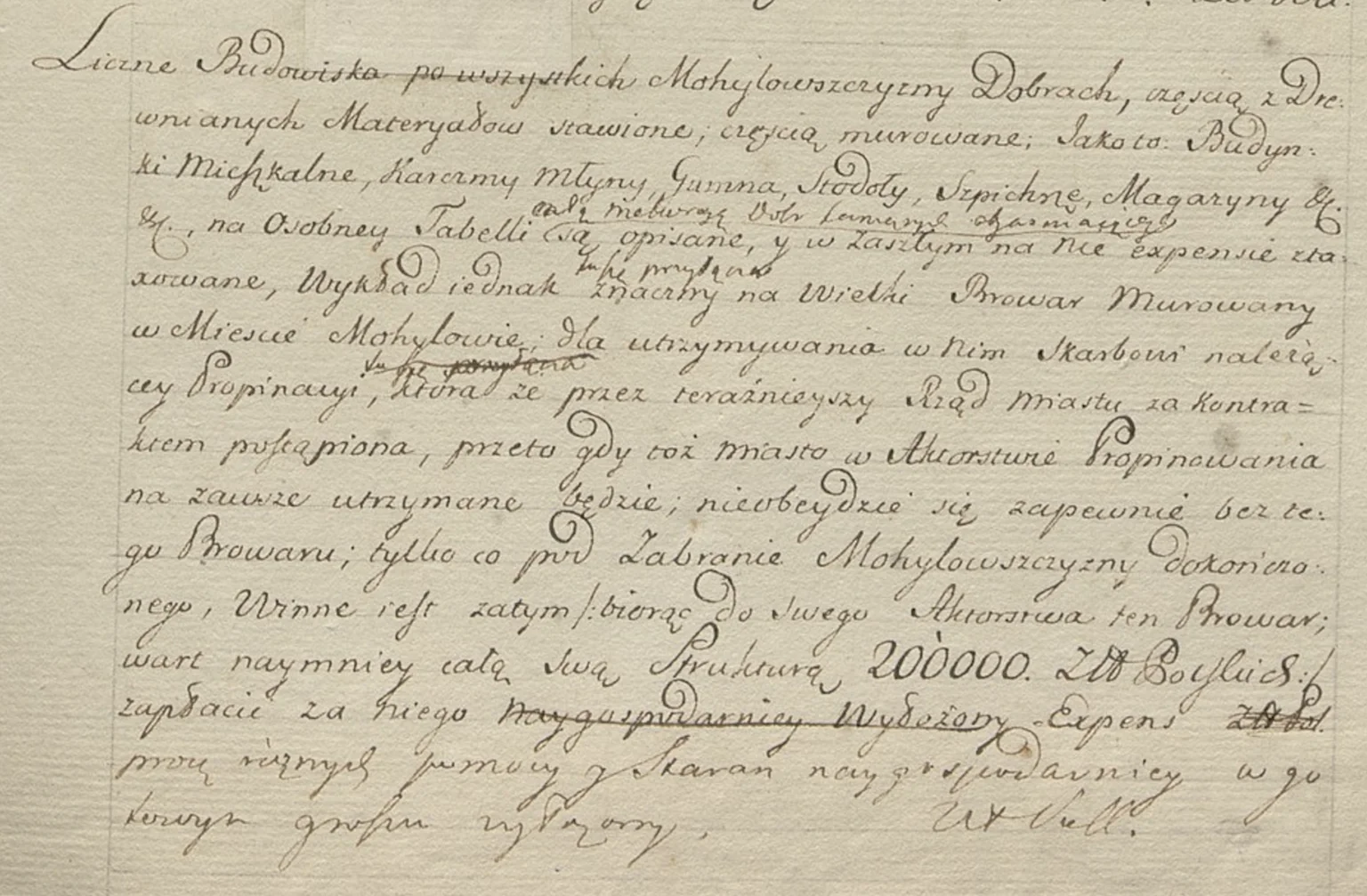
↗Title page of the Dojlidy estate inventory dated 17 November 1628. Reproduced on the cover of «Browar w Dojlidach 1628 r.», Białystok, 2022.
The Dojlidy inventory, known through a 2022 edition, describes an estate, kettle, malt house, kiln, and storage.
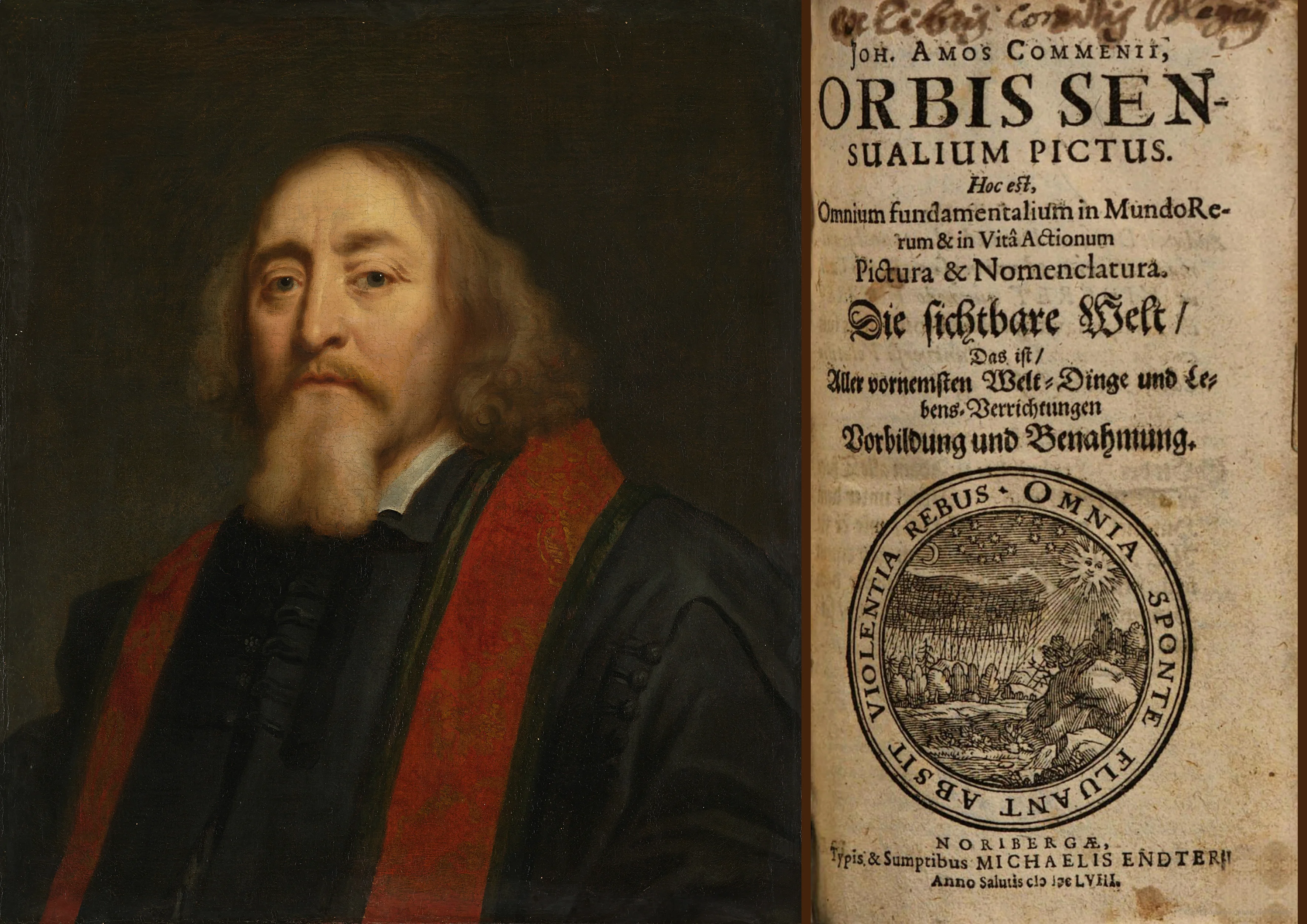
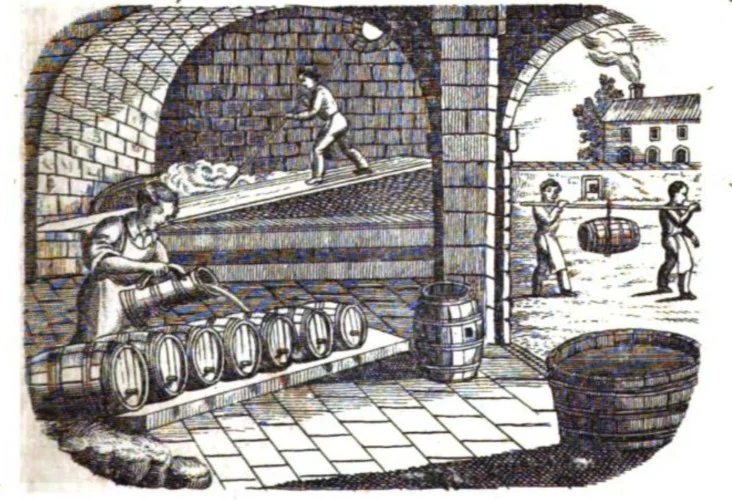
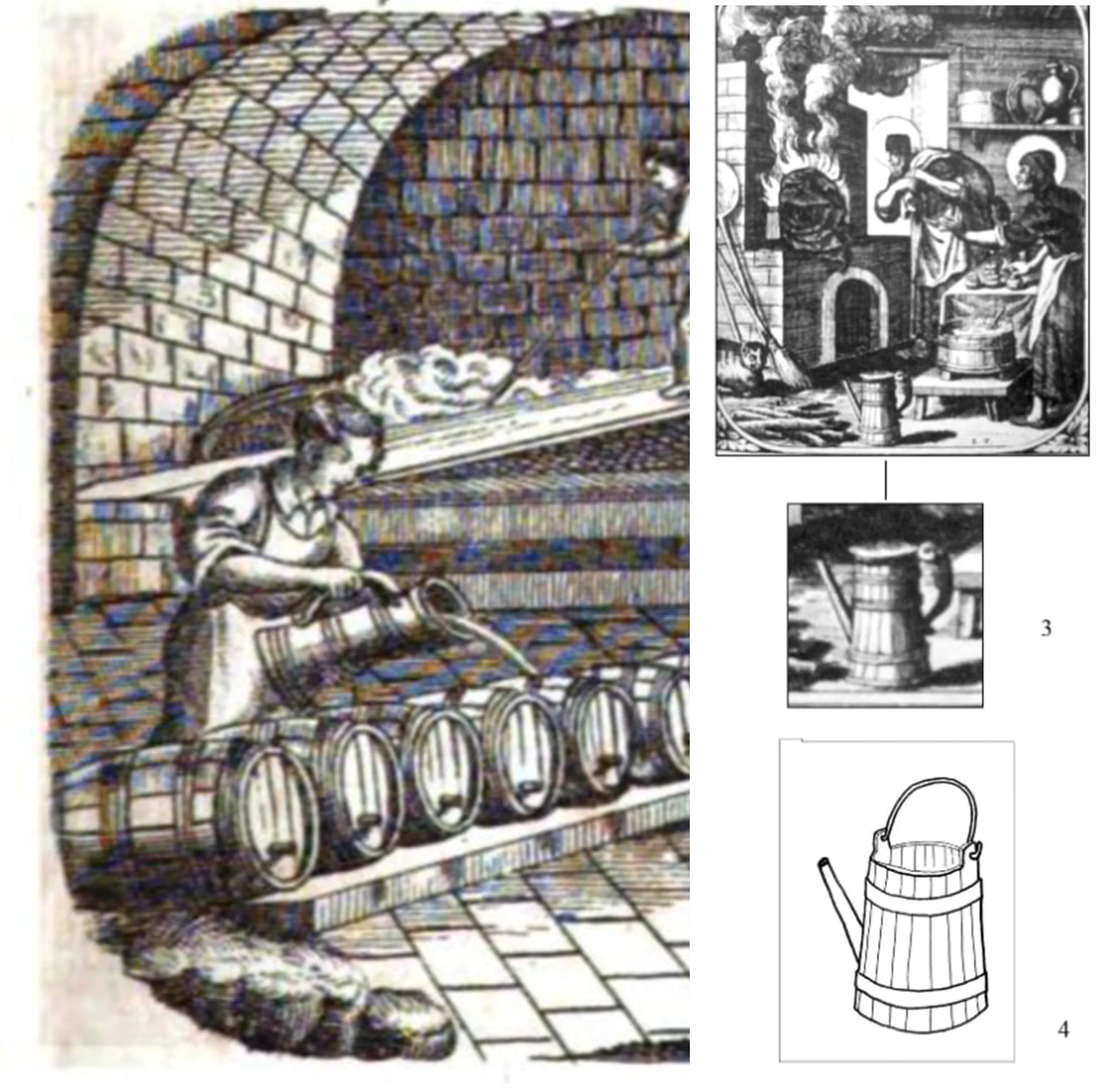
In 1658, Jan Amos Comenius published Orbis Sensualium Pictus, a famous illustrated textbook that included a chapter on brewing. This article examines how the book circulated in the Polish-Lithuanian Commonwealth, what its brewery illustration actually showed, and why an alembic appeared alongside the brewing equipment.
Historical context
Seventeenth–nineteenth centuries
Document and edition
1658 — first edition; 1664/1667 — engravings compared; 1767 — Vilnius edition; 1832 — Gehler's separate new manual
↗“Brewing” (Zythopoeia. Die Bierbraw.), Jan Amos Comenius, Orbis Sensualium Pictus, Nuremberg, 1658.
The engraving and the Zythopoeia chapter are considered alongside later textbook editions and their educational context. This is not a technical recipe.
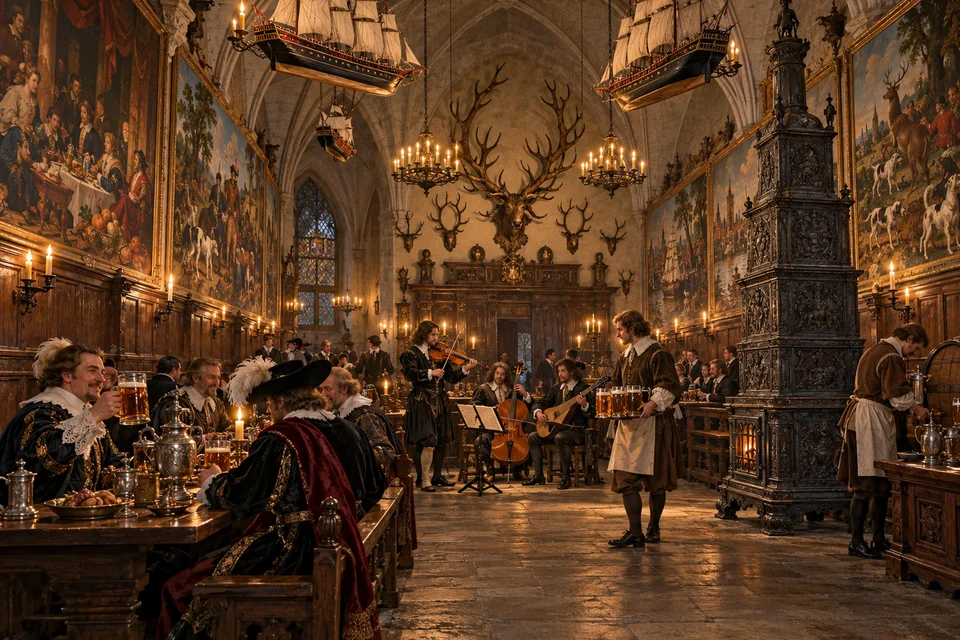
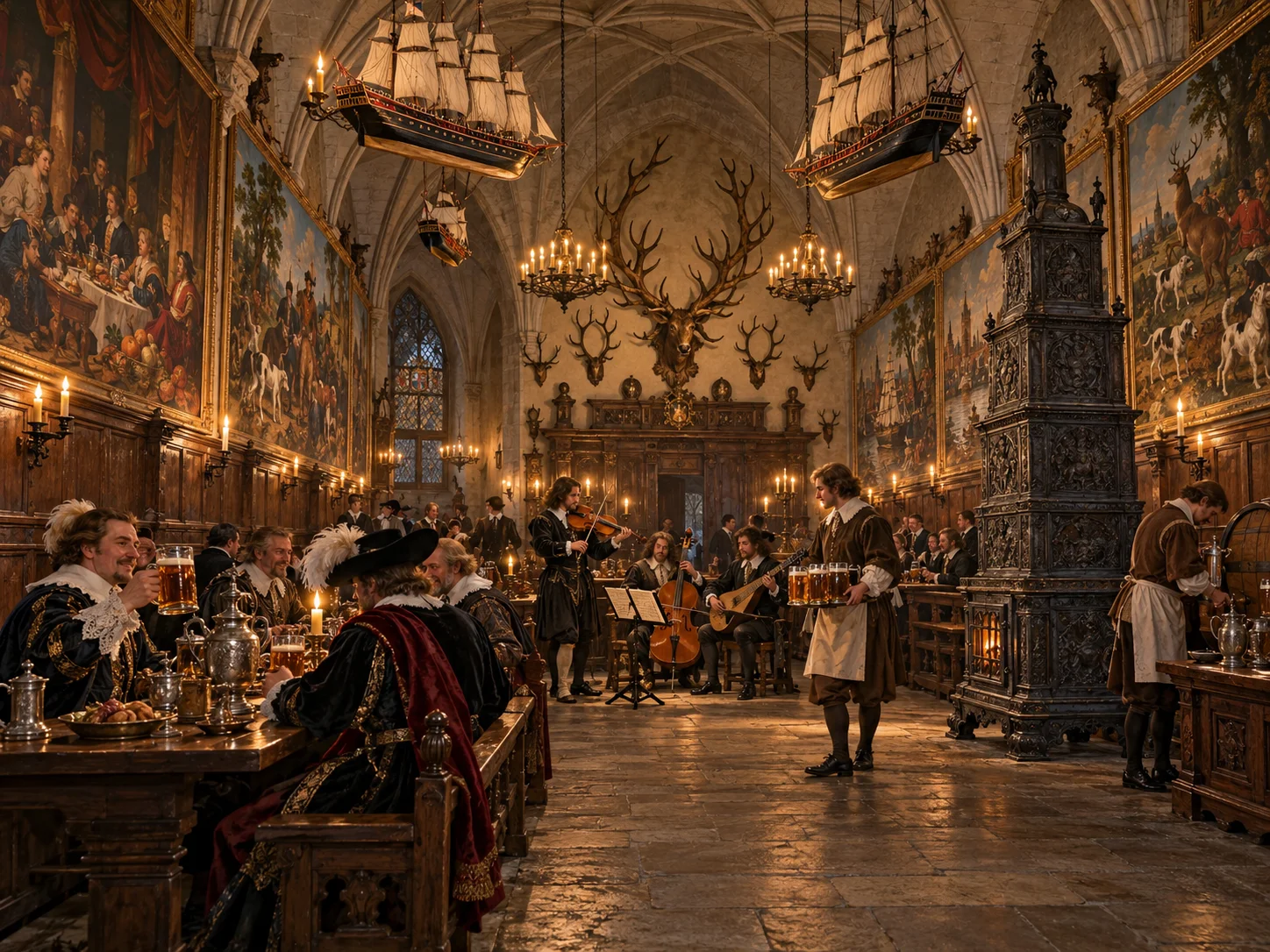
In 1659, Andreas Cellarius described an unusual noble hall in Danzig where distinguished townsmen could pay a fixed fee and drink beer until the evening while listening to instrumental music. What did this place look like, and how closely did it resemble a modern beer festival?
Historical context
A seventeenth-century account of Danzig; the date of the particular feast is unknown
Document and edition
1659
↗Reconstruction / illustrationAI reconstruction of the noble beer hall at the Pfundkammer in Danzig, based on the description by Andreas Cellarius, 1659.
Feasting culture in Danzig, now Gdańsk, as described in a 1659 book. Calling the gathering a festival is a modern analogy.
How was beer brewed in Belarusian lands at the beginning of the 18th century? The 1704 inventory of Sapockin reveals two brewhouses, brewing regulations, production fees, lease arrangements and the role of a watermill. Using this town in the Grand Duchy of Lithuania as an example, we explore the economic history of Belarusian brewing.
Historical context
Sapotskin in 1704
Document and edition
11 November 1704 — inventory; scholarly edition published in 2012
What was beer like in the Polish–Lithuanian Commonwealth during the 17th and 18th centuries? Drawing on Gabriel Rzączyński’s 1721 work, this article explores beer varieties and prices, the grain trade, brewing centers in Belarus, Lithuania, and Poland, the importance of water, and historical beliefs about beer’s properties.
Historical context
Fifteenth–eighteenth centuries, with earlier quotations
Document and edition
1721 — Syrenius's book
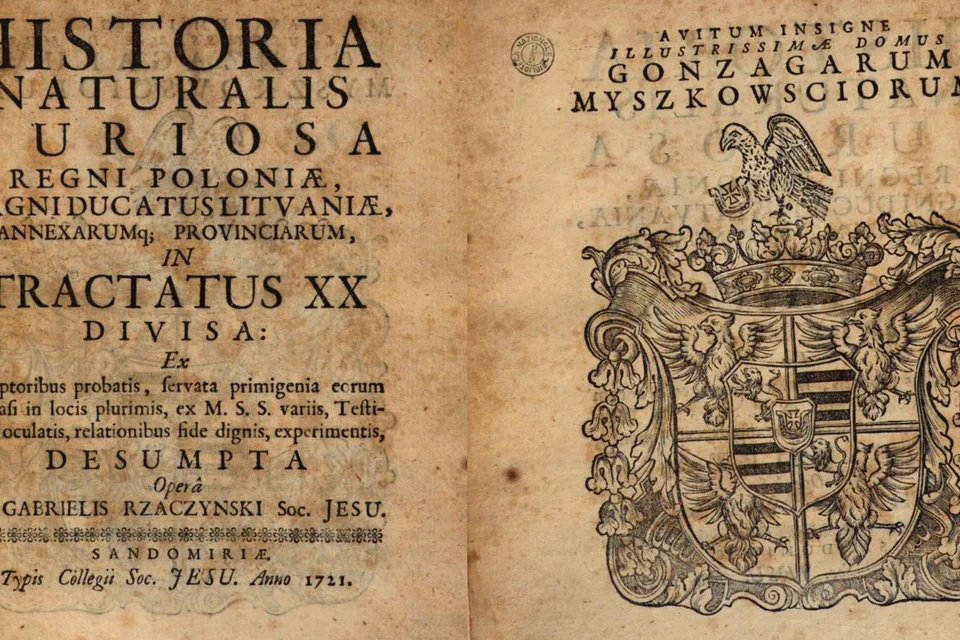
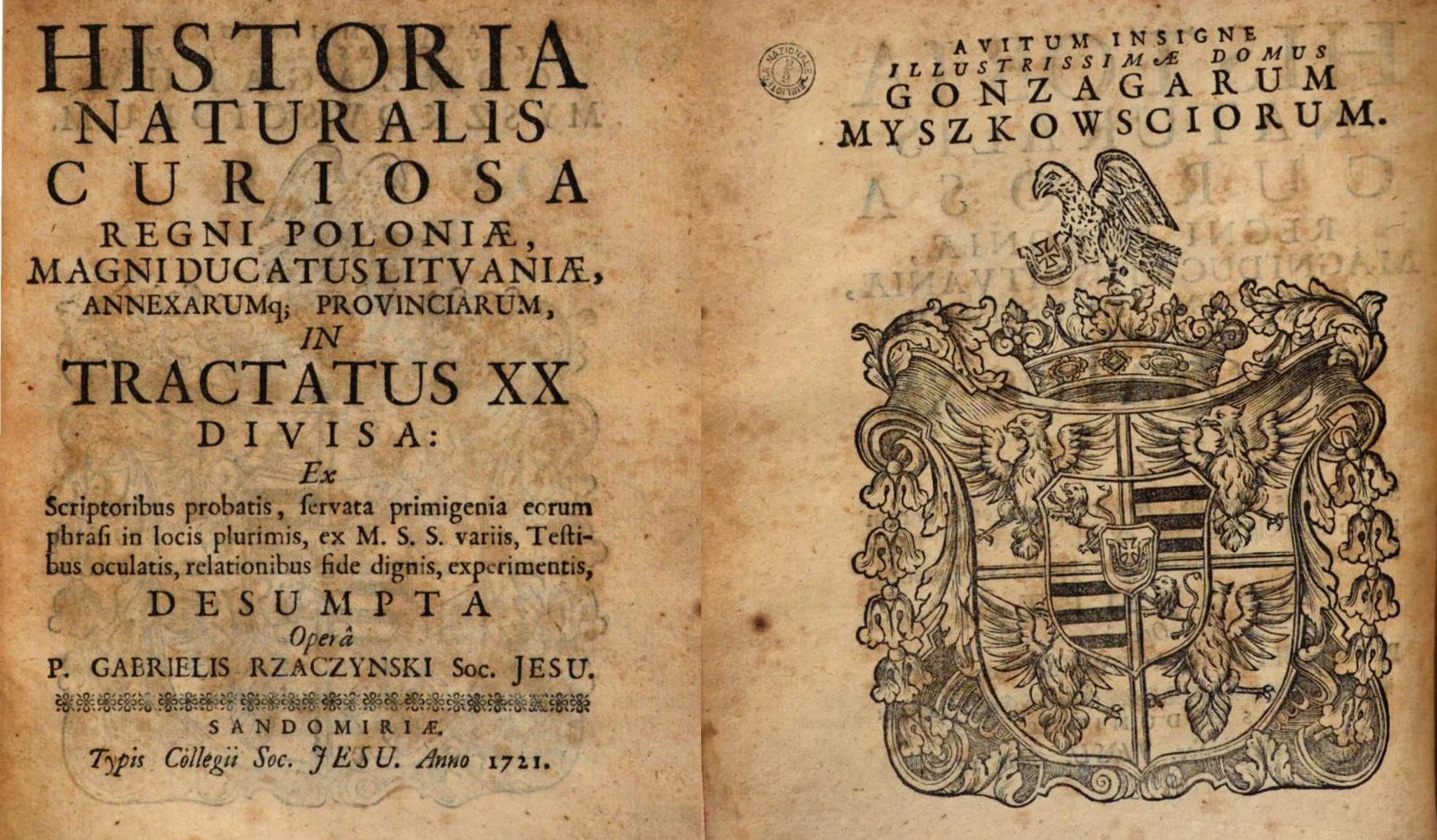
↗Gabriel Rzączyński (1664–1737). Historia Naturalis Curiosa Regni Poloniae, Magniducatus Litvaniae, Annexarumque Provinciarum, in Tractatus XX Divisa. Sandomierz: Typis Collegii Soc. Jesu, 1721.
Syrenius's 1721 synthesis includes information from other periods and regions; not every description can be dated to 1721.
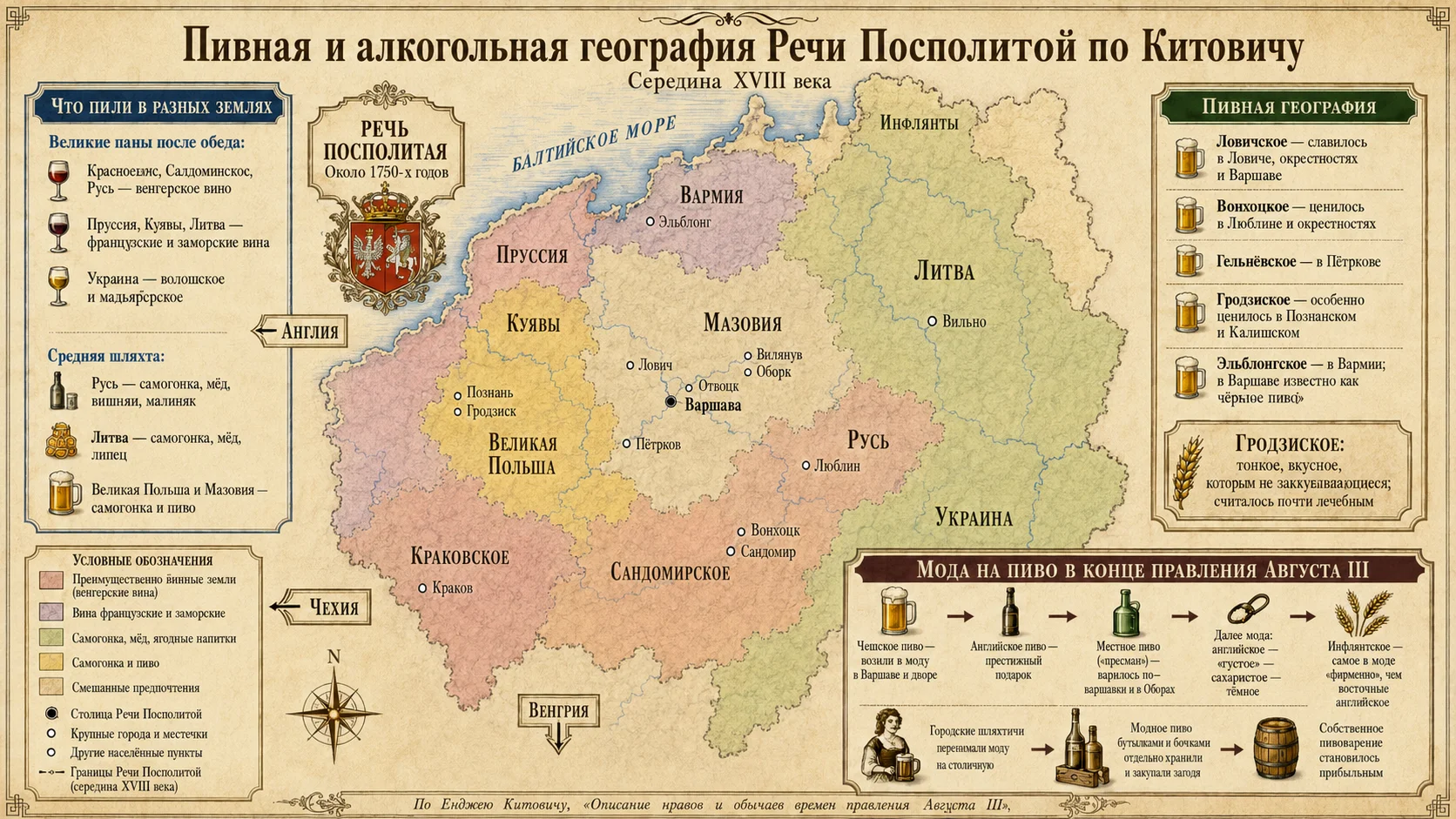
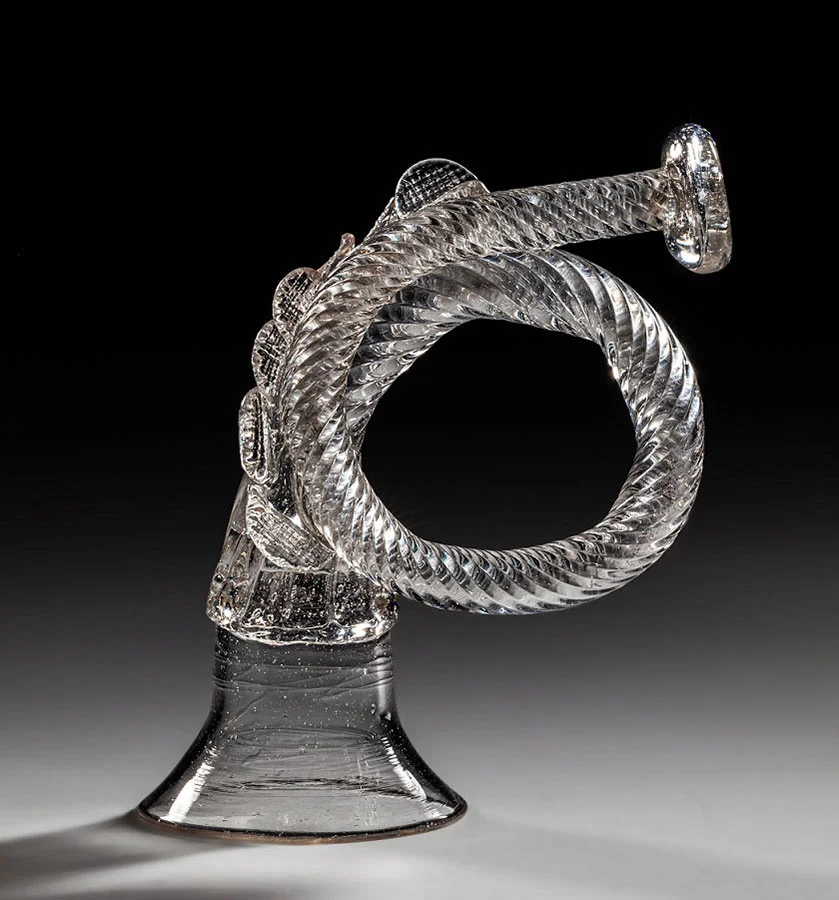
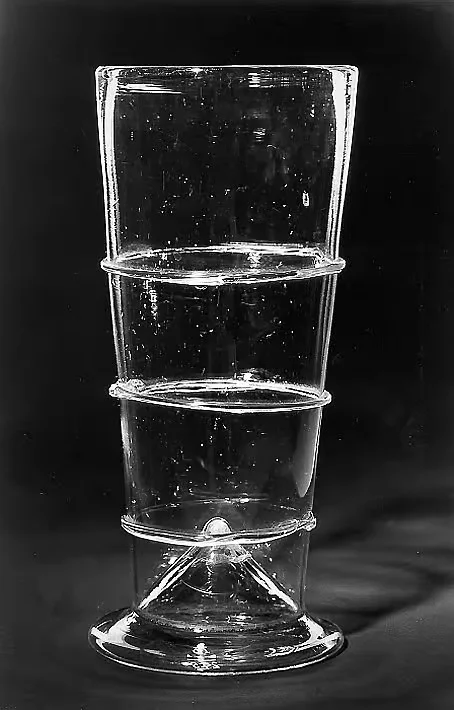
How did people drink beer in the 18th-century Polish-Lithuanian Commonwealth? Drawing on Jędrzej Kitowicz, we explore regional beer traditions, unusual drinking vessels, the game “piwo — dobre — nalej”, and the political role of alcohol at noble assemblies.
Historical context
Main account: 1733–1763, with comparisons to other periods
Document and edition
1840–1841 — Kitowicz; museum Passglas dated to around 1700; Naliboki glassworks, 1722–1862, and Urechye, 1737–1846
↗A noble banquet. Detail of Dzwon śmierci (The Bell of Death), unknown artist, mid-17th century. Basilica of the Holy Trinity, Krosno, Poland.
Beer vessels, feasting games, and political culture under Augustus III, 1733–1763; Kitowicz's book was first published in 1840–1841.
How did Antoni Tyzenhauz’s economic reforms influence brewing in the Grand Duchy of Lithuania during the second half of the eighteenth century? Czech brewers, masonry breweries, malt production and hop cultivation are examined through historical studies and archival documents.
Historical context
Second half of the eighteenth century; Tyzenhaus's appointment in 1765
Document and edition
1760 — a comparable contract; 1772 — report; secondary studies published in 1845, 1970, and 1971
↗Contract with brewer Jan Weygner for work in Wieliszew, 21 August 1760. Source: Archiwum Główne Akt Dawnych (AGAD).
The reforms are discussed through historical studies from 1845, 1970, and 1971 and an archival collection.
A study of a 1756 archival plan tentatively associated with the Bakszty (Bakshty) estate in Ashmyany County. The labels for kettles, the malt house, spirits stores and an ox stable suggest that brewing and grain-spirit production may have operated together at this estate complex.
Historical context
Mid-eighteenth century; comparative inventories from 1762, 1767, 1788, and other years
Document and edition
1756 — boundary document with a plan on its reverse
↗Reconstruction / illustrationVisualization of the plan of an ox stable and brewery at the Bakszty estate (?) in the Ashmyany district. 1756. Hypothetical reconstruction based on the archival plan.
The 1756 plan may relate to Bakshty. The proposed joint production of beer and distillates remains an interpretation.
A city, town, or estate. Choose a place and trace its links to the documents. This is a geographic catalogue: the locations of some historic breweries and wells still need to be verified.
Historical place names belong to their own time. Dojlidy is now part of Białystok, Poland; Danzig is present-day Gdańsk. Modern Belarusian borders do not define every story in this atlas.
01Grodno+
City wells, brewing, and estate reforms. The locations of individual wells remain a research hypothesis.
The study found 440 folklore and ethnographic records that mention beer. Grain is named explicitly in 92 of them. The count reflects the limits of the sample.
Beer records found440records
92 grain specified348 grain not specified
A record that does not name a grain should not be assigned a specific ingredient.
Share of the 92 records that name a grain
Wheat43 mentions 46.7%
Barley38 mentions 41.3%
Rye11 mentions 12%
Data table and both calculation methods
Grain mentions in the reviewed corpus
Grain
records
From 92
From 440
Wheat
43
46.7%
9.8%
Barley
38
41.3%
8.6%
Rye
11
12%
2.5%
Not specified
348
—
79.1%
These figures describe the studied sample. They do not show the historical share of production Beer made from each grain? The distribution is affected by the corpus, its genres, and the survival of records.
A kettle in an inventory. A line about city wells. An unusual plant name. This is how a document becomes a research trail.
Dojlidy / Inventory17.XI. 1628
01Brewery
02Copper kettle
03Malt house
Editorial diagram based on the study. Document description: 2022 edition.
Document → how the estate worked
A brewery described in words.
The Radziwiłł estate inventory lets us look at the Dojlidy farmstead: its rooms, kettle, malt house, and working equipment. Each detail raises another question about how the brewery operated.
The document dates to 1628; the printed edition used here was published in 2022. Dojlidy is now part of Białystok, Poland.
A 1721 book by Szymon Syrenius mentions Grodno water as suitable for brewing. From there, the story turns to comparisons with the city's topography, consultation with historians, and an original reconstruction of the drink.
The exact locations of the wells described remain an open research question. The modern photograph shows members of the research team.
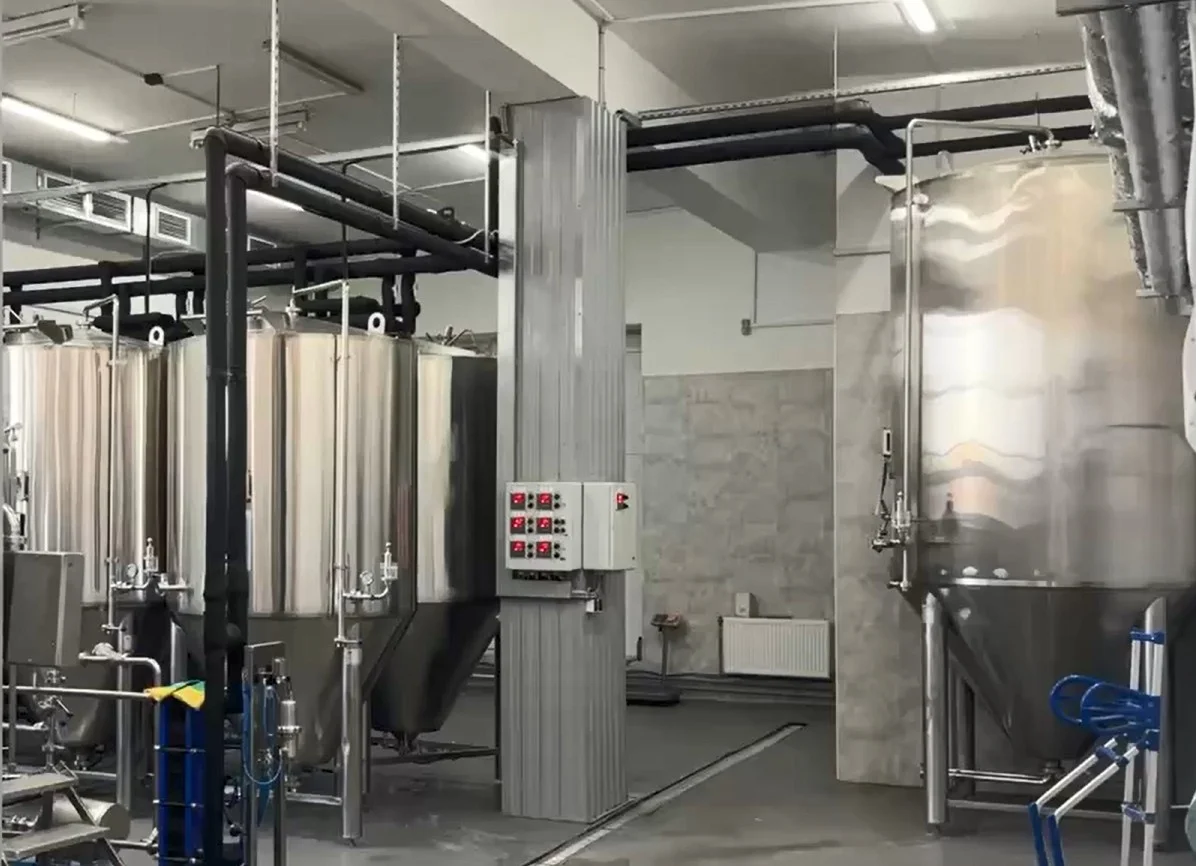
↗The author of the research adding malt to the mash tun during the experimental reconstruction of historical Grodno Bock beer at Garadzenski Brovar brewery.↗Kirill Bulanov, head brewer at Garadzenski Brovar, during an experimental brew of historical Grodno beer in the Bock style.↗Cylindroconical fermentation tanks at Garadzenski Brovar brewery, where the reconstructed Grodno Bock-style beer underwent fermentation.
Drink / plant / hypothesis
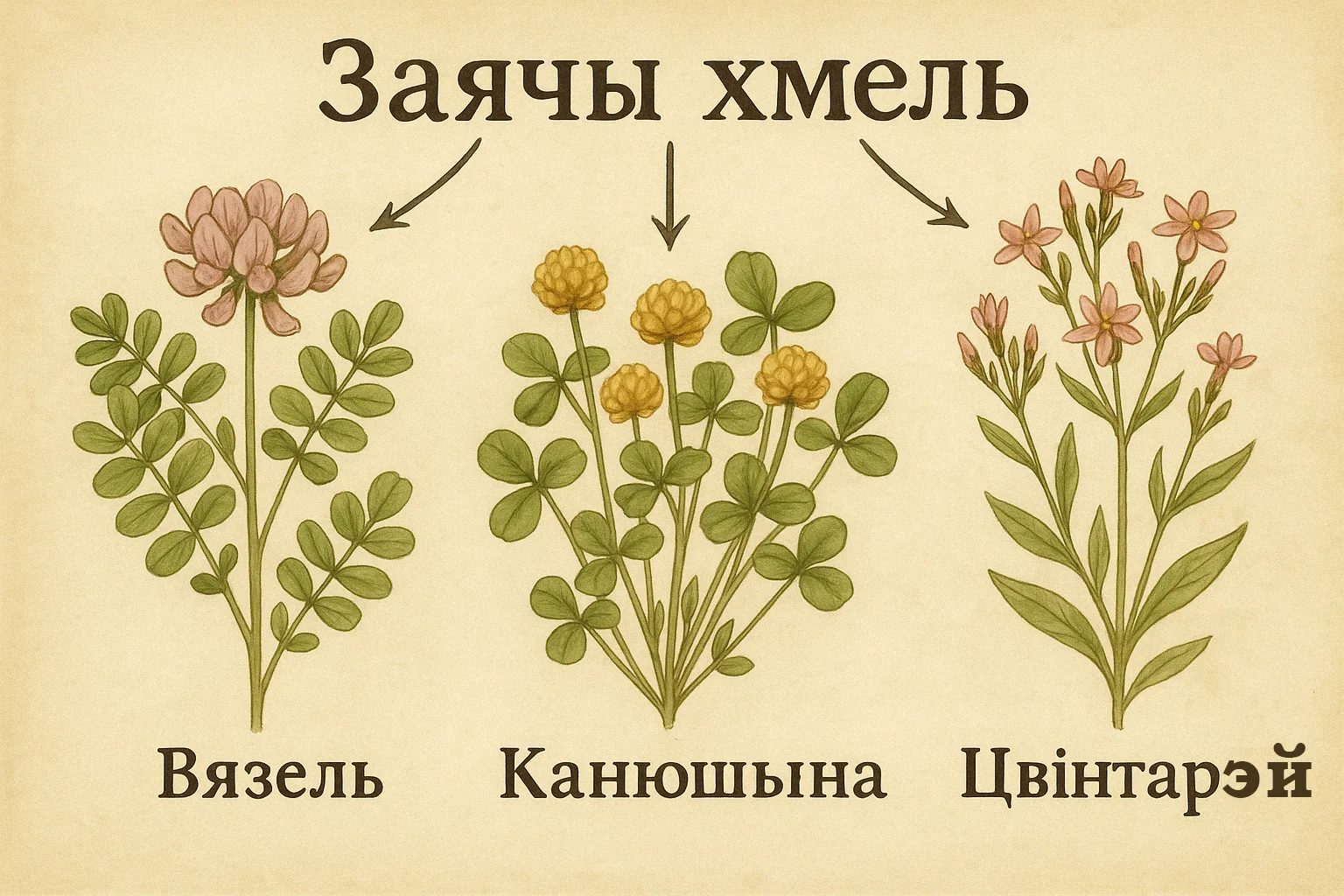
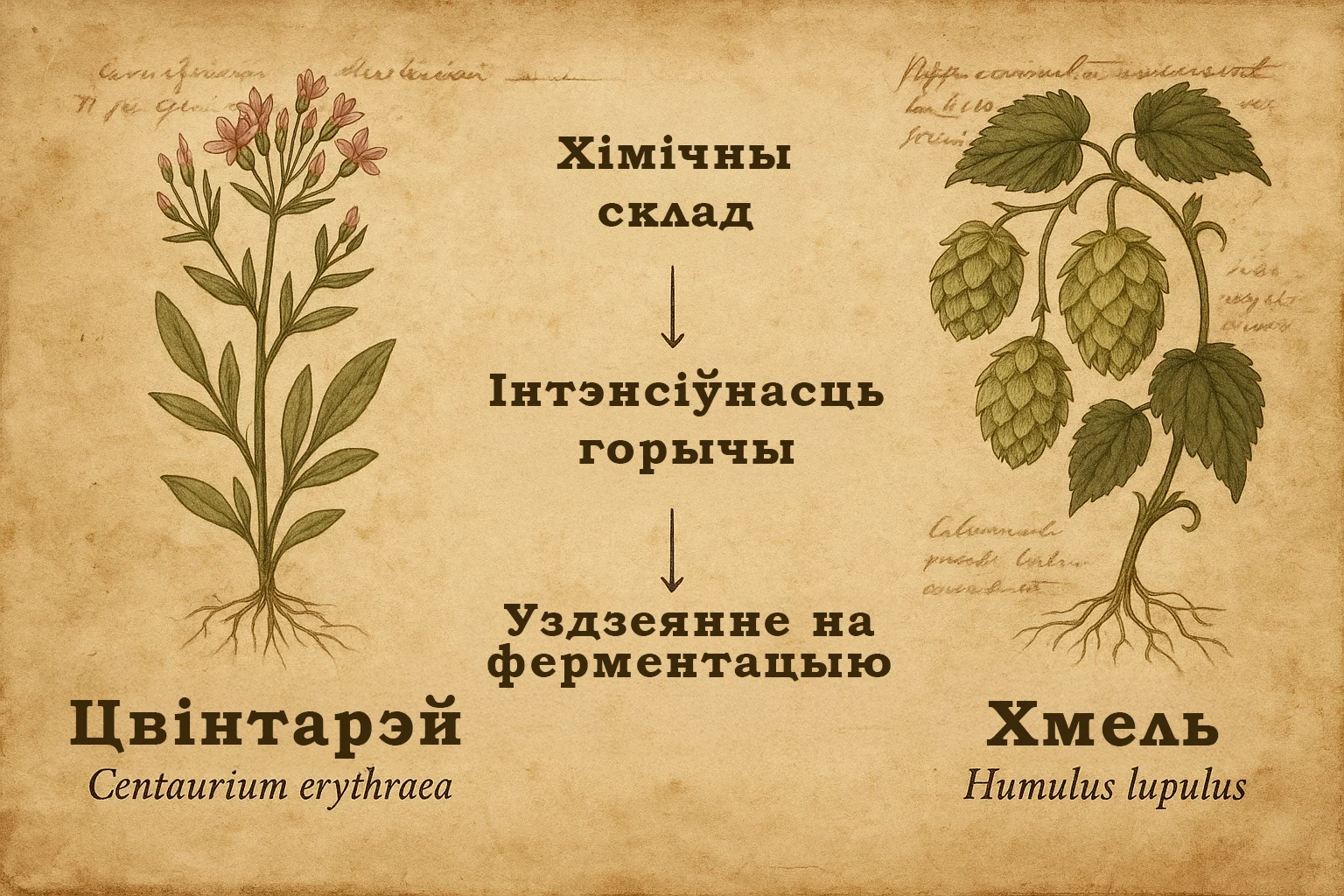
Why beer called “hare beer”?
Travel notes, centaury in Dubrovno beer, and a literary clue from Korotkevich raise a question that still needs checking.
Feasting games and political gatherings in the time of Augustus III, as described by Kitowicz. The reign (1733–1763) and the 1840–1841 publication of his book are shown separately.
Source wording, interpretation, and hypothesis call for different language.Example: a plan of an estate complex, possibly connected with Bakshty.
01Historical source
02Analysis document
03Comparison pieces of evidence
04Conclusion or hypothesis
05Publication studies
↗Author’s redraw of a plan · 1756 documentPBP.BY graphic reconstruction based on an archival plan from 1756, held by the Wróblewski Library of the Lithuanian Academy of Sciences. Its link to Bakshty is tentative.Original PBP illustration
Browar, Słodownia, grain and spirits storage rooms. Compare these details with the document facsimile in the study. The accompanying redraw is a modern illustration by the author.
Reading BANIA It is compared with historical dictionaries and descriptions of other estates. This comparison supports the interpretation that the equipment was used for distilling.
The link to Bakshty remains a hypothesis. The plan supports discussion of beer and spirits production on the same estate; claims about which came first need more evidence.
Beer history, drinking culture, and related beverages are treated separately. Newly published material appears here from the CMS; historical dates are added after review.
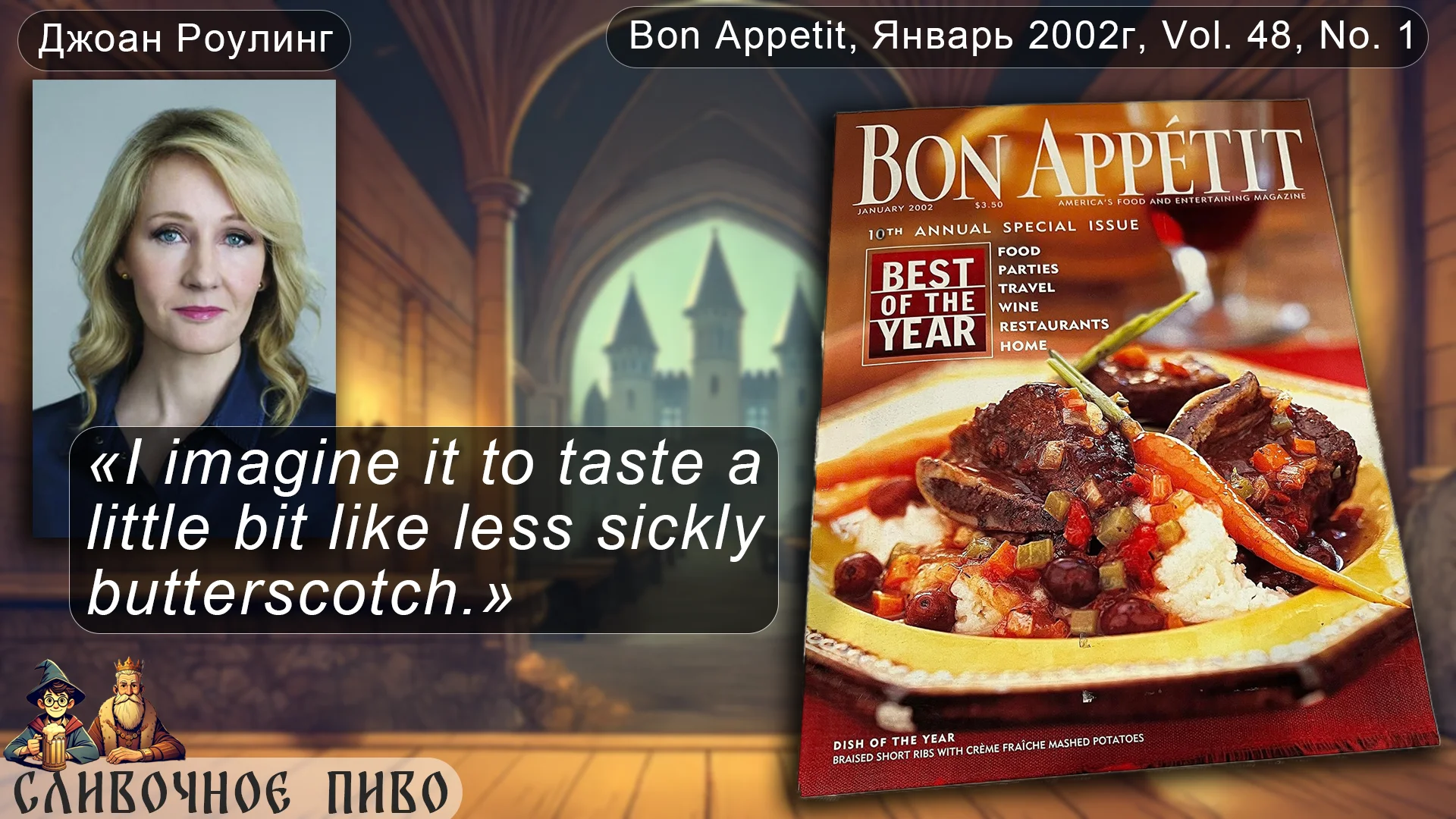
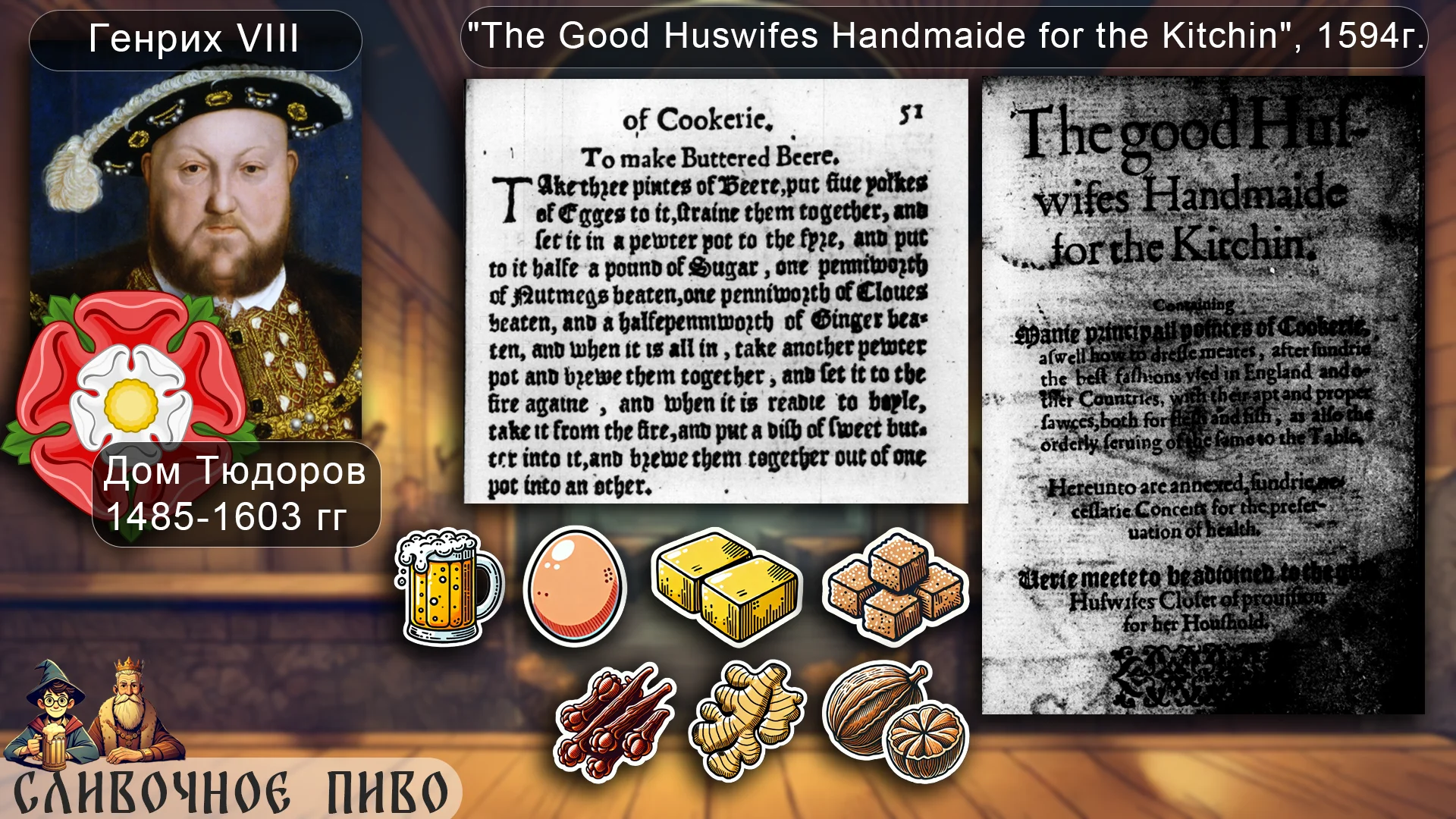
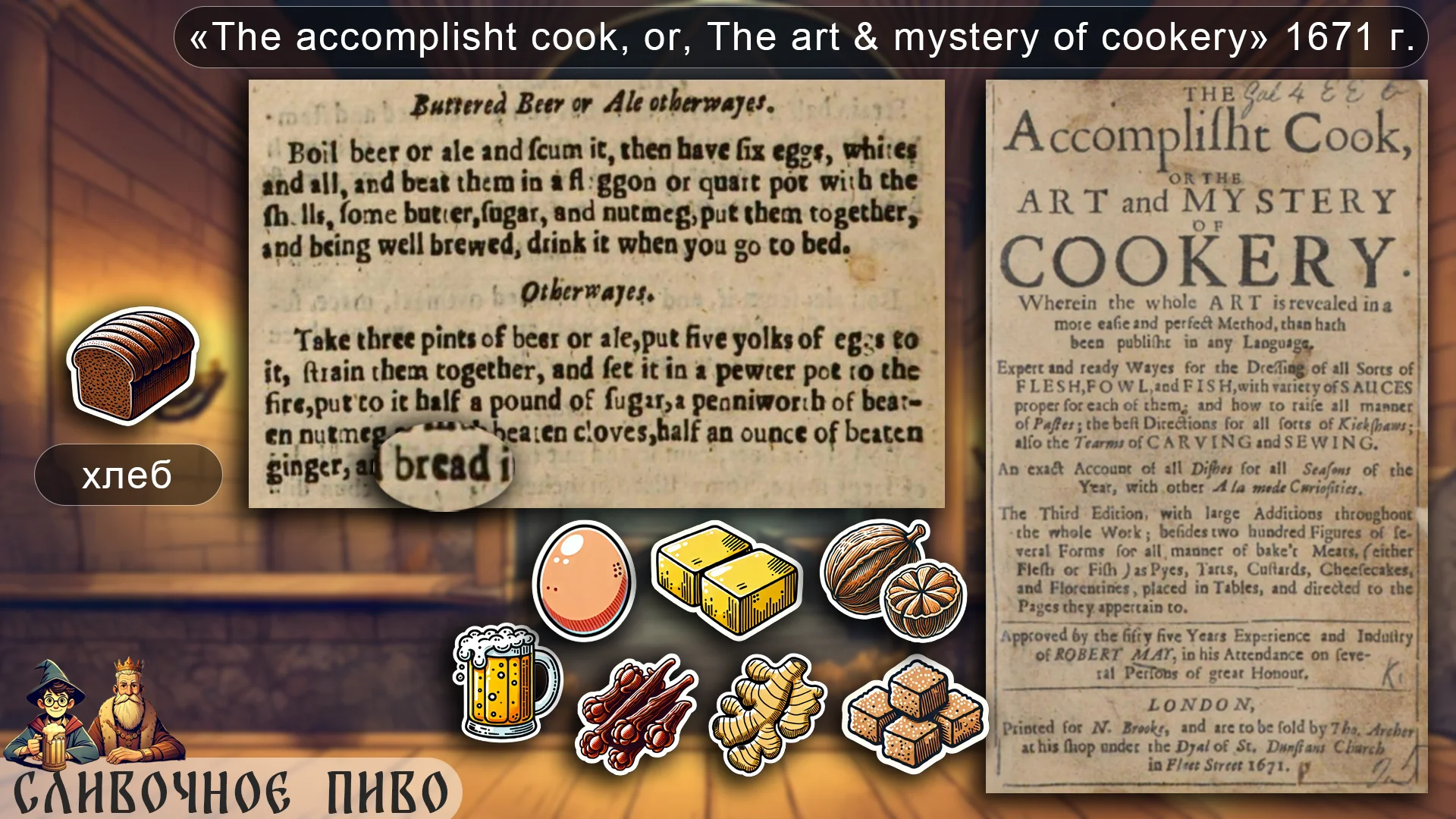
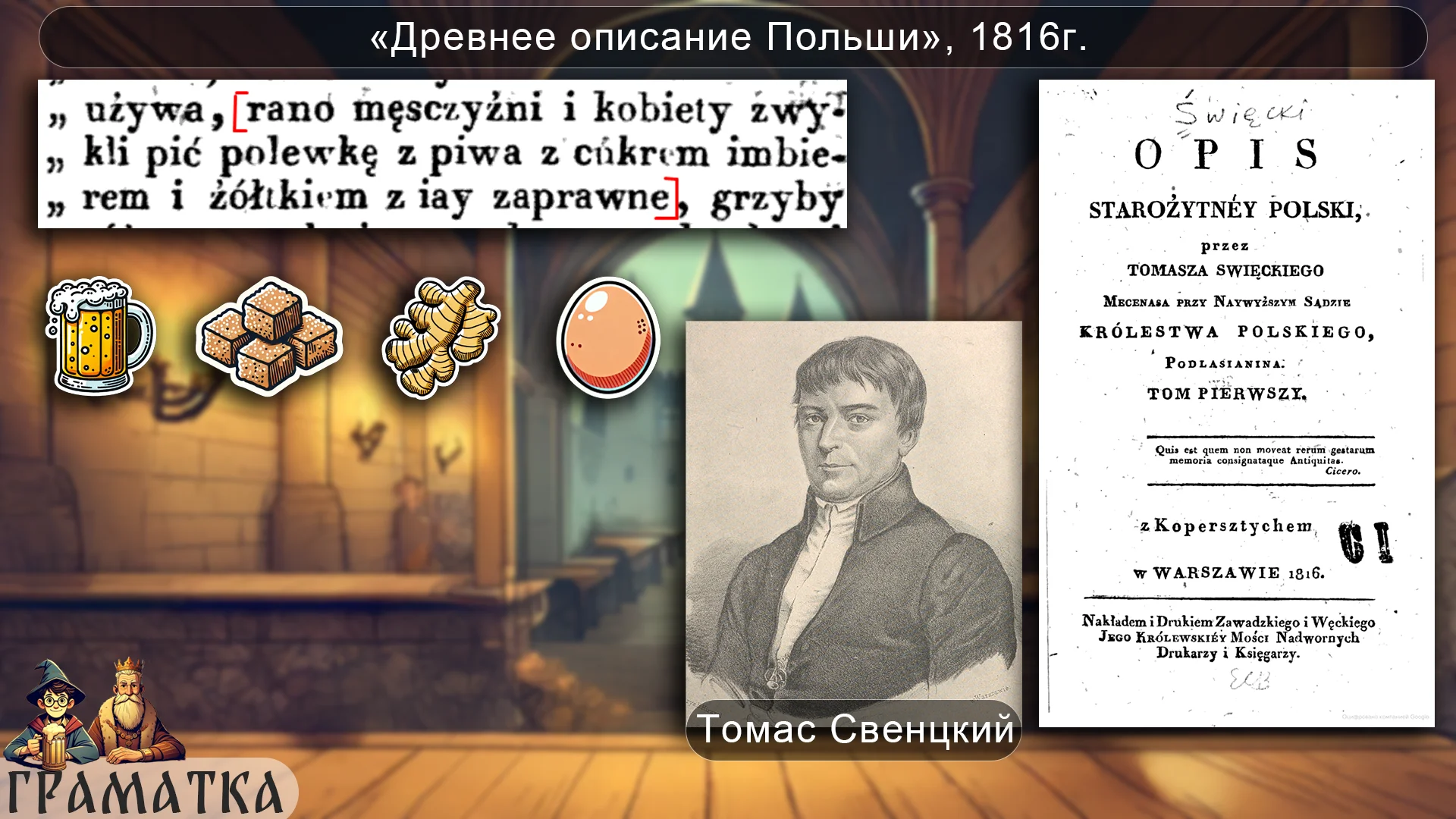
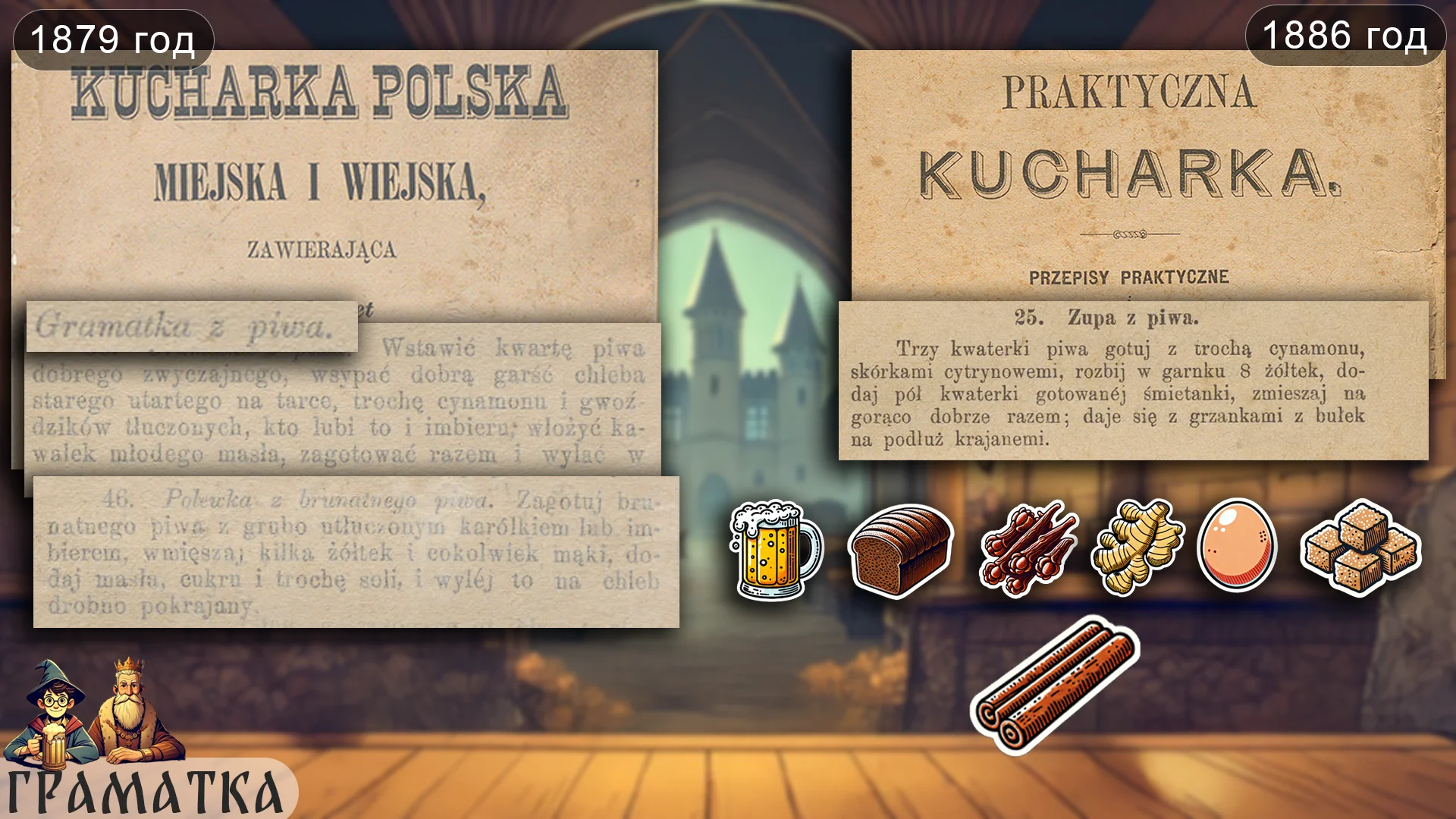
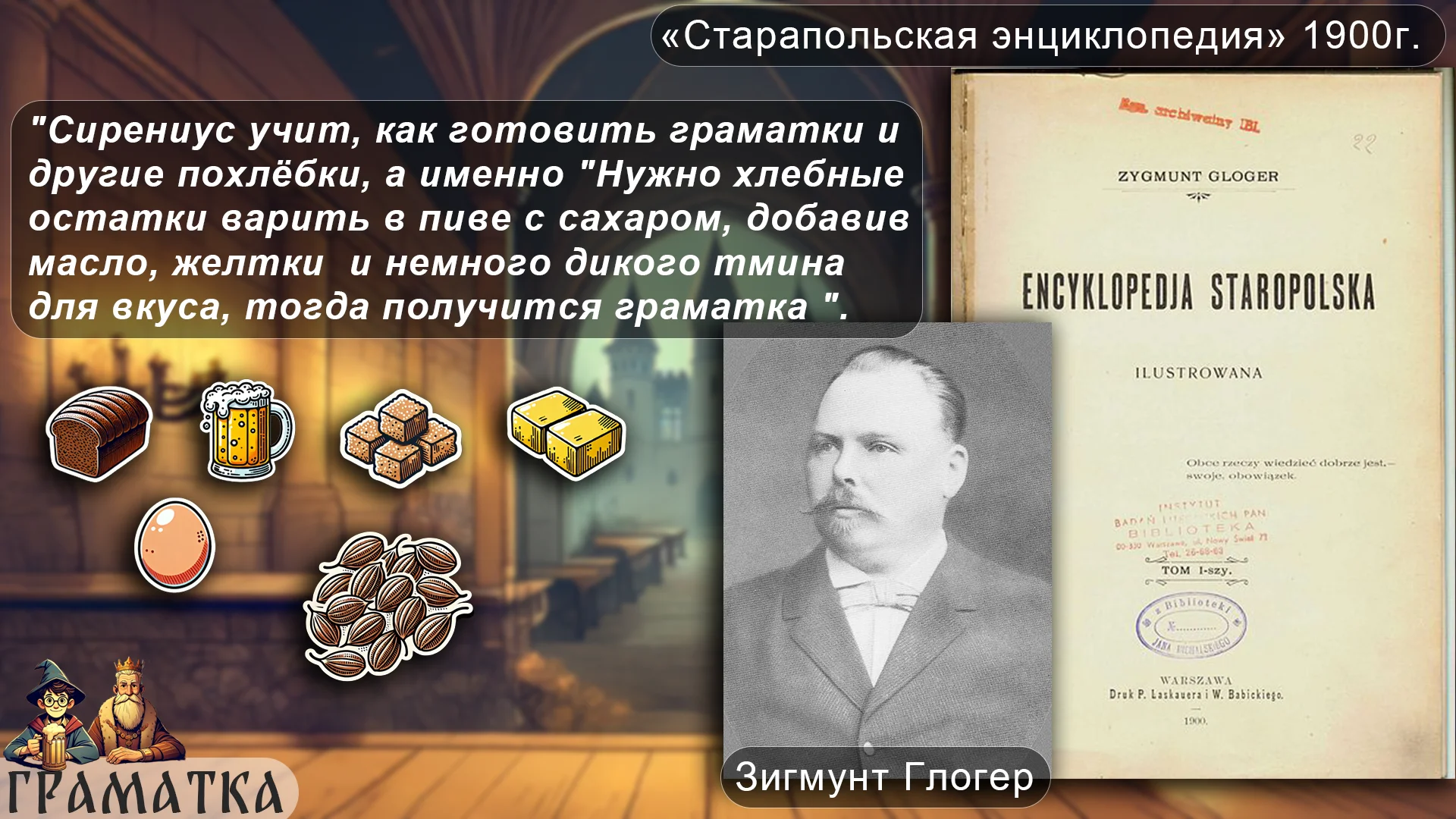
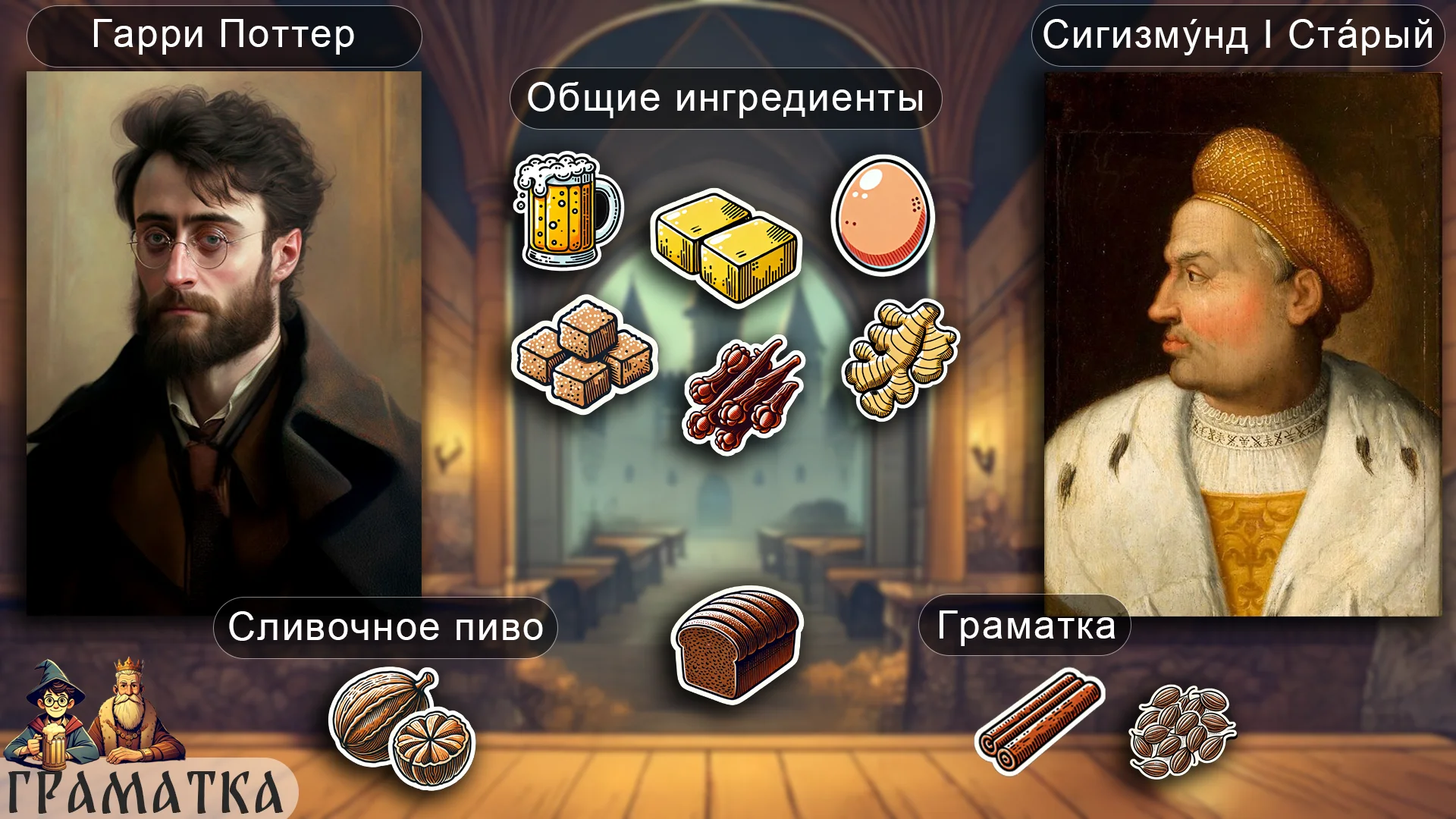
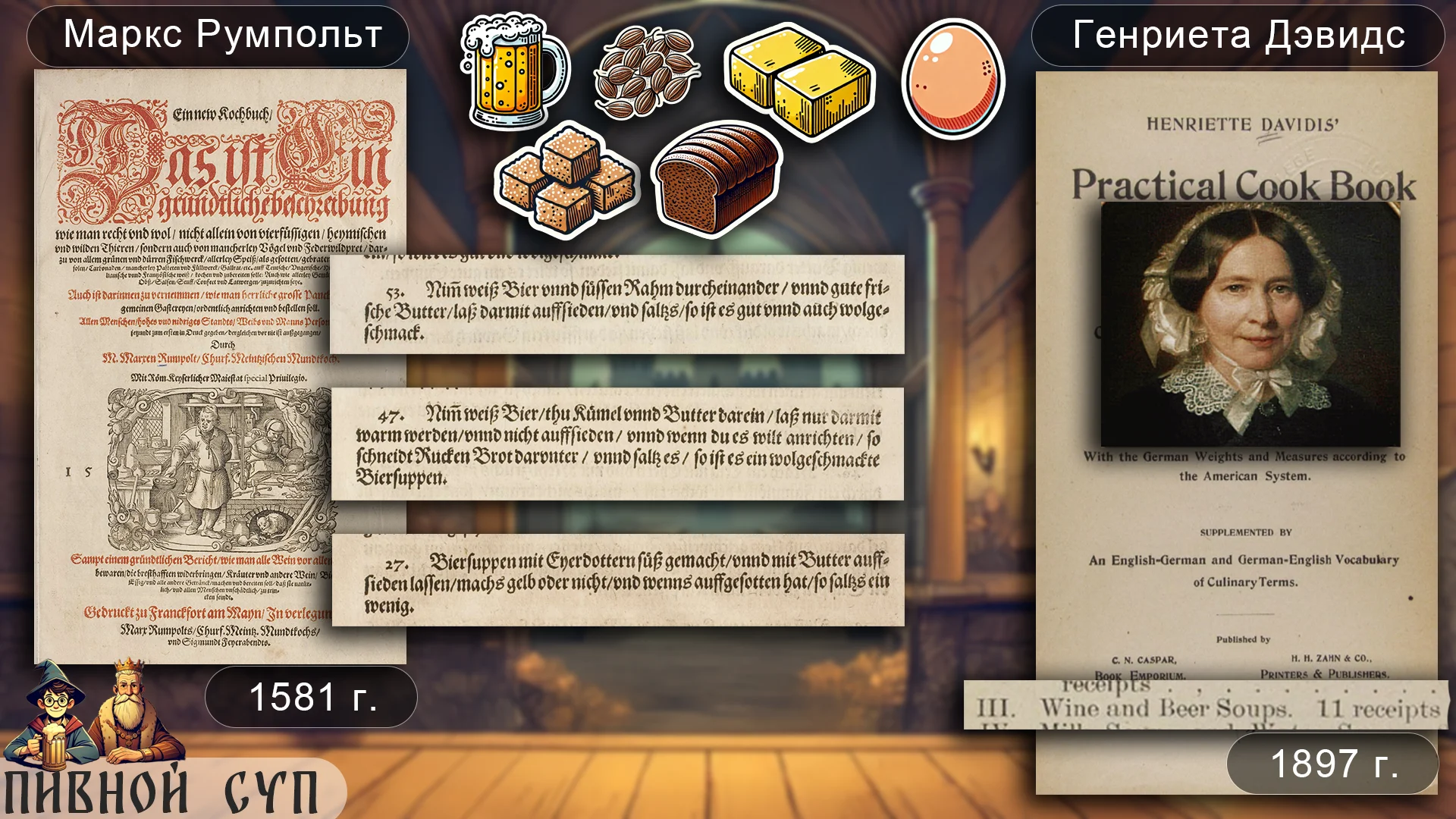
A historical study of gramatka, English Buttered Beere and European beer soups. Sixteenth- to nineteenth-century recipes, Sigismund I, Harry Potter, spices in the Grand Duchy of Lithuania, and an original reconstruction of a hot beer drink.
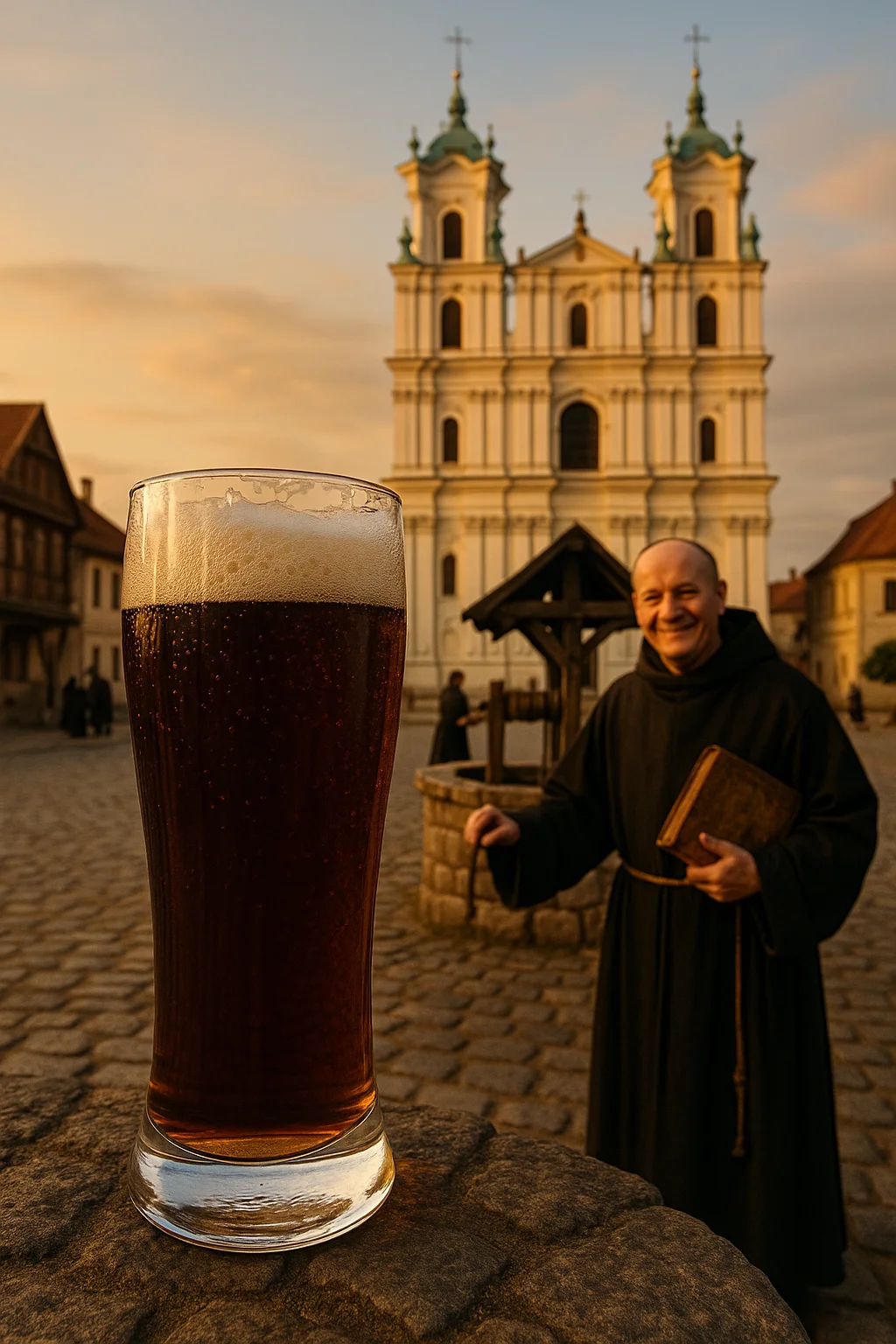
In 1721, Gabriel Rzączyński described three wells in Grodno whose water was exceptionally suitable for brewing. We explore the city's water supply, search for its historic wells, investigate the Kuntz brewery and recreate a traditional dark Bock-style beer through experimental brewing.
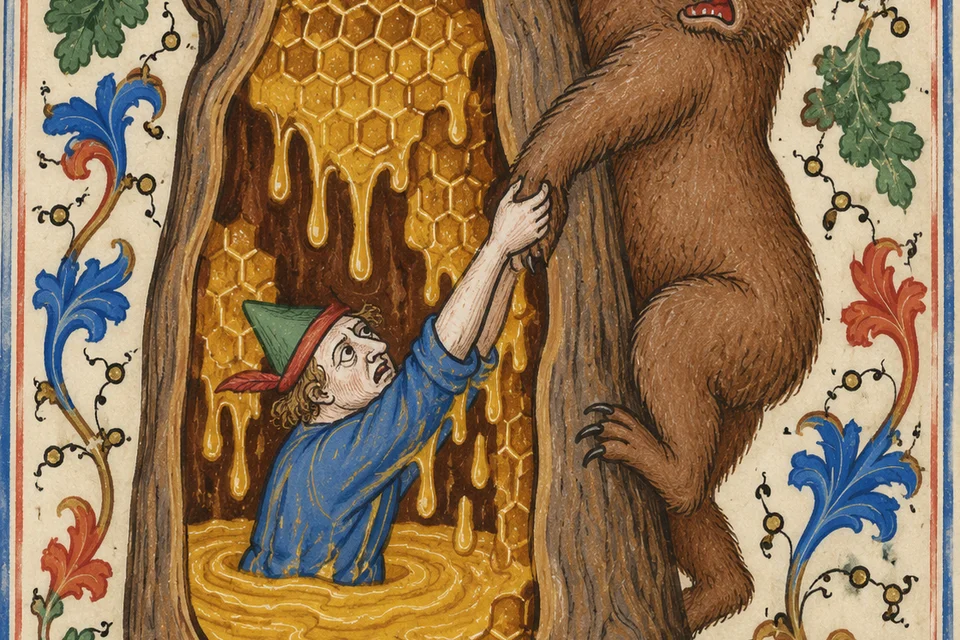
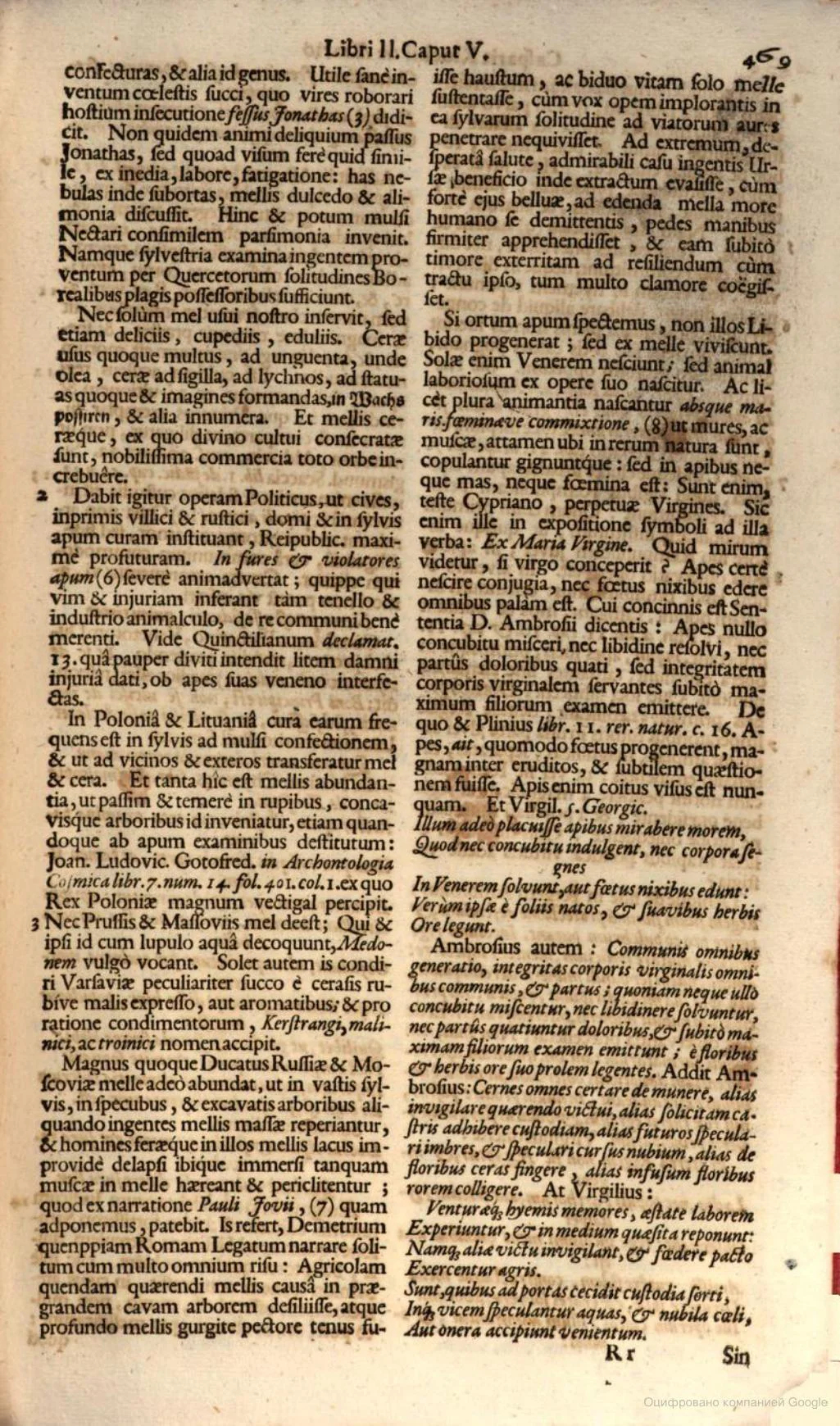
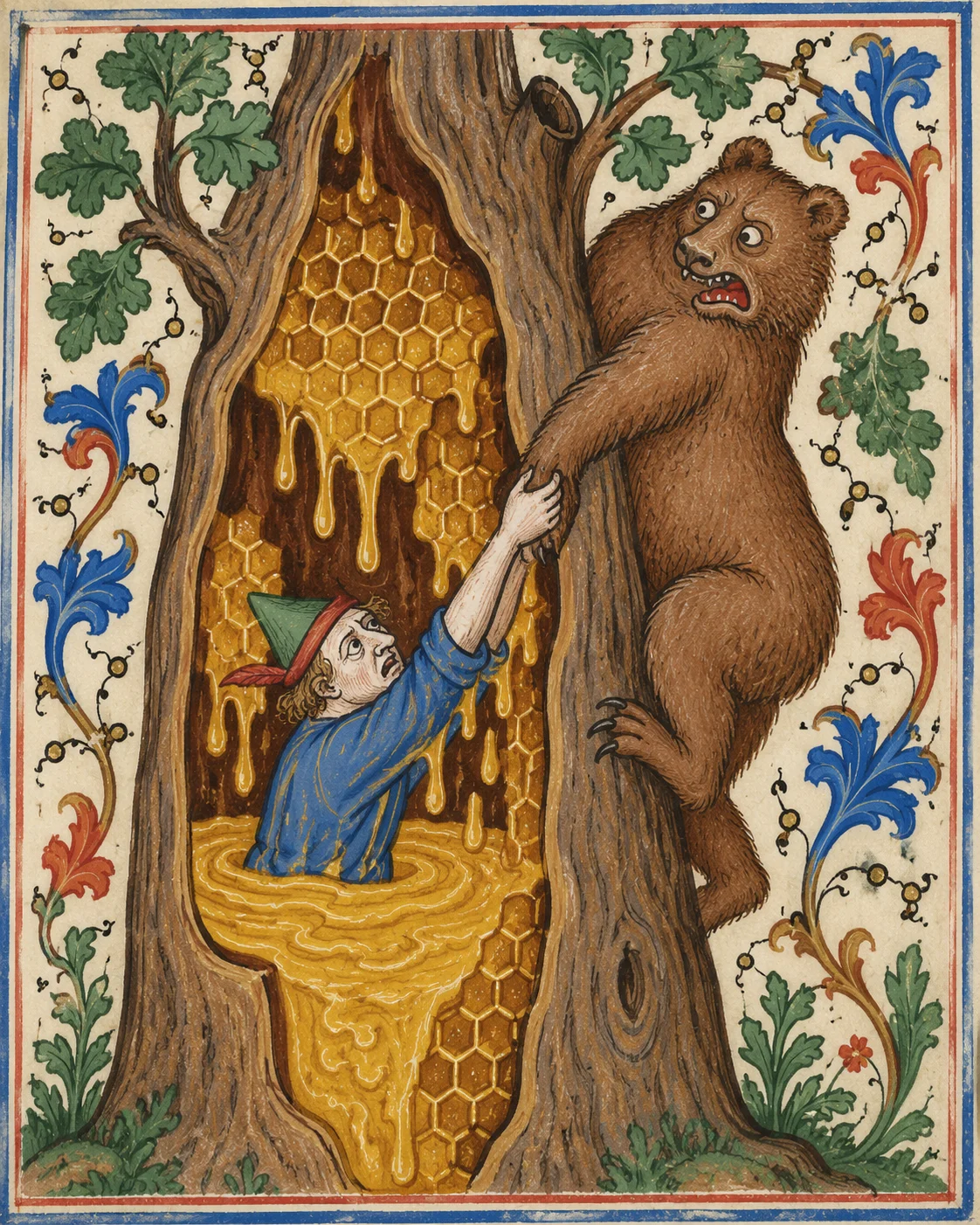
Sixteenth- and seventeenth-century sources describe extraordinary quantities of honey in the Grand Duchy of Lithuania and neighbouring lands — including tales of honey-filled traps, bears, and a peasant rescued from a hollow tree by a frightened she-bear.
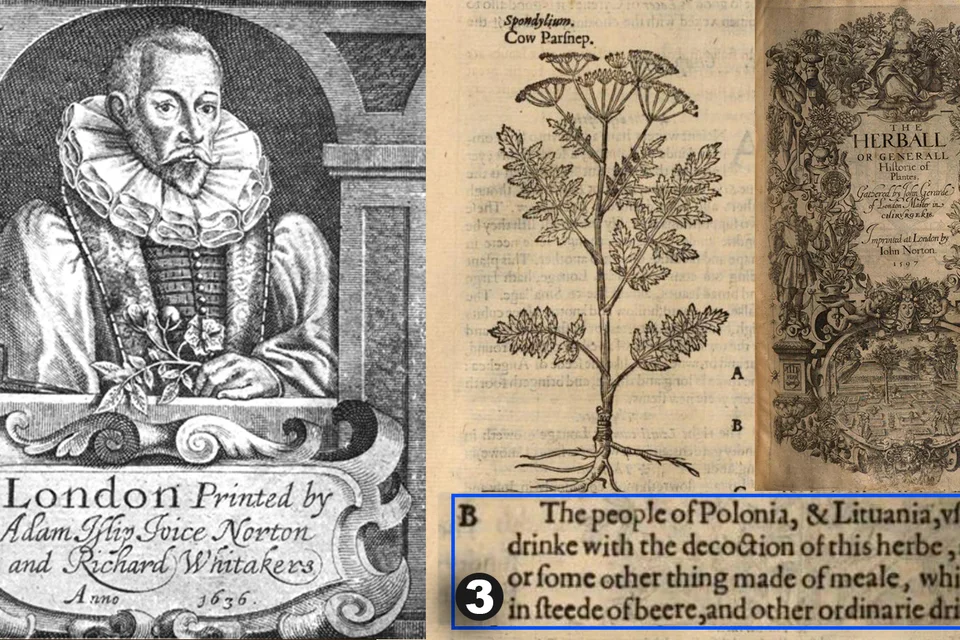
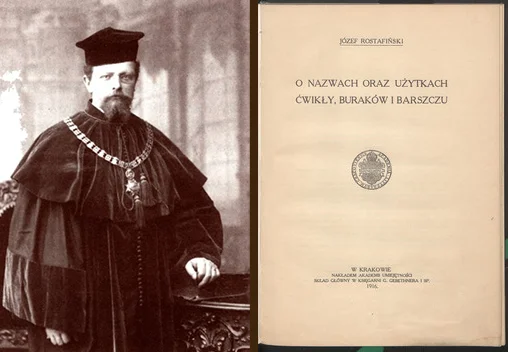
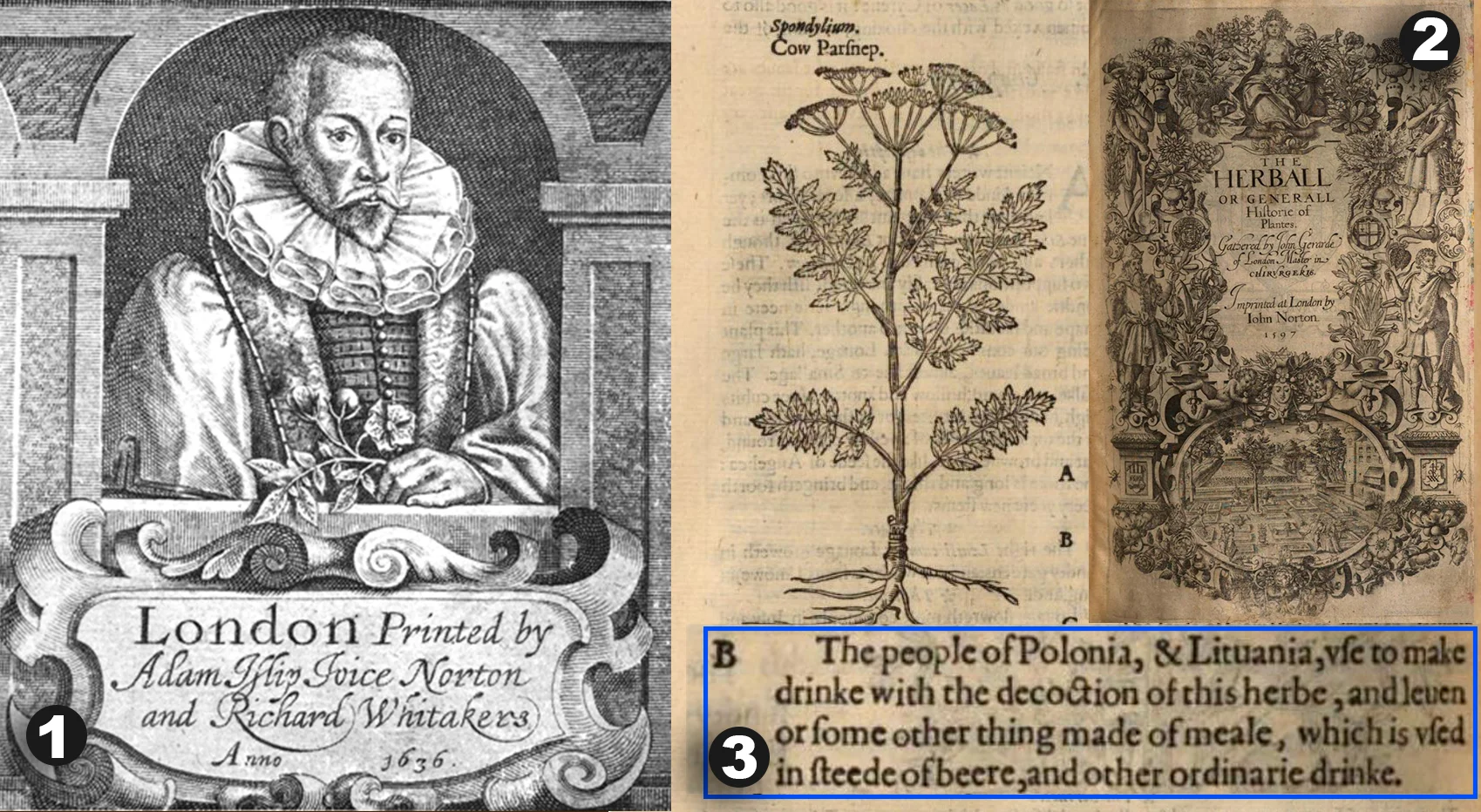
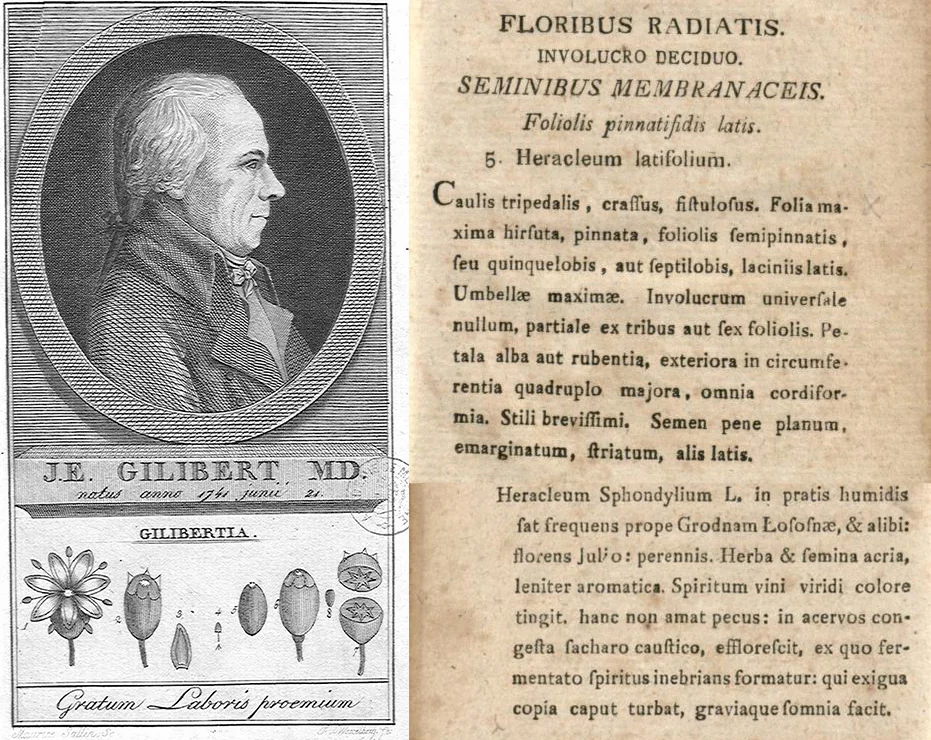
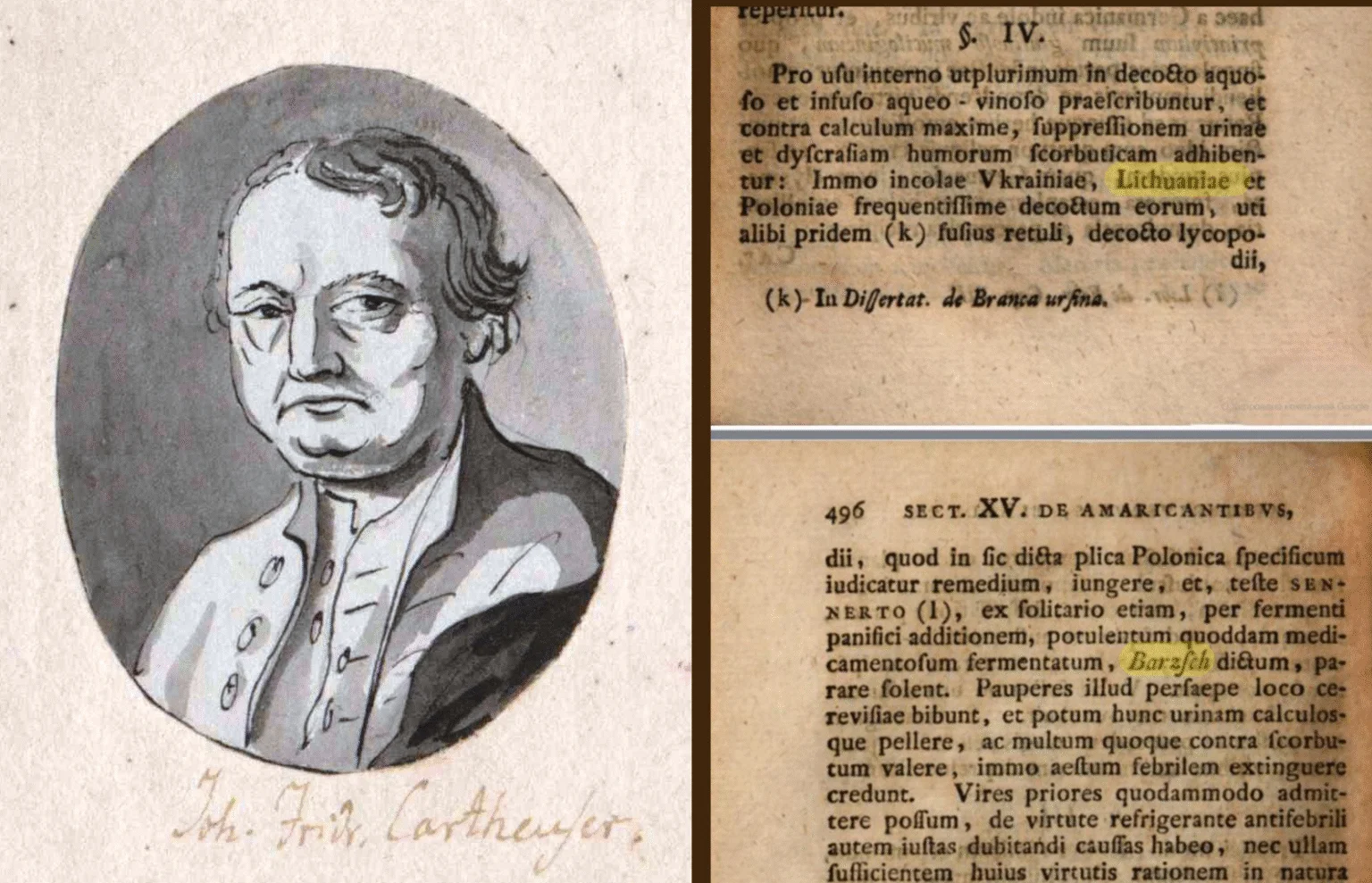
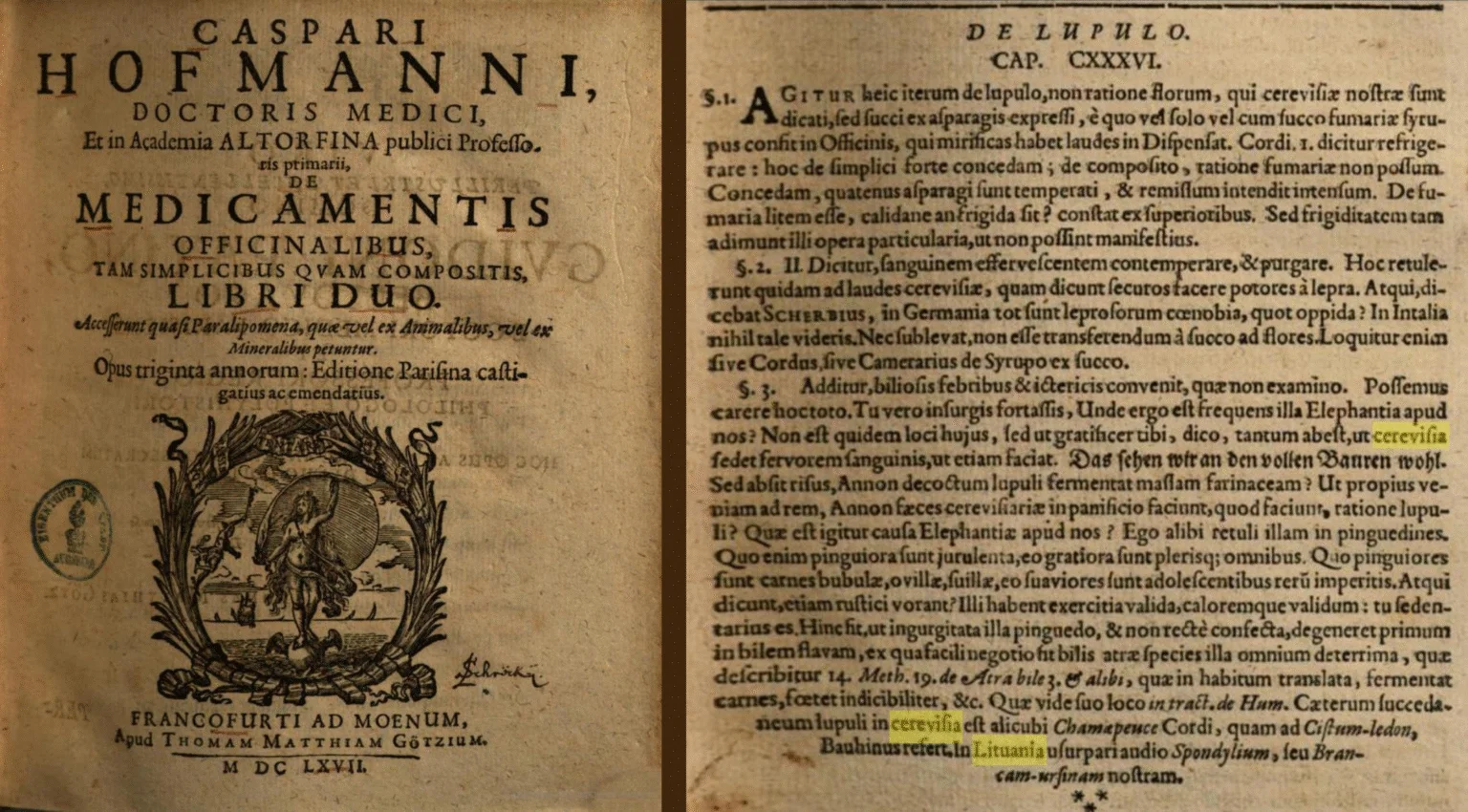
Sources from the 16th–19th centuries describe drinks made from hogweed that were fermented and consumed instead of beer in Lithuania, Poland and neighbouring lands. Some of this evidence is directly connected with Grodno, Polesia and other territories of present-day Belarus. Based on these sources, I propose a hypothesis: early “borshch” may originally have been a fermented, probably low-alcohol liquid base similar to kvass or light beer, with the name only later passing to the soup we know today.
In a German edition published in 1554, the physician Ioannes Placotomus discussed Polish and Lithuanian beers and referred to excellent “Lithuanian honey” gathered from linden blossoms. This article examines what the Latin source actually says, what “Lithuania” meant in the sixteenth century, and why the evidence is relevant to the history of beer and honey-based drinks in the lands of present-day Belarus.
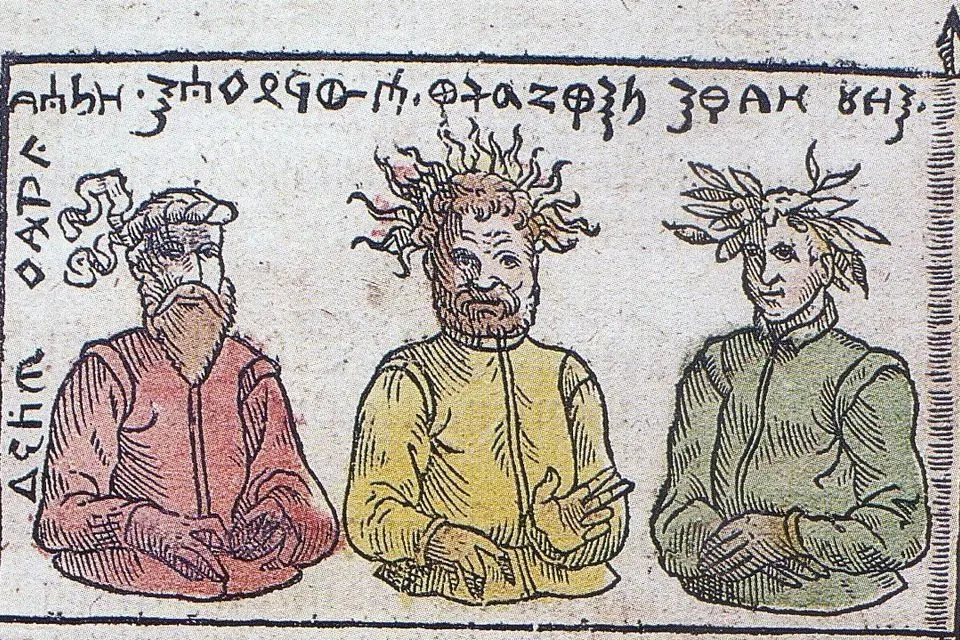
How was beer used in the pagan rites of Lithuania, Samogitia and neighbouring Baltic lands in the sixteenth century? Maciej Stryjkowski’s chronicle records beer in offerings, seasonal festivals, funerals and commemorations of the dead.
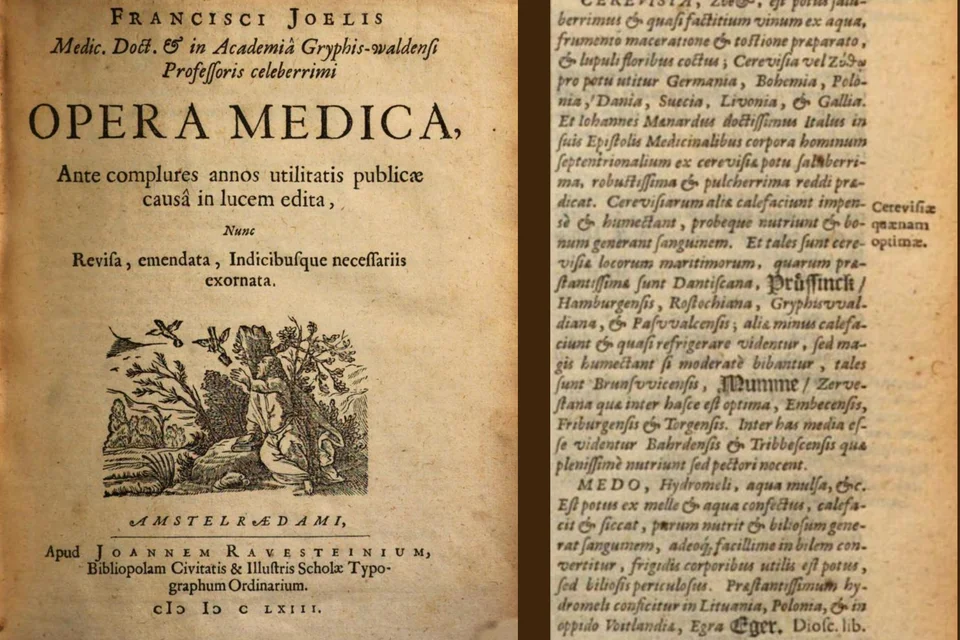
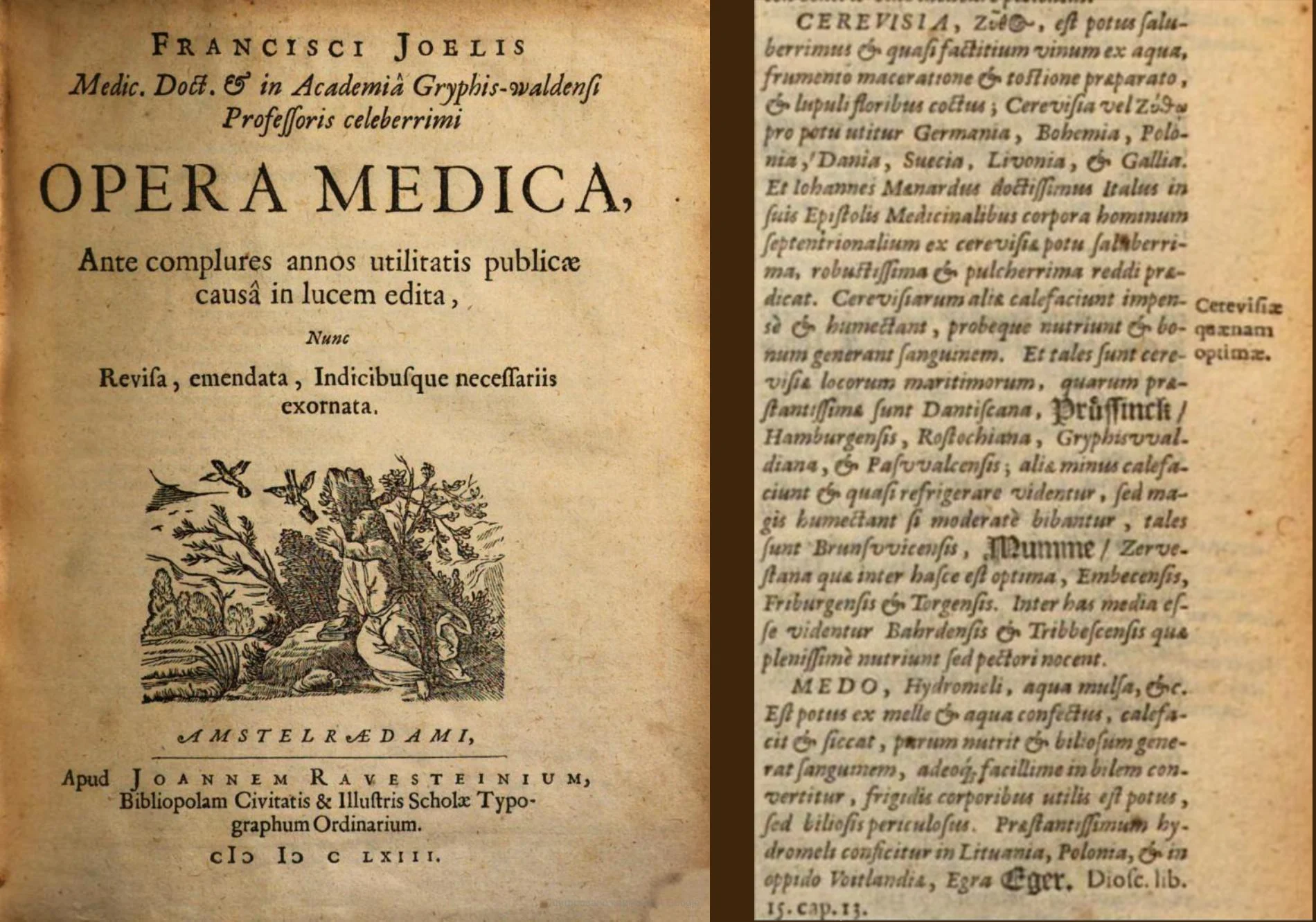
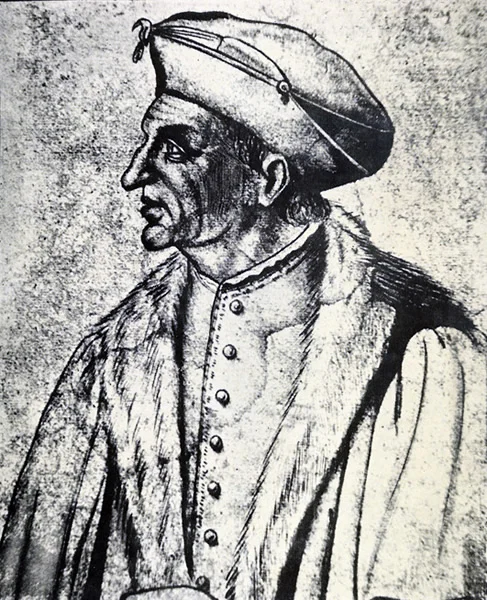
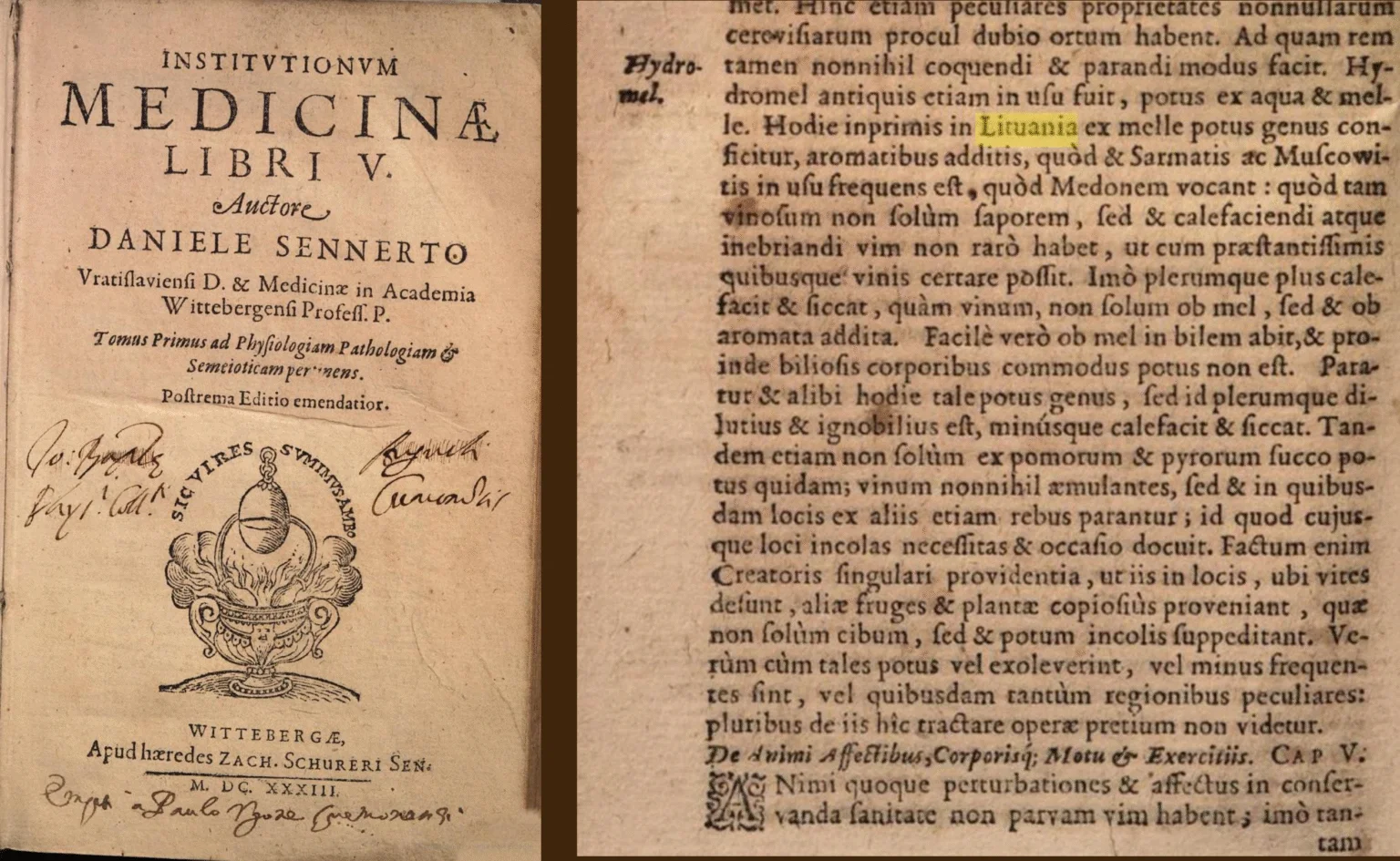
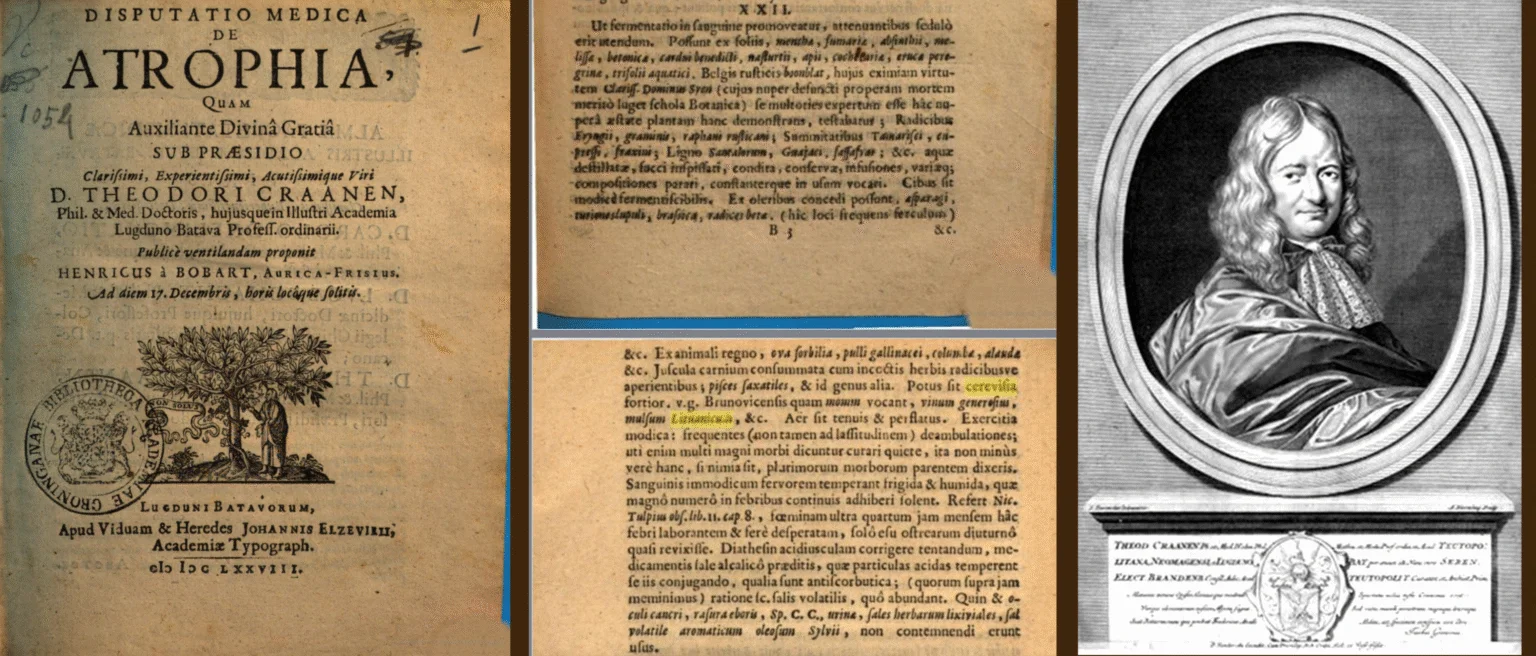
This article examines three seventeenth-century medical sources that describe beer and honey-based drinks, their properties, and their effects on health. Particular attention is given to references to Lithuania and the eastern lands of the Polish-Lithuanian Commonwealth as regions associated with brewing and traditional mead making.
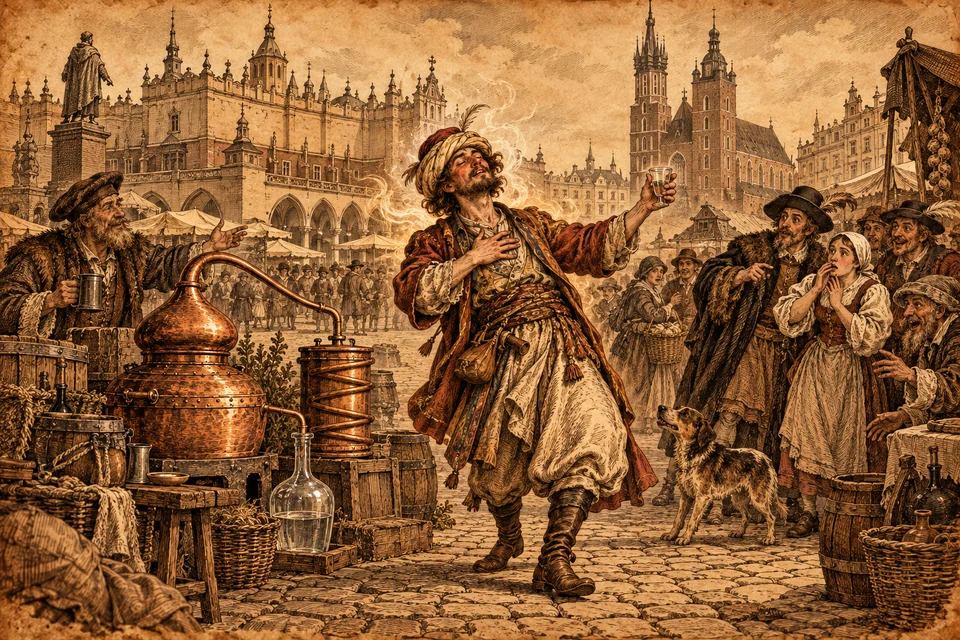
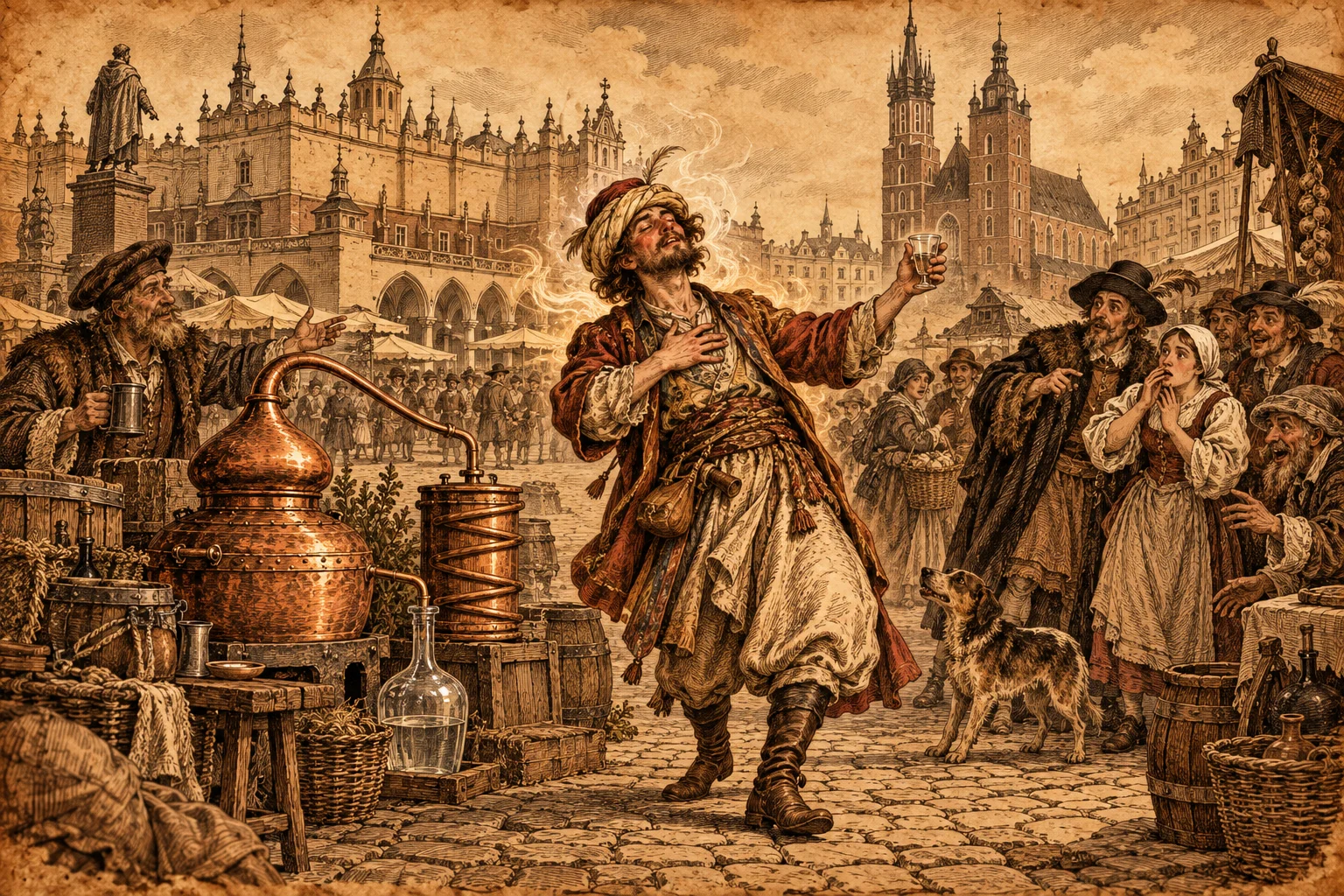
The history of harelka (gorzałka) and grain-based distillation in the Grand Duchy of Lithuania and the Polish–Lithuanian Commonwealth, based on Gabriel Rzączyński's 1721 work. Discover how strong spirits were produced, which grains and spices were used, why Gdańsk's anise-flavoured spirit became an export product, and what role distilled beverages played in the culture and medicine of our ancestors.
What did a brewery on a seventeenth-century magnate estate look like? An inventory of the Radziwiłł family's Dojlidy estate, dated 17 November 1628, offers a remarkable glimpse into its brewing operations, including a copper brewing kettle, malthouse, malt-drying facilities, barrels and grain-storage buildings. We examine this historical document to discover what it can — and cannot — tell us about brewing technology, production and the estate economy.
In 1658, Jan Amos Comenius published Orbis Sensualium Pictus, a famous illustrated textbook that included a chapter on brewing. This article examines how the book circulated in the Polish-Lithuanian Commonwealth, what its brewery illustration actually showed, and why an alembic appeared alongside the brewing equipment.
In 1659, Andreas Cellarius described an unusual noble hall in Danzig where distinguished townsmen could pay a fixed fee and drink beer until the evening while listening to instrumental music. What did this place look like, and how closely did it resemble a modern beer festival?
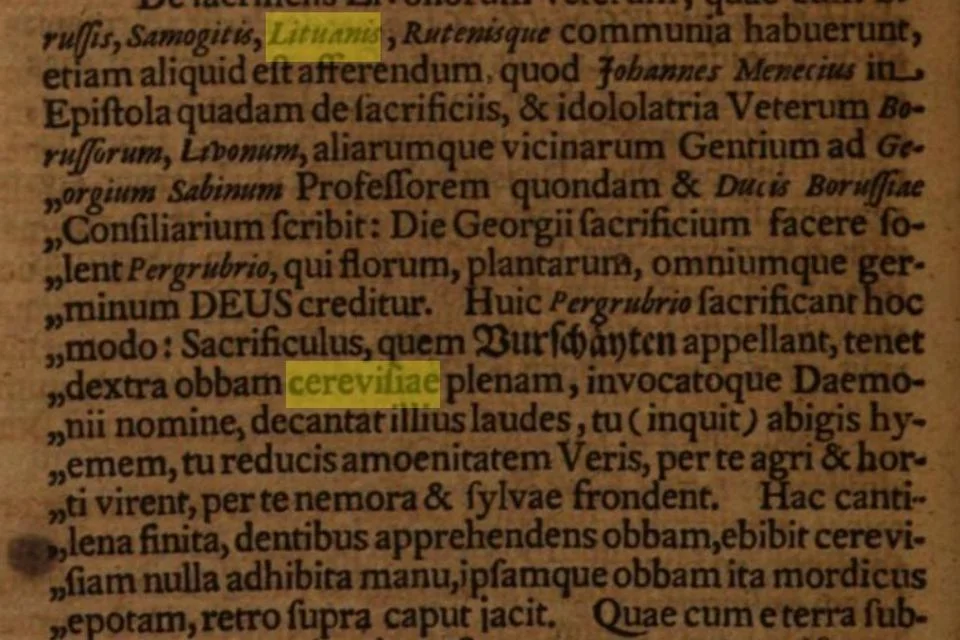
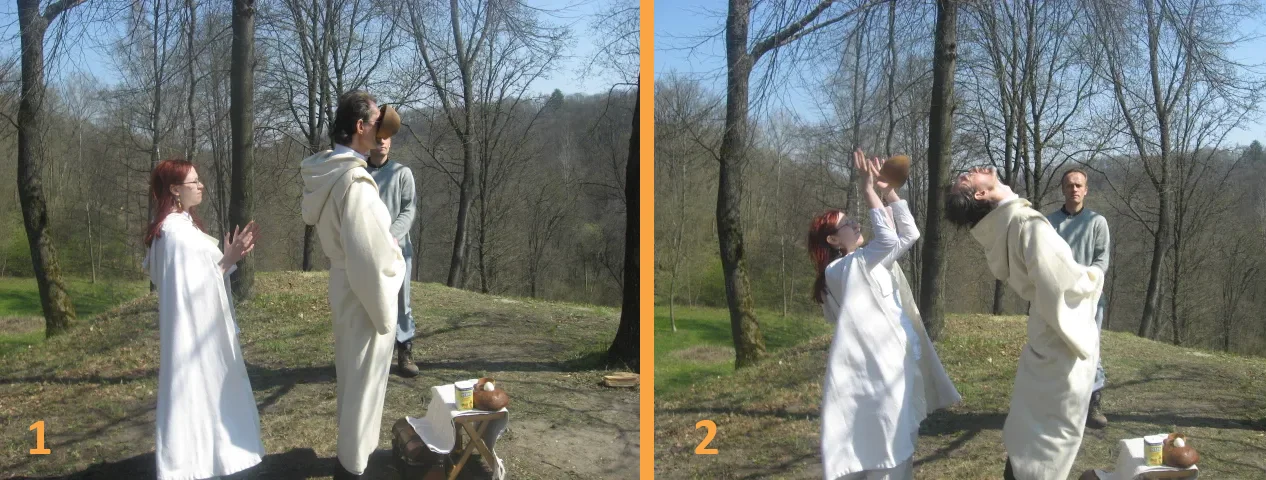
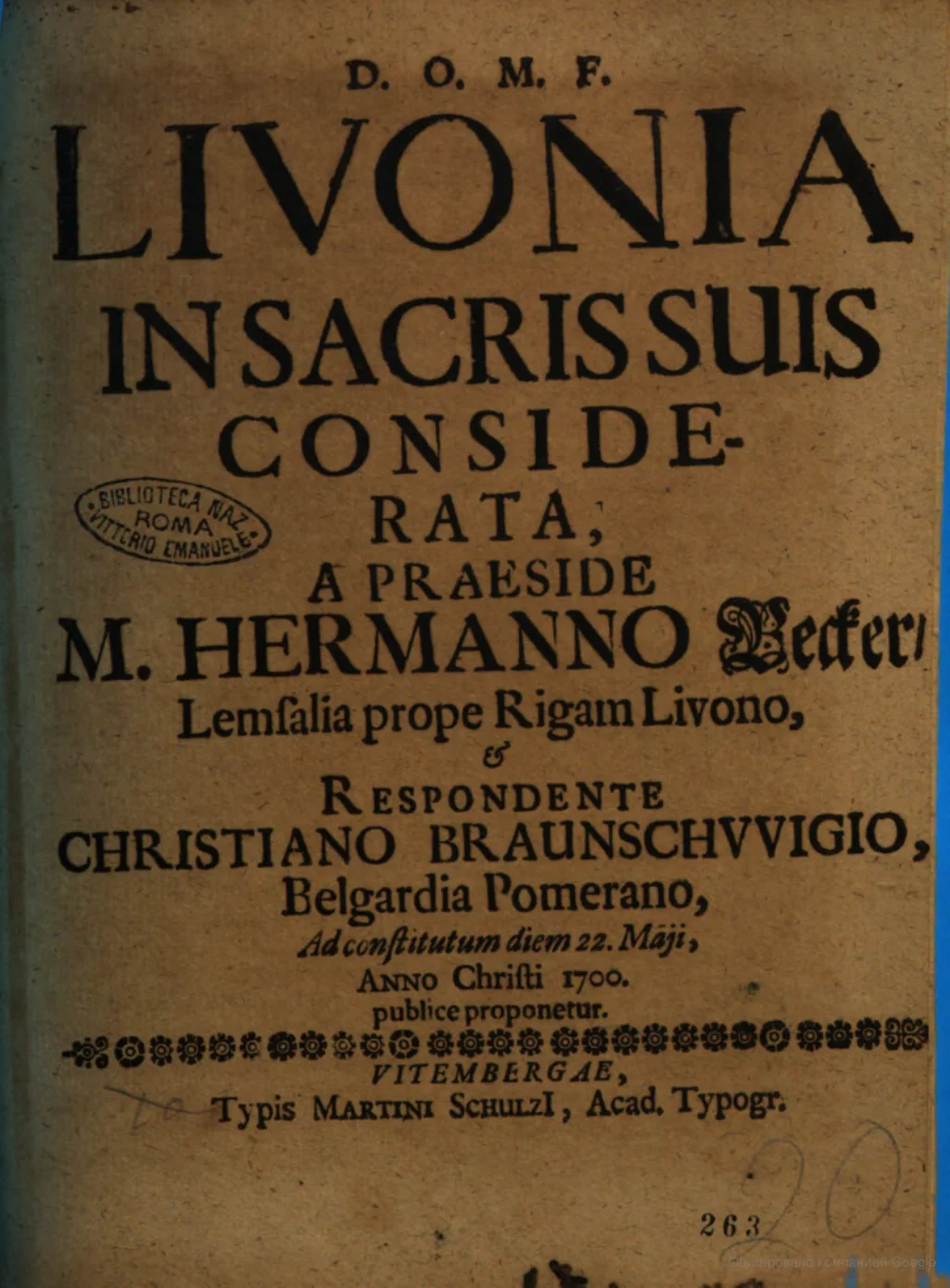
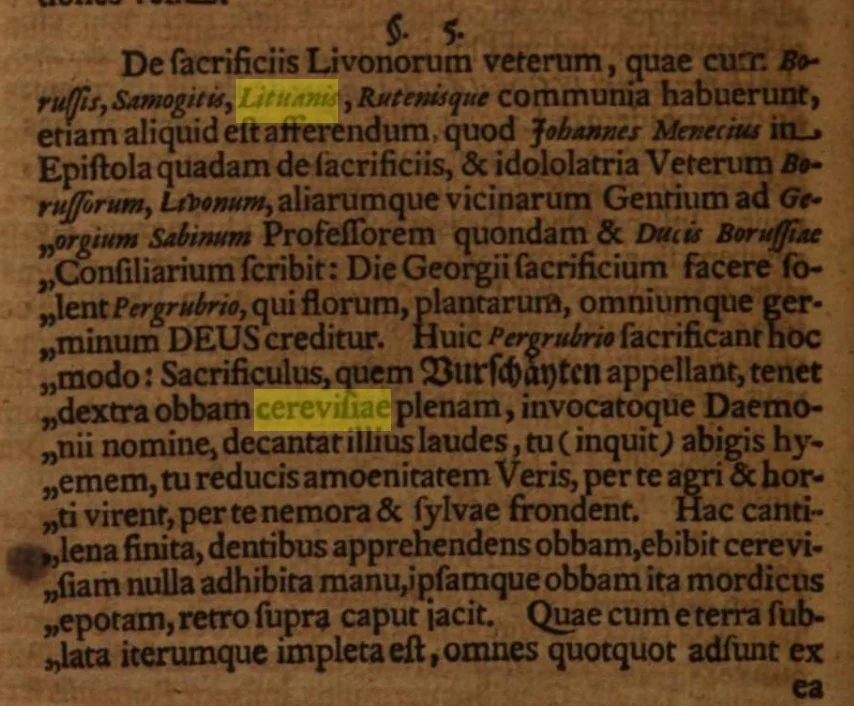
A source from 1700 preserves a detailed description of a pagan spring ritual involving beer, also known from the chronicle of Maciej Stryjkowski. A priest drank beer from a vessel without using his hands and then threw it behind his back. The text explicitly mentions Lithuanians, Ruthenians and other peoples of the region.
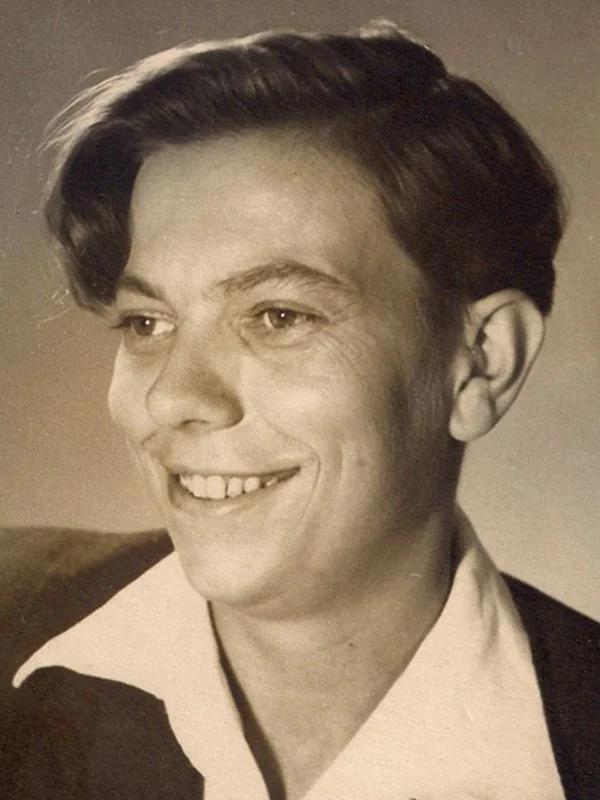
The story of “hare hop”, centaury and an unusual beer once brewed in Dubrovno. Travel accounts by William Coxe and Baron Campenhausen, Uladzimir Karatkevich’s poetry and vernacular plant names come together in a curious hypothesis about “hare beer”.
How was beer brewed in Belarusian lands at the beginning of the 18th century? The 1704 inventory of Sapockin reveals two brewhouses, brewing regulations, production fees, lease arrangements and the role of a watermill. Using this town in the Grand Duchy of Lithuania as an example, we explore the economic history of Belarusian brewing.
Mead had a centuries-old history in the Polish–Lithuanian Commonwealth and was regarded as a northern counterpart to wine. Drawing on Gabriel Rzączyński’s 1721 work, this article explores historical accounts of honey and mead from Lithuania, Ruthenia, Samogitia, Volhynia, Courland and neighbouring regions, with particular attention to the Grand Duchy of Lithuania and the lands of present-day Belarus.
What was beer like in the Polish–Lithuanian Commonwealth during the 17th and 18th centuries? Drawing on Gabriel Rzączyński’s 1721 work, this article explores beer varieties and prices, the grain trade, brewing centers in Belarus, Lithuania, and Poland, the importance of water, and historical beliefs about beer’s properties.
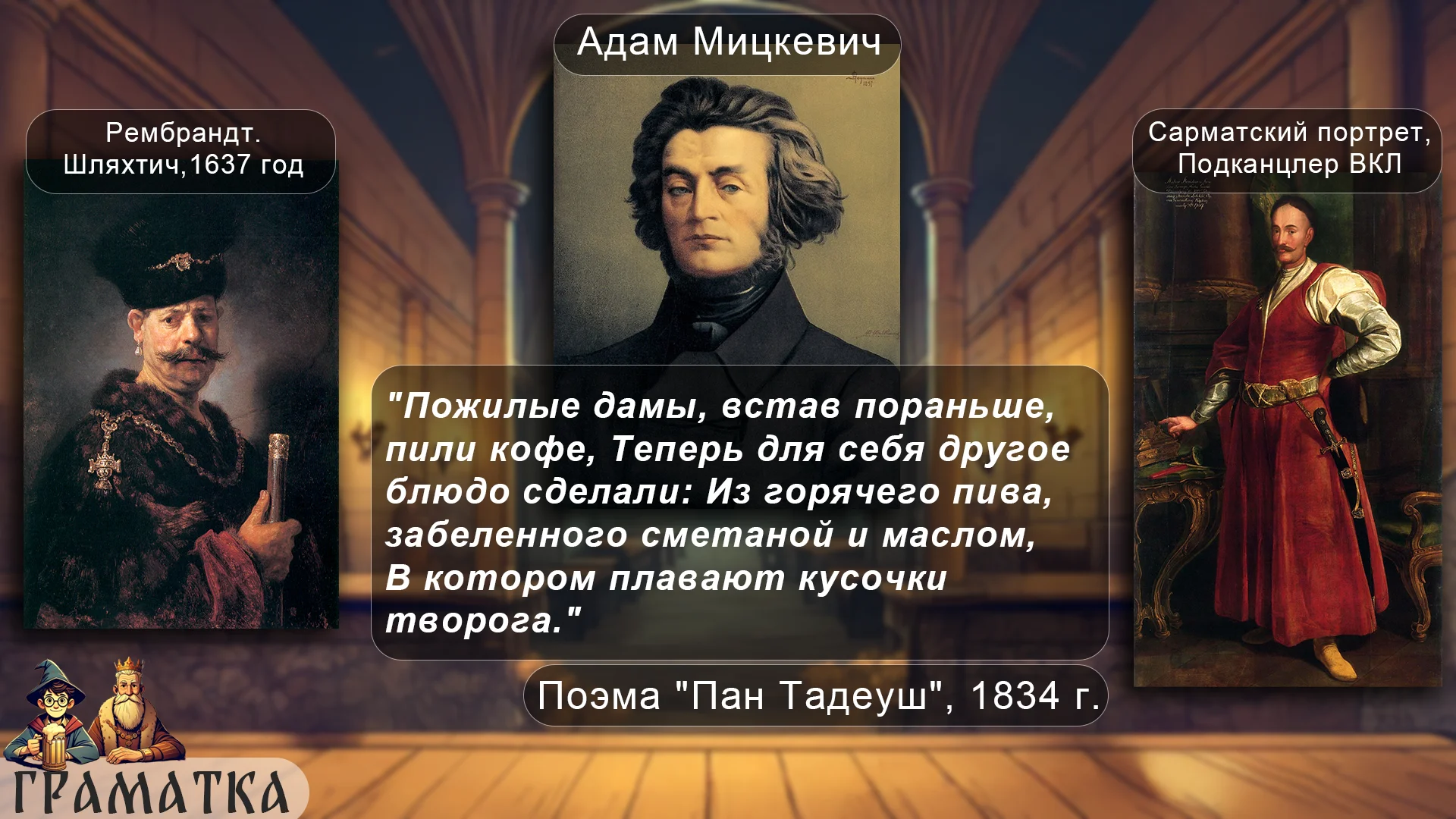
How did coffee transform the morning habits of noblewomen in the eighteenth-century Polish–Lithuanian Commonwealth? Historian Jędrzej Kitowicz recounts how coffee replaced a traditional beer-based breakfast soup known as gramatka and, in his view, helped curb excessive consumption of strong spirits.
How did people drink beer in the 18th-century Polish-Lithuanian Commonwealth? Drawing on Jędrzej Kitowicz, we explore regional beer traditions, unusual drinking vessels, the game “piwo — dobre — nalej”, and the political role of alcohol at noble assemblies.
How did Antoni Tyzenhauz’s economic reforms influence brewing in the Grand Duchy of Lithuania during the second half of the eighteenth century? Czech brewers, masonry breweries, malt production and hop cultivation are examined through historical studies and archival documents.
A study of a 1756 archival plan tentatively associated with the Bakszty (Bakshty) estate in Ashmyany County. The labels for kettles, the malt house, spirits stores and an ox stable suggest that brewing and grain-spirit production may have operated together at this estate complex.
A study of Belarusian folklore and ethnographic sources identified 440 records mentioning beer. Only 92 explicitly identify the grain: 43 refer to wheat, 38 to barley and 11 to rye. These records have been plotted on an interactive map.
Selected documents and editions from the main catalogue. Titles and bibliographic details remain in their original language; links to digital copies are shown where available.
A Polish historical publication issued in 2022, devoted to the inventory of the Dojlidy estate, compiled on 17 November 1628 in the possessions of Prince Krzysztof Radziwiłł. The book reproduces and discusses the historical document, providing evidence for the study of a magnate estate's organisation in the first half of the seventeenth century. Of particular interest to brewing history are records concerning the brewery, malthouse, estate buildings, equipment and production infrastructure in Dojlidy, now part of Białystok, Poland.
A scholarly publication of the 1704 historical inventory of the town of Sapockin in the Grodno District of the Grand Duchy of Lithuania. The document provides information on landholding, property leases, financial obligations, taxation, and the town's economic infrastructure. Of particular importance to brewing history are its references to two brewhouses, regulations governing beer production, fees levied on each brew, rental revenues, and a watermill. The inventory was published by V. Halubovich and A. Vashkevich in Belaruski Histarychny Zbornik (2012, no. 37, pp. 242–260).
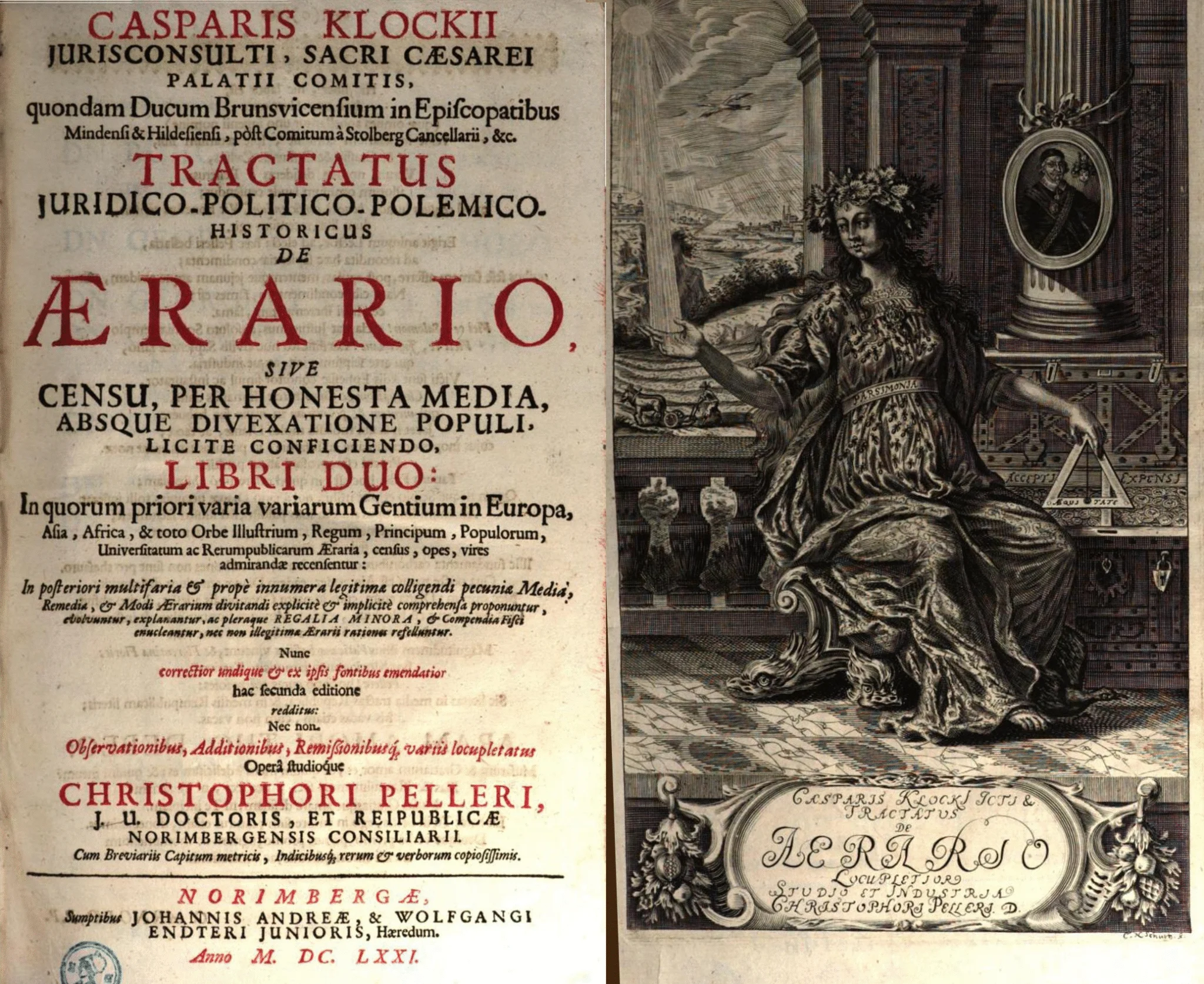
An encyclopaedic natural-history work by the Polish Jesuit and naturalist Gabriel Rzączyński, published in Sandomierz in 1721. Divided into twenty treatises, it describes the natural resources, fauna, flora, geography and other characteristics of the Kingdom of Poland, the Grand Duchy of Lithuania and neighbouring provinces. Rzączyński drew on earlier literature, manuscript materials, eyewitness accounts and observations. For research into the history of mead, the work is particularly valuable for its information on beekeeping, honey, honey-based alcoholic drinks and regional traditions of their production within the Polish–Lithuanian Commonwealth.
A 1756 boundary document concerning the estates of Czapunia and Bakszty in the Ashmyany district of the Grand Duchy of Lithuania. Its reverse contains a plan of an estate production complex, including a brewery, malt house, grain and spirits storage rooms, and an ox stable. The document is relevant to the study of 18th-century brewing and distilling architecture and technology. The attribution of the complex specifically to the Bakszty estate remains tentative.
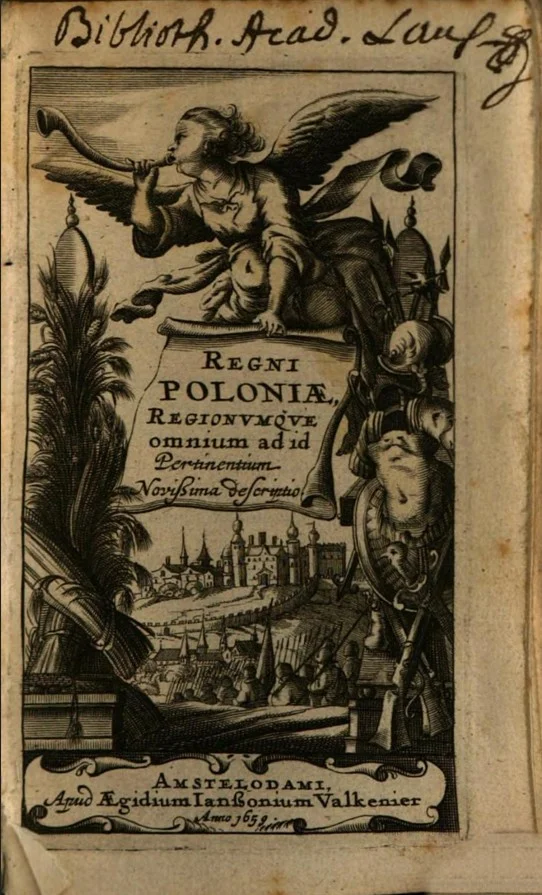
The first Nuremberg edition of Jan Amos Comenius's illustrated textbook in Latin and German. The book introduces pupils to the surrounding world, crafts and everyday activities through text and images, including brewing.
There is no single date that marks the beginning of brewing across the territory of present-day Belarus. Surviving documents come from different places and periods. PBP studies include, for example, a printed source from 1554 and estate inventories from the 17th and 18th centuries.
Which brewery in Belarus was the oldest?
The published documents do not support naming one continuously operating brewery as the oldest. Inventories record different estates in particular years; comparisons depend on the place, the document, and what it can actually confirm.
Where can I find the documents and bibliography?
Open any study in the collection: its sources and notes are listed at the end. The full list of sources and publications is available in the catalogue.
The research continues
History remains open.
I’m Stanislav Pridybailo, a brewer and researcher with the PBP project. I look for old recipes, study the sources, and test historical reconstructions in practice.

 Reconstruction / illustration
 Reconstruction / illustration
 Reconstruction / illustration


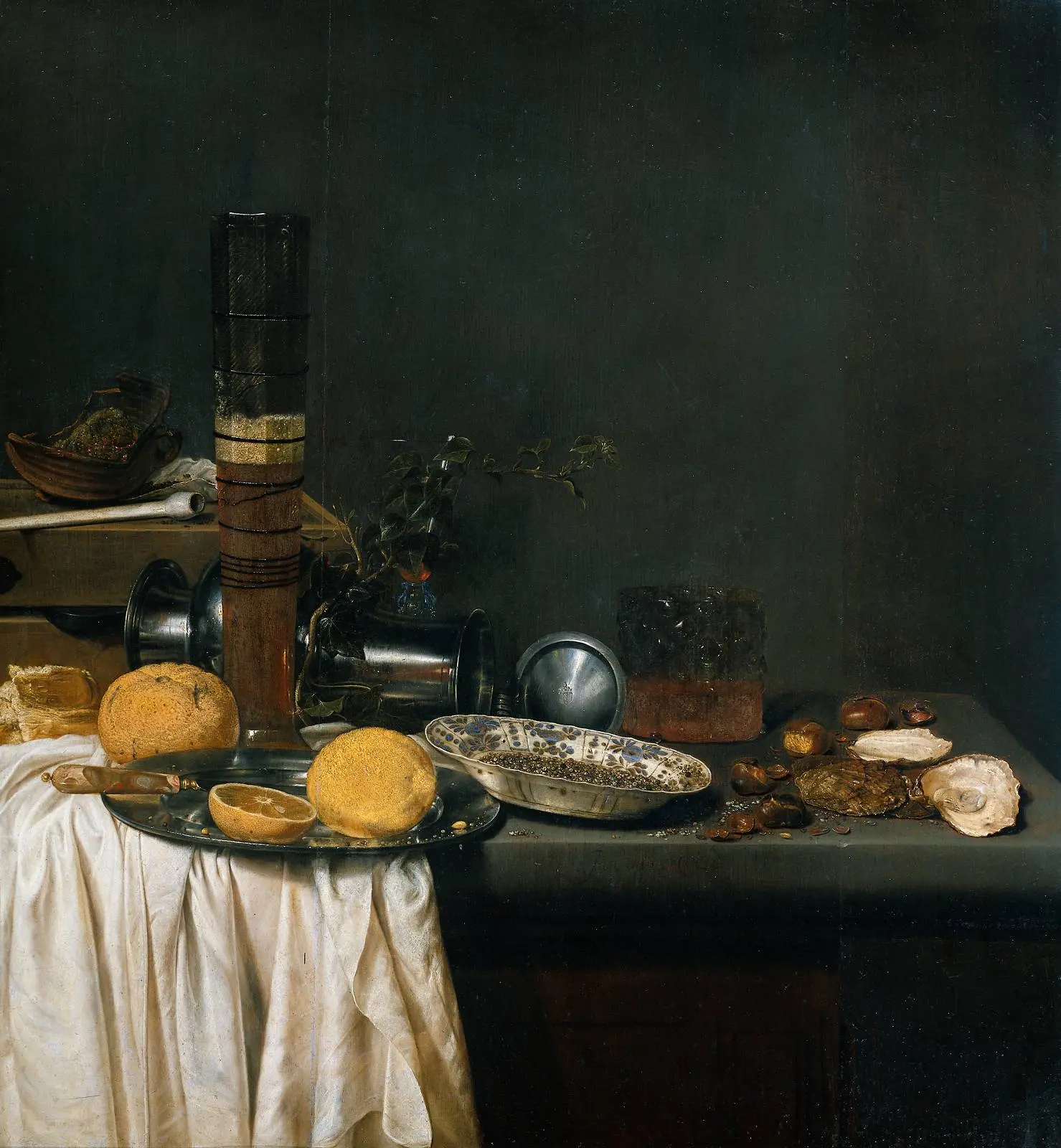
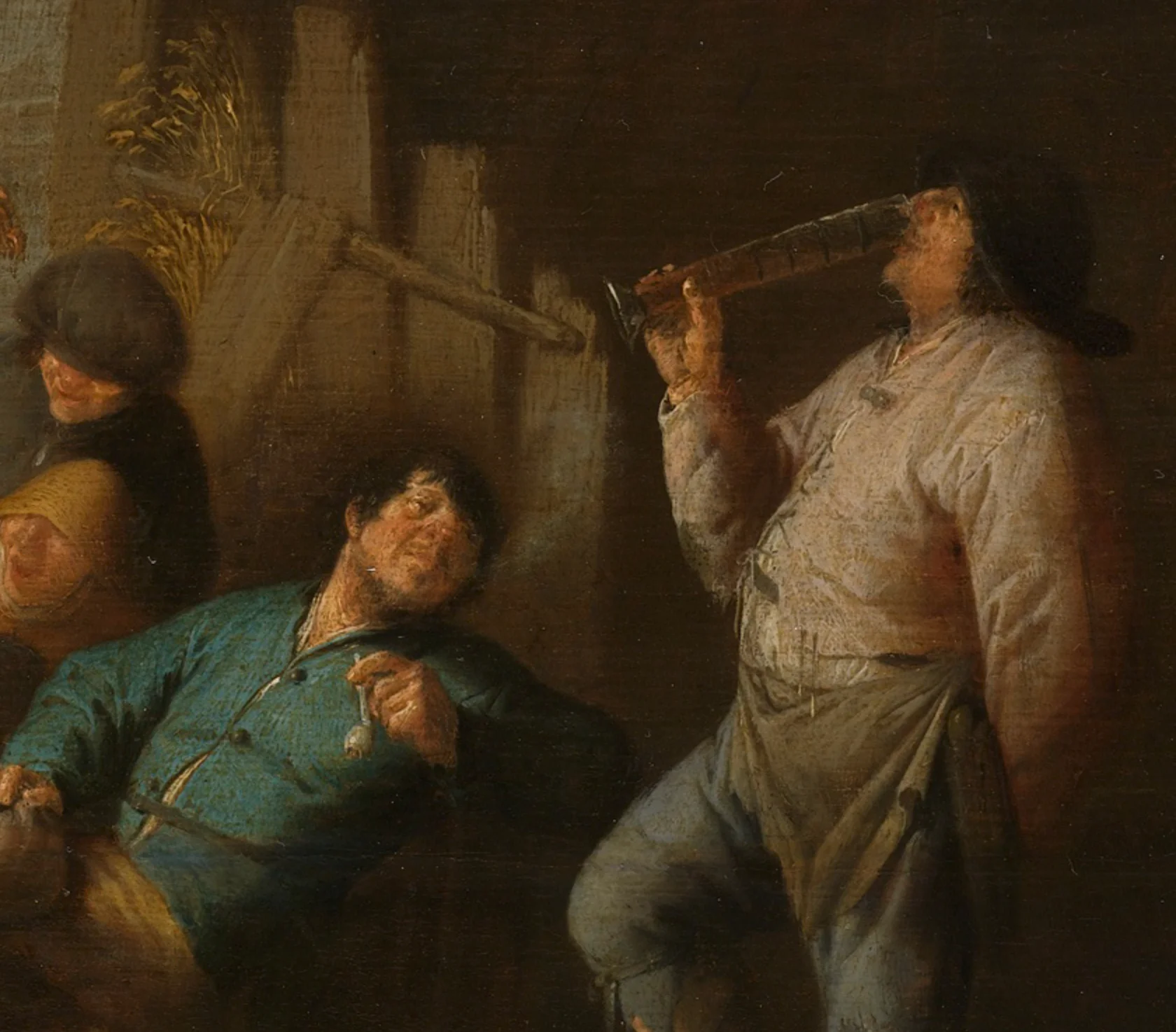
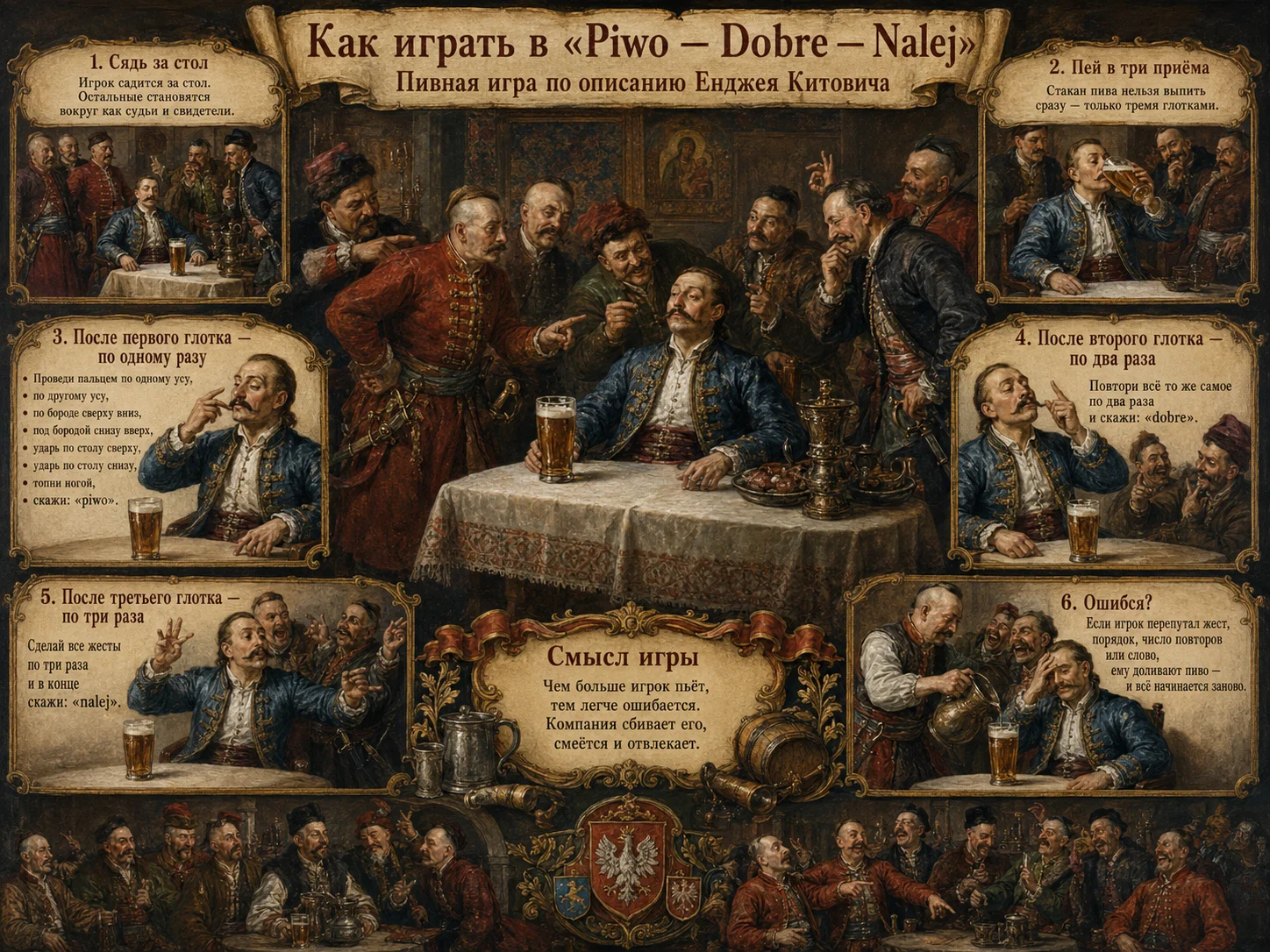 Reconstruction / illustration
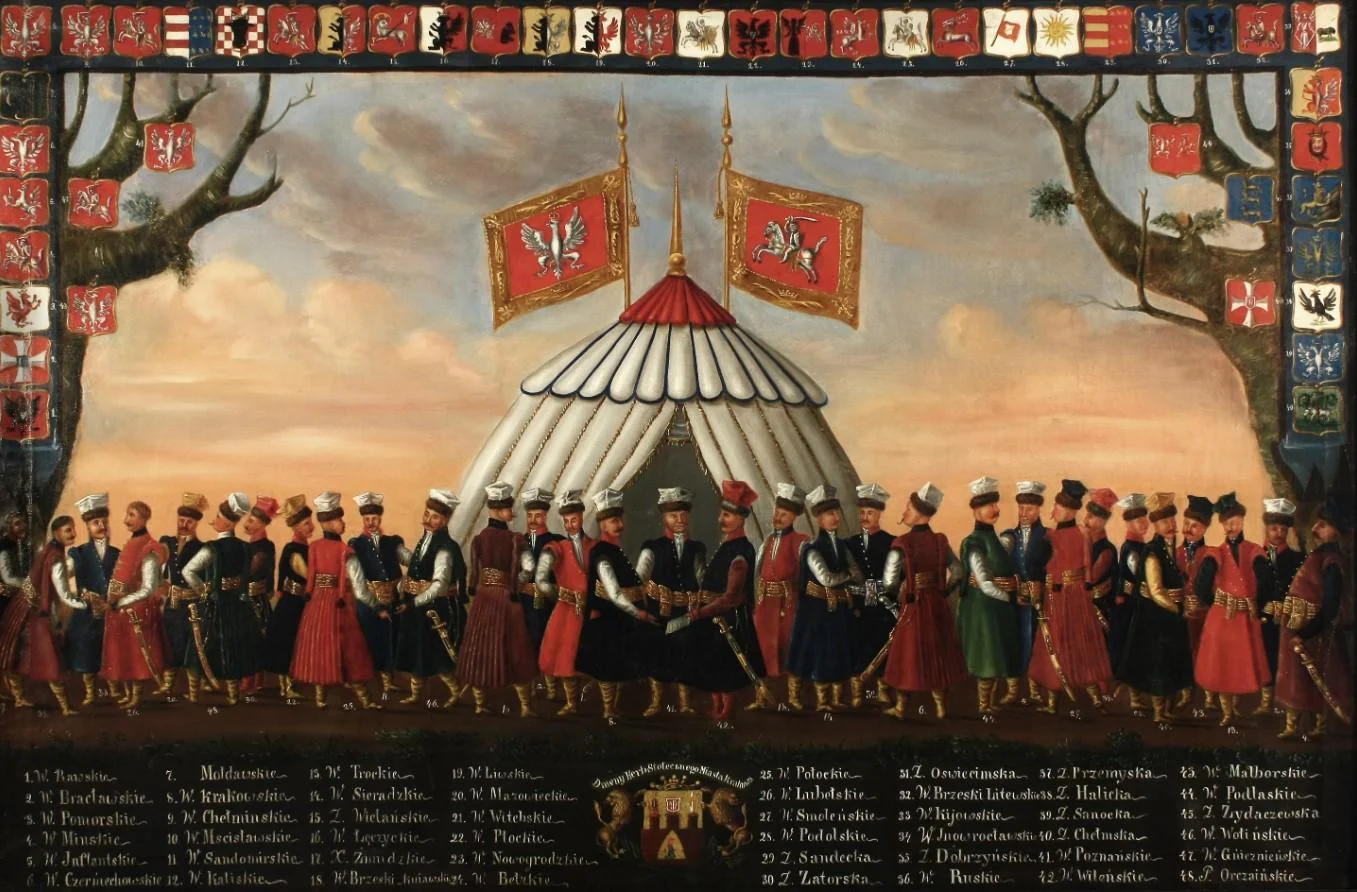

 Reconstruction / illustration
 Reconstruction / illustration
 Reconstruction / illustration
 Reconstruction / illustration
 Reconstruction / illustration
 Reconstruction / illustration
 Reconstruction / illustration
 Reconstruction / illustration
 Reconstruction / illustration

 Reconstruction / illustration
 Reconstruction / illustration


 Reconstruction / illustration